

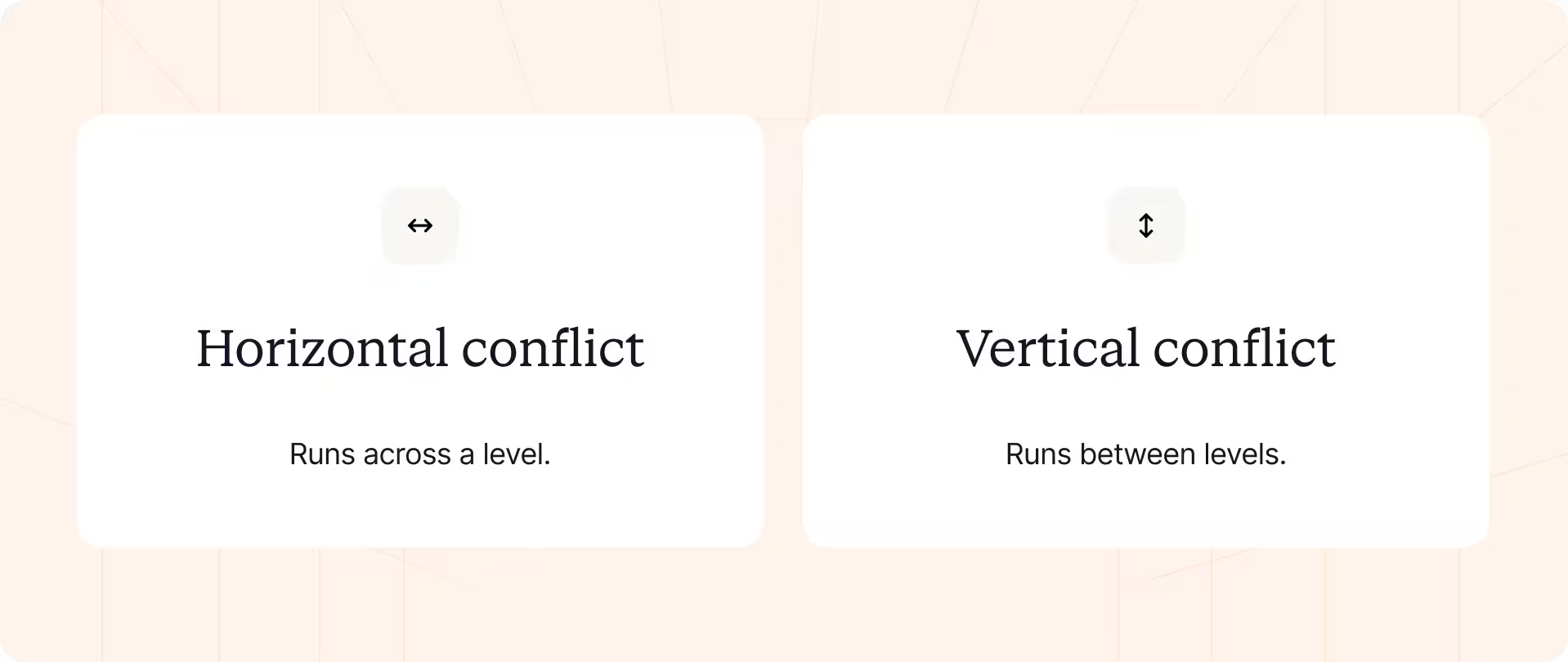
Horizontal channel conflict happens between partners at the same channel level, such as two resellers pursuing one account. Vertical channel conflict happens between different levels, often a vendor’s direct sales team and a partner. The key difference is the vendor’s role: it typically referees horizontal disputes but becomes a party when its own sales team is involved.
Two claims arrive for the same customer. Are two channel partners competing, or is your direct sales team competing with a partner? The answer determines who must decide and whose behavior must change. This is about sales channels, not conflict between internal departments.
For definitions and detailed controls, see horizontal channel conflict, vertical channel conflict, and the broader channel conflict guide. Here, the focus is how to tell the two apart and why the distinction matters.
Horizontal vs vertical channel conflict: the differences that matter
Start with who is competing, not whether the dispute involves pricing, territory, or an existing customer. Horizontal channel conflict occurs among channel members at the same distribution level. Vertical channel conflict occurs between levels of a distribution channel.
| Dimension | Horizontal conflict | Vertical conflict |
|---|---|---|
| Parties involved | Two channel partners at the same distribution level, such as resellers or MSPs | Parties at different levels, usually the vendor’s direct sales team and a reseller partner; sometimes a distributor and reseller |
| Typical disagreement | Which partner has a valid claim to an account, opportunity, or territory? | Should the vendor’s team or another channel level control an opportunity or customer relationship? |
| Commercial issues | Deal priority, pricing, territory, renewals, or account access | Deal priority, pricing, territory, renewals, or account access |
| Source of friction | Overlapping partner coverage or inconsistent priority decisions | Conflicting ownership expectations or incentives between channel levels |
| Vendor’s role | Usually the referee between partners | Often a party when direct sales is involved; may mediate a distributor–reseller dispute |
| Trust at stake | Whether two partners trust a channel leader to apply rules consistently | Whether partners believe the vendor follows its own rules |
| Decision that matters | Which competing partner claim takes priority? | Will the vendor’s team honor the partner’s valid claim? |
| Primary emphasis | Clear deal registration priority and consistent enforcement | Direct-team accountability, clear partner agreements, and aligned incentives |
Who is actually in conflict?
Horizontal conflict runs across a level. Two resellers, two agencies, or two MSPs may each claim the same deal in a partner program. They have different commercial interests, but neither is the vendor’s own sales organization.
Vertical channel conflict runs between levels. In B2B SaaS, for example, it often means a reseller competing with the vendor’s direct team. In a multi-tier channel, a distributor and one of its resellers can also conflict. The classification depends on their positions in the channel, not who started the dispute.
What are they fighting over?
The same account can create either type of conflict. Pricing is not uniquely vertical: two resellers might offer different price points despite a consistent pricing policy. Renewals are not uniquely vertical either: two partners might both claim the customer relationship.
Look past the disputed asset to the parties involved. In horizontal channel conflict, the question is often which partner has priority. In direct-versus-partner vertical channel conflict, it is often whether the vendor will compete for or respect that priority.
Why the vendor’s role changes the response
In horizontal channel conflict, the vendor generally acts as referee. The challenge is applying clear rules to both partners, even when one loses. Poor communication or inconsistent decisions can weaken partner trust and partner loyalty beyond the disputed account.
In direct-versus-partner vertical channel conflict, the vendor is not neutral. Its own direct rep may benefit from winning the account. Partners want proof that a partner agreement binds the vendor even when its team has something to lose. The test is whether the direct team follows the same rules.
The exception is a distributor–reseller dispute, where the vendor may again be a mediator. Vertical describes the parties’ levels, not automatic vendor involvement.
Why the safeguards differ
Both situations benefit from a shared deal registration process and customer relationship management (CRM) pipeline visibility. This can surface potential conflicts, but a priority ruling between two resellers does little if a direct representative can ignore it. Horizontal disputes emphasize a fair playing field for two partners. Direct-versus-partner disputes test accountability for internal competition between direct and indirect sales teams, and for the incentive programs behind it. The controls overlap, but conflict resolution depends on who must honor the decision.
One account, two different conflicts
Hypothetical example: A logistics company is evaluating a workflow platform. Reseller A has introduced it to the operations team and believes it has the opportunity. Keep the customer and product the same, then change only the competing party.
Horizontal channel conflict: Reseller B also claims the same deal. The vendor must decide between two partners at the same level, or clarify whether their roles can coexist.
Vertical channel conflict: Instead, the vendor’s direct rep claims the account. Now the vendor must decide whether its own team will respect the reseller’s position.
The customer encounters the same overlap. What changes is who needs to step back and who has authority to make that decision.
How to identify the conflict in front of you

Ask these questions before labeling a disputed opportunity:
- Who is on the other side? Another reseller or same-level partner points to horizontal channel conflict. Your direct sales team against a partner points to vertical channel conflict.
- Is the vendor judging or participating? Refereeing competing partner claims suggests horizontal conflict. Having its own direct team on one side suggests vertical conflict.
- What decision must be honored? A priority ruling between partners suggests horizontal conflict. A decision binding the vendor’s own sales team suggests direct-versus-partner vertical conflict.
Pricing, territory, and renewals can feature in both. Classify by the parties first.
Where multichannel conflict fits
Multichannel conflict concerns multiple distribution channels, such as direct sales, resellers, referral partners, marketplaces, and systems integrators. Different channels can reach the same customer through separate sales motions. This is a different dimension from horizontal versus vertical conflict.
Under Introw’s taxonomy, a referral partner and a reseller competing through different motions is a multichannel case. A direct team competing with a reseller can be both vertical and multichannel: the parties occupy different levels and their sales routes overlap.
That means the labels need not be mutually exclusive. Determine who is involved and which motions overlap before deciding how to interpret the conflict.
How Introw helps with channel conflict
Introw helps channel operations teams spot potential conflicts before a decision. Its partner relationship management (PRM) workflows accept registrations through a partner portal. The conflict check compares those submissions against relevant CRM records, including direct opportunities, and other Introw form submissions. Configurable conditions help exclude irrelevant or stale matches.

That gives the channel leader a common view of partner-versus-partner and direct-versus-partner conflicts. Introw’s AI can suggest a resolution and draft partner communication, but the channel team reviews the evidence and makes the final call.
If you want to see how this prevention-first model works in practice, you can request a demo and walk through how Introw supports it across your channel program.




See AI-Native PRM in Action
Book a demo with one of our partner program experts, or explore Introw on your own time.