

What is a value-added reseller (VAR)?
A value-added reseller (VAR) is a company that buys a product from a vendor, adds its value, and resells the combined solution to the end customer.
Added value can include:
- Implementation
- Integration
- Customization
- Training
- Support
- Complementary hardware or software
That's the whole distinction. A plain reseller just moves the product. A VAR wraps it in services and expertise the customer couldn't easily get from the vendor directly, and that's the value-added reseller meaning in practice.
Two examples:
- IT VAR: sells a security platform, then handles deployment, configuration, and managed monitoring.
- SaaS VAR: sells a CRM, then handles data migration, custom objects, and admin training.
One clarification: In a business and technology context, VAR only means value-added reseller, not the sports replay system or the electrical term that shares the same letters.
Value-added reseller companies are especially common in IT, hardware, cybersecurity, and enterprise software, industries where the product alone rarely solves the customer's problem.
A VAR is just one of several ways a vendor goes to market through partners. Comparing partner type options side by side shows exactly where a VAR fits next to a referral partner, a distributor, or an MSP.
What does a VAR actually add? The five types of value
Every one of these value-added services means the VAR has to employ skilled people and pay them long before a deal actually closes. Pre-sales engineers, implementation consultants, and technical support staff are on the payroll whether this quarter brings in new business.
That's real technical expertise the customer is paying for, and it's usually where a VAR's most durable, profitable professional services revenue comes from.
This standing cost is also why VARs feel margin pressure much more than referral or affiliate partners do, since those partners mostly just introduce a lead and step back.
In return, a VAR can charge a premium for the additional services they bring to a deal.
Why this builds industry knowledge and repeat business
When a VAR consistently delivers strong technical expertise and excellent customer service, customers stay loyal and keep coming back. A plain reseller rarely earns that kind of repeat business. Over time, this is what turns a reseller into a genuine value-added reseller technology partner with real industry knowledge.
Vendors that enable partners with content, battlecards, onboarding guides, and case studies help VARs ramp new customers faster.
VAR vs. reseller vs. distributor vs. MSP vs. white-label
Here's how the reseller model compares across each partner type:
Two common confusions, resolved:
- Value added reseller vs. distributor: who they sell to. A distributor sells to resellers and VARs. A VAR sells directly to the end user.
- VAR vs. white-label: whose brand the customer sees. A VAR sells under the vendor's brand alongside their own, while a white-label software partner program strips the vendor's brand out entirely and lets the partner sell it as their own.
How the VAR business model works
Getting paid is only half the picture. How a VAR structures the deal, and where the real profit comes from shapes everything else about the relationship.
The buy-sell model
- VAR purchases from the vendor (or original equipment manufacturer) discounted off list
- Sells to the end user at or near list price and keeps the difference
- Owns the customer contract and invoices directly
Common with hardware, networking equipment, and on-premise software, and it's the model that requires the VAR to manage real distribution channel logistics, sometimes across multiple vendors and multiple products at once.
The agency model
- Vendor contracts and invoices the customer directly
- Vendor pays the VAR a commission or revenue share
- Less working-capital burden for the VAR, less control over the relationship
Two revenue streams: product and services
Most content on the value-added reseller model misses this: a VAR makes money twice, on product margin and on their services. For many VARs, professional services, implementation, training, and ongoing support are the larger, more profitable streams and the biggest source of added value services beyond the core product itself.
That's why product margin alone doesn't decide whether a VAR invests in your product. They're also weighing customer demands and whether the product creates real service opportunities, tailored solutions, specialized services, customized services for their own business.
Recurring vs. one-time
In SaaS and cloud computing, whether hosted on AWS, Google Cloud, or elsewhere, VAR margin is often earned on recurring subscription revenue rather than a one-time hardware sale. That shifts the economics toward long-term account ownership rather than one-off deals.
Strong vendor partnerships also unlock special pricing over time. VARs that consistently hit volume thresholds tend to negotiate better rebates with product manufacturers and distributors, and good vendor management often leads to real cost savings passed on to end customers.
Why VARs matter beyond the sale
Two things worth noting about the VAR business model as a whole:
- VARs often take on the complex supply chains and procurement processes a business would otherwise have to manage in-house, which is part of the value-added reseller VAR proposition beyond just reselling software.
- VARs are increasingly becoming significant providers of managed IT and cloud services, not just one-time sellers, which is why managing multiple products across vendors is now a core part of running a VAR business.
On value-added reseller margins:
Percentages vary widely by industry, deal size, and partner tier. Treat any specific figure quoted elsewhere with caution. What stays consistent is the structure above, buy-sell or agency, plus product margin and services revenue on top.
Why VAR programs fail: the margin problem
VAR programs fail on margin, not on enthusiasm. By the time a VAR closes a deal, they've already spent money on pre-sales and delivery capability to get there. Erode that margin, and you haven't just cost them one sale. Now you've undercut the whole reason they bet on your product in the first place.
Most VARs are already working with thin profit margins in a crowded field. Losing more of that margin isn't a pricing hiccup. It's the difference between a partner who keeps selling and one who quietly moves on.
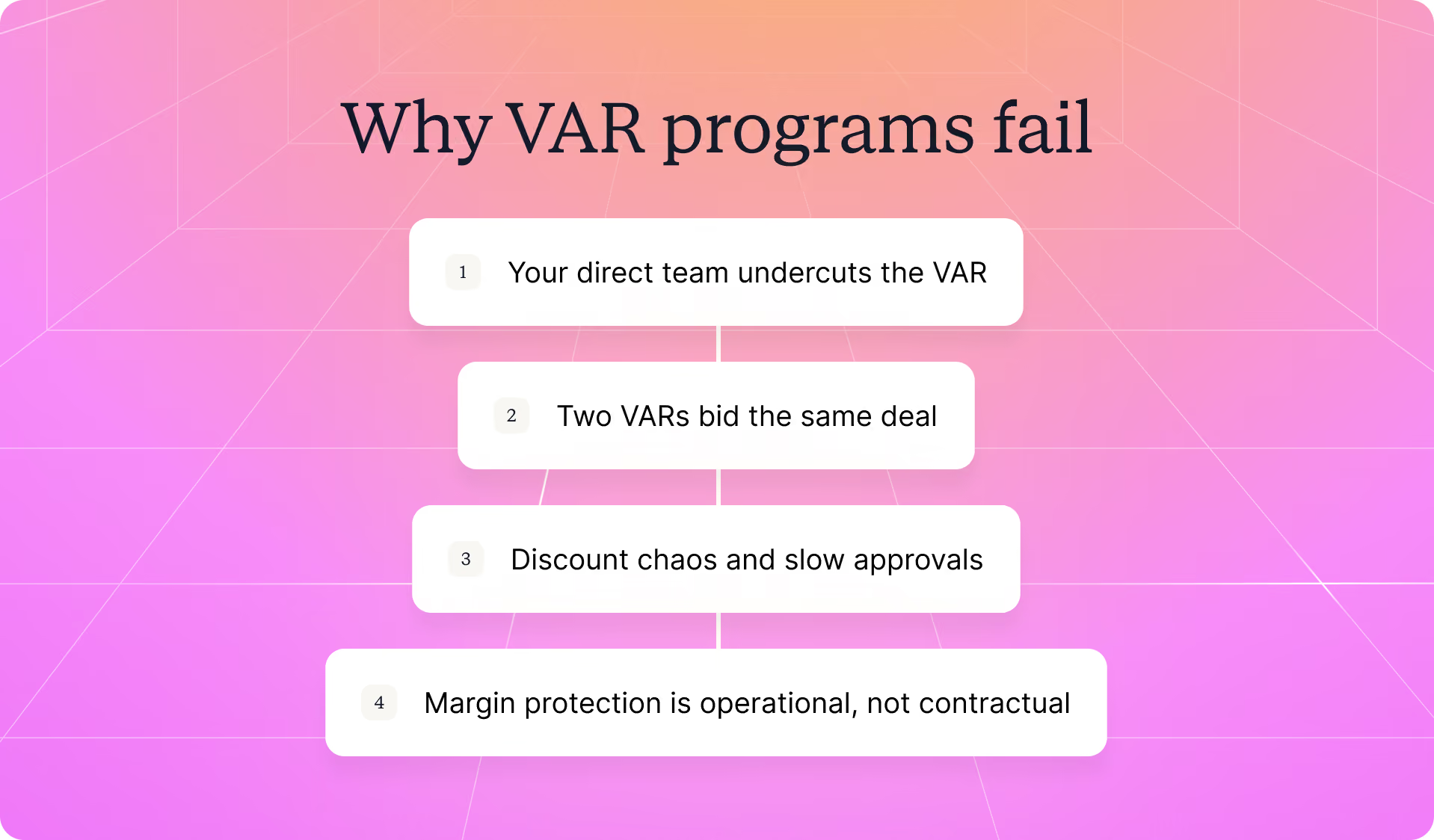
Your direct team undercuts the VAR
The most damaging pattern. A VAR works an opportunity for weeks, then your direct sales team appears on the same account with a lower price, because nothing in your system flagged the account as claimed. The VAR loses the deal and the trust. This is a common trigger for channel conflict.
Two VARs bid the same deal
Two of your VARs find the same opportunity and compete for it. Price is the only lever either has left. Both margins collapse, and the customer learns your pricing is negotiable.
Discount chaos and slow approvals
If VARs email for pricing approval on every deal, business processes slow down, and discounting becomes political rather than governed by tier. A VAR who can't forecast their margin can't confidently invest their sales team's time.
Margin protection is operational, not contractual
Every VAR agreement promises margin protection in writing. What determines whether it's real is whether your systems enforce it:
- Is a registered deal visible to your direct team in the CRM?
- Is conflict detected at submission, not three weeks later?
- Does approval lock in the VAR's price?
- Is pricing governed automatically by tier, not negotiated per customer requirements?
A strategic approach to margin protection has to be built into the existing product's systems, not left to a clause in a contract.
How to build a VAR program (for vendors)
A well-built VAR program can boost sales without forcing vendors to grow their sales team headcount. Here's how to build one, step by step.
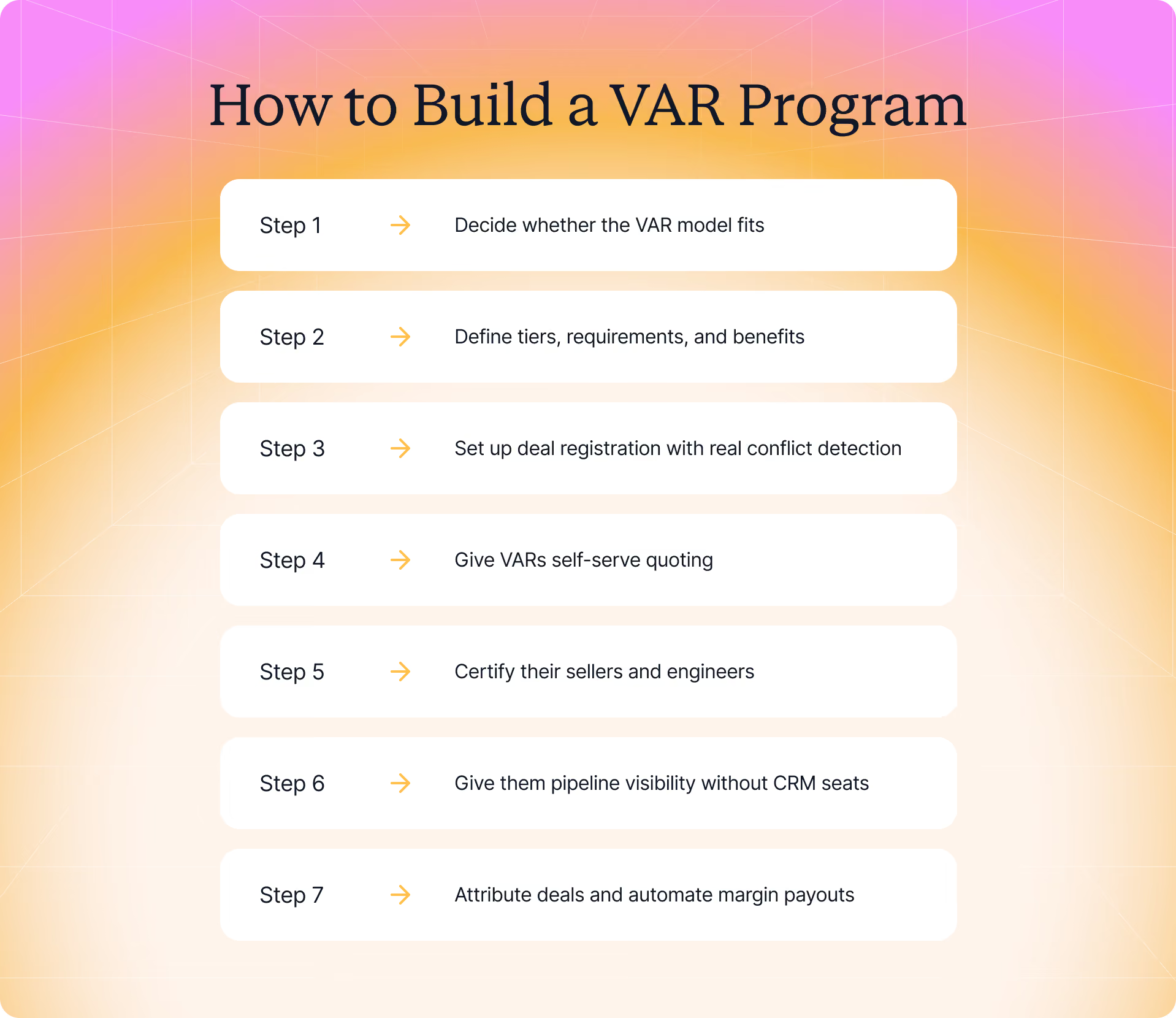
Step 1: Decide whether the VAR model fits
VARs make sense when your product needs implementation, integration, or ongoing service. Fully self-serve products usually fit a referral model better, so it's worth comparing the full range of partner type options before committing to a VAR-first strategy.
Step 2: Define tiers, requirements, and benefits
Gold/silver/bronze style tiers work well, each with clear requirements (certifications, revenue, registered deals) and clear benefits in return (discount level, MDF, lead sharing, support SLAs).
Higher tiers often come with a dedicated account manager on the vendor side too. This is where partner management earns its keep, letting pricing and access scope automatically instead of being negotiated deal by deal.
Step 3: Set up deal registration with real conflict detection
This is the single most important system in a VAR program. It has to run in real time, automatically, with approval that genuinely locks the registered VAR's position. Real deal and lead registration is what makes the margin protection promised in Step 2 actually enforceable.
Step 4: Give VARs self-serve quoting
Once pricing is tier-governed, it should follow the VAR into their quotes automatically, so the number is correct by construction and no one waits on an approval email. That's precisely what tier-aware CPQ is built for.
Step 5: Certify their sellers and engineers
A VAR's AEs and SEs aren't your employees, so quality has to come from certification rather than assumption. Running that certification through a partner LMS ties it directly to pricing tier and selling rights, so it scales as the network grows instead of relying on a vendor's own informal badge system.
Step 6: Give them pipeline visibility without CRM seats
VARs need to work their deals, editing only the fields you allow, without needing a full CRM license and without your team manually managing that access. A shared partner portal handles both, syncing every change back to your CRM automatically.
Step 7: Attribute deals and automate margin payouts
Every VAR-owned deal needs to be attributed in the CRM so accounting reconciles against the same source of truth as direct sales. That's where solid partner attribution meets automated commissions and SPIFF payouts, so the VAR trusts the numbers without chasing anyone down each quarter.
Get these seven steps right, and the program runs itself. Here's what it looks like from the other side of the table.
How to become a value-added reseller (for partners)
Running a VAR business starts long before the first deal closes.
Work through this checklist before you sign anything:
☐ Pick a product and vertical where your expertise is real. Customers must actually need your help, or the added value isn't real.
☐ Understand the economics up front. Discount by tier, buy-sell vs. agency model, how deal registration and margin protection work, and what service opportunities the product creates.
☐ Check margin protection in practice, not just contract language. Can the vendor's direct team see registered deals? How fast is registration approved? How is conflict resolved?
☐ Build real delivery capability. Pre-sales, implementation, and support are what separate a VAR from a traditional reseller, and they're a genuine hiring commitment.
☐ Get certified early. Certification usually gates your tier, pricing, and selling rights, and keeps your team up to date on new releases.
☐ Plan for working capital if it's a buy-sell model. You may need to pay the vendor before the customer pays you.
So, do value-added resellers make money? Yes, from two streams: product margin and their services revenue. Services is often the more profitable, more defensible of the two.
A VAR that builds real industry knowledge in a vertical earns repeat business and stronger customer relationships. It typically wins new customers a regular reseller never gets close to.
And now, customers see a partner solving their specific challenges, not just a checkout page.
This works in theory, but what does it actually look like when a VAR sits down and starts working?
A day in the life of a VAR (what good looks like)
Here's what all seven steps look like once they're actually running, on an ordinary Tuesday.
When everything goes right, you should see the reseller sell faster, margin stay protected, and the vendor's pipeline stay clean. Less admin on both sides, a better customer experience, and higher satisfaction all around.
How Introw powers VAR and reseller partnerships
Every problem in this guide comes down to trust. Does the VAR trust their deal is safe? Does the vendor trust the numbers are accurate?
Introw answers both with systems, not promises.
The moment a deal gets registered
When an account gets claimed twice, a form doesn't sync, or someone has to manually cross-check a spreadsheet is where things usually break.
Deal and lead registration with real-time conflict detection closes that gap the second a deal is submitted.
“Introw has been a breath of fresh air. It doesn't require hours of training videos or extensive onboarding.” - Joe Wilkinson, Channel Director at SafeBreach
The moment a VAR needs a price
A VAR waiting days on a discount approval loses momentum on a deal they've already invested in. CPQ applies tier-governed pricing automatically, so the quote is correct the first time.
The day-to-day of running a deal
VARs shouldn't need a full CRM seat to update a field or check status. The partner portal scopes access to exactly what's allowed, syncing every change back to HubSpot or Salesforce automatically.
The moment a network outgrows spreadsheets
As a VAR network grows, tiers keep pricing and access scoped automatically instead of negotiated deal by deal, and certification keeps new AEs and SEs selling accurately from day one.
Commission season
If a reseller can't see how their payout was calculated, they stop trusting the rest of the program too. Attribution and commission payouts tie back to the same CRM records both sides already trust.
“Introw is really a big innovator. Having one partner platform that can push everything into HubSpot and mirror it in real time.” - Rick Hakkaart, BDM at Quatt
None of this needs a separate system.
Deep Salesforce integration keeps every registered deal, sale, and commission tied to the CRM your revenue team already runs on.
If margin protection for your VAR channel is still living in spreadsheets and good intentions, book a demo, and we'll show you what it looks like running on autopilot instead.
Still curious? Here are some quick answers to help clear things up
A plain reseller moves the product with little or no modification. A value-added reseller wraps it in services the customer can't easily get elsewhere and charges accordingly.
Who they sell to. A distributor sells to resellers and VARs, not end customers. A VAR sells directly to the end user and owns that relationship.
A VAR sells under the vendor's brand alongside their own. A white-label partner removes the vendor's brand entirely and sells the product as its own.
Buy-sell: the VAR purchases at a discount, resells at or near list, keeps the difference, owns the contract. Agency: The vendor invoices the customer directly and pays the VAR a commission or revenue share.
What protects VAR margin is systems, not just contracts. Real-time deal registration with automatic conflict detection, approval gates that lock in a VAR's position, and tier-governed pricing.






Are you already an active Introw partner?
Book a demo with one of our partner program experts, or explore Introw on your own time.