

.svg)


.svg)
.svg)







Blog

SPIFF Programs: What They Are, How to Design Them, and Examples That Drive Partner Sales
A well-designed SPIFF program can turn a slow quarter, product launch, or stalled partner pipeline into a surge of sales activity. Used well, SPIFFs can change behavior fast. Used poorly, they can create expensive distractions. If you’ve heard the term before but never really knew what it meant, you’re not alone.
What is a SPIFF program?
A SPIFF program is a short-term sales incentive used to reward a specific action. SPIFF stands for sales performance incentive fund, though you may also see it written as “spiff” or “spiv.”
The SPIFF program's meaning is simple: you offer an extra reward when someone does the thing you want more of.
.png)
That could mean a direct cash bonus for closing deals above a set value, selling a new product, registering qualified leads, or reaching specific sales targets during a promotion period.
Unlike standard sales commissions, a sales SPIFF is temporary and focused. Commission usually runs in the background as part of your long-term compensation plans. A SPIFF is used when you want immediate motivation around one goal.
A well-structured SPIFF program usually has five traits:
- Short-term: It runs for a month, a quarter, or a campaign window.
- Targeted: It focuses on one product, region, deal size, or behavior.
- Simple: The program rules are easy to understand.
- Stackable: It can run alongside regular commission.
- Trackable: Every qualifying sale is tied to clear eligibility criteria.
.png)
SPIFFs can motivate sales teams, individual salesperson performance, and external channel partners. This guide focuses on partner SPIFFs because they’re harder to manage. Your channel partners don’t live in your CRM, and they can’t always see what they’ve earned.
That’s why a strong channel partner incentive program needs more than a good reward. It also requires clear tracking, fast communication, and a simple way for partners to see progress.
If your goal is to improve partner sales, a SPIFF can help. But only when the reward, rules, and payout process are easy to trust.
Why companies run SPIFF programs
The best SPIFF programs don’t just offer extra money. They encourage specific sales behaviors when they matter most.
Here’s why they work.
.png)
#1 Urgency creates action
Most sales commissions become part of the background. Sales reps and channel partners expect them, so they rarely change behavior on their own.
A short-term incentive creates a reason to act now.
For example, a channel SPIFF program might offer:
- $500 for every new logo deal closed this quarter
- A bonus for selling a newly launched product
- Extra rewards for deals above a specific value
The deadline matters as much as the reward. When partners know the opportunity disappears after a promotion period, they’re more likely to prioritize that deal over competing opportunities.
This is why SPIFFs are often used during product launches, pipeline pushes, and other strategic initiatives where timing matters. Teams running incentives alongside their existing HubSpot integration can track participation and revenue generated without creating separate workflows.
#2 Clarity drives participation
A successful SPIFF program should be easy to explain.
If partners need a spreadsheet and three meetings to understand the reward, participation drops. If the rules fit in one sentence, participation rises.
For example:
“Close a new logo deal above $10,000 this quarter and earn $500.”
That’s clear. Partners know the sales goals, the reward, and the eligibility criteria immediately.
The most effective SPIFF program ideas focus on simplicity. Partners should spend time selling, not interpreting program rules.
#3 Visibility keeps partners engaged
A sales SPIFF only works when people can see it.
Many sales SPIFF programs fail because the incentive is announced once and then forgotten. The reward lives in an email or PDF while partners focus on daily sales activity.
Visibility creates immediate motivation.
For example, when incentives appear directly inside a partner portal, partners can see pending and confirmed SPIFF rewards alongside active deals. Seeing the reward attached to a live opportunity keeps the incentive top of mind.
This is especially important for channel partners who may be managing opportunities across multiple sales channels at the same time.
#4 Low friction means more claims
Even strong cash SPIFFs lose impact when the payout process is complicated.
If partners have to chase approvals, fill out forms, or wait months for reward distribution, participation drops. Friction creates doubt, and doubt reduces engagement.
The best incentive program experiences make claiming rewards almost automatic.
With tools such as deal and lead registration, partner activity can be tracked from the original opportunity through payout. Add automation, notifications, and approval workflows, and salespeople spend less time on admin and more time closing deals.
When earning a reward feels easy, more partners participate. When rewards are visible, simple, and easy to claim, SPIFFs consistently boost sales and increase sales activity.
How to design a SPIFF program that actually changes behavior
A successful SPIFF program starts with a clear goal. The reward matters, but the behavior matters more.
.png)
Step 1: Define the behavior you want to change
Start with the outcome, not the incentive.
Ask yourself:
- Do you want more deals registered?
- Do you want to shorten the sales cycle?
- Do you want bigger deals?
- Do you want more certified partners?
- Do you want to increase sales in a specific market?
Pick one.
The best sales incentive programs focus on a single objective. If you try to change too many sales behaviors at once, partners won’t know what matters most.
Step 2: Set clear, simple rules
Partners should understand the SPIFF in seconds.
Every SPIFF program should answer four questions:
- What triggers the bonus?
- How much is the reward?
- Who is eligible?
- When does it expire?
For example:
“Register and close a new logo deal above $10,000 before September 30 and earn a $500 bonus.”
Simple rules lead to more participation. Complex rules lead to salespeople guessing.
Step 3: Make the incentive meaningful
A bigger reward isn’t always a better reward.
The goal is to offer meaningful rewards that justify the extra effort. For many SaaS programs, cash bonuses between $250 and $1,000 are enough to change behavior. Enterprise-focused SPIFF campaigns may require larger payouts.
You can also experiment with:
- Cash SPIFFs
- Non-cash rewards
- Non-cash SPIFFs
- Tech gadgets
- Prepaid debit cards
The best reward is the one that motivates channel partners to take action.
Step 4: Use CRM-based conditions
Manual tracking breaks quickly.
The most effective SPIFF programs use CRM data as the source of truth.
For example:
- Deal stage = Closed Won
- Deal value > $10,000
- Close date falls within Q3
When all conditions are met, the reward is triggered automatically.
In Introw, SPIFFs are configured using CRM filters, so qualifying deals are identified automatically based on your existing CRM data.
Here's an example of Introw’s commission plan builder showing CRM-based SPIFF conditions and a live preview of qualifying deals:
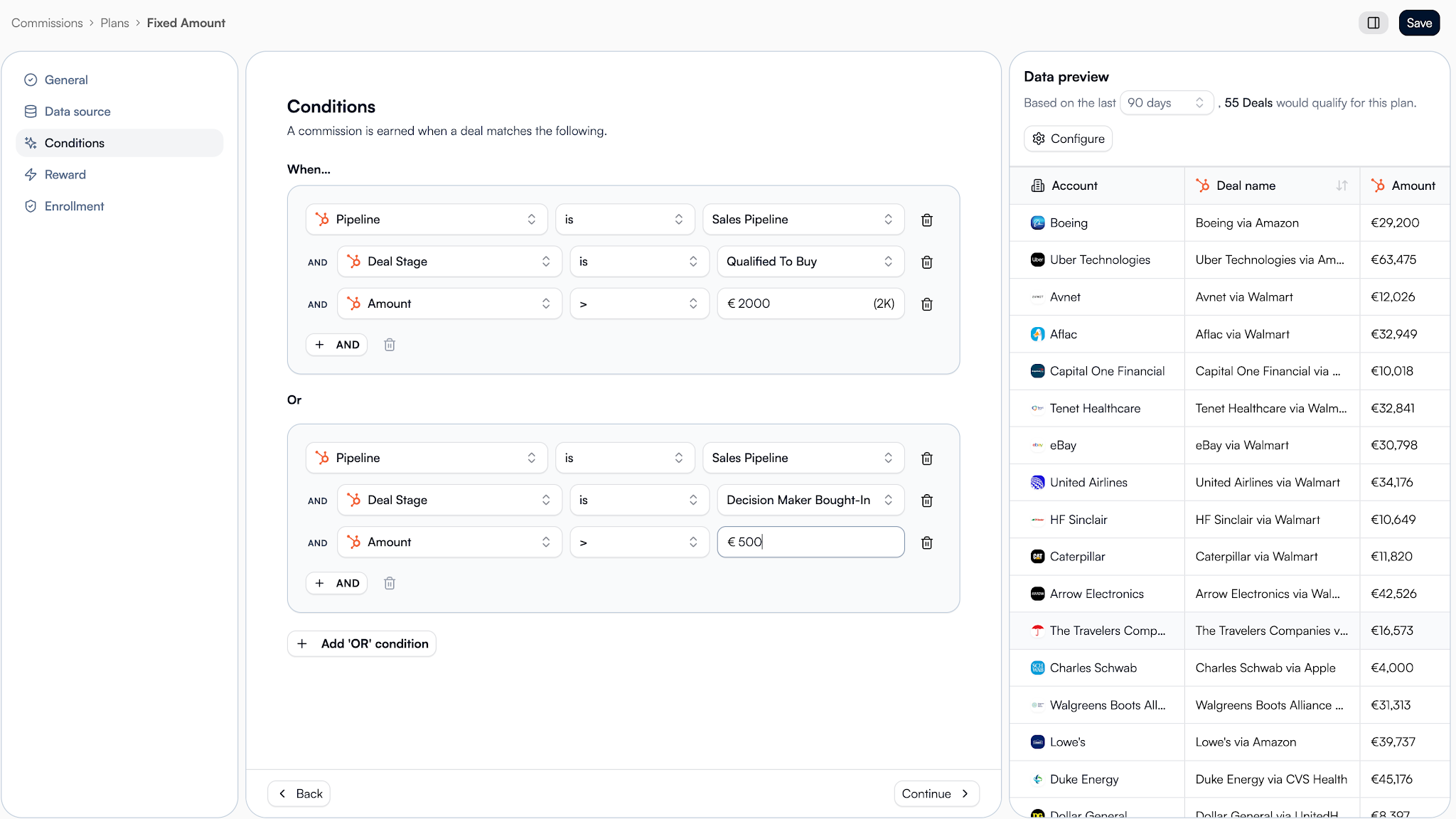
Good SPIFF program management starts with reliable data.
Step 5: Make the reward visible
Partners shouldn’t have to remember a SPIFF.
They should see it where they already work.
For example, Introw displays expected earnings directly on deal cards and inside the partner experience. Partners can see whether rewards are pending or confirmed without digging through old emails.
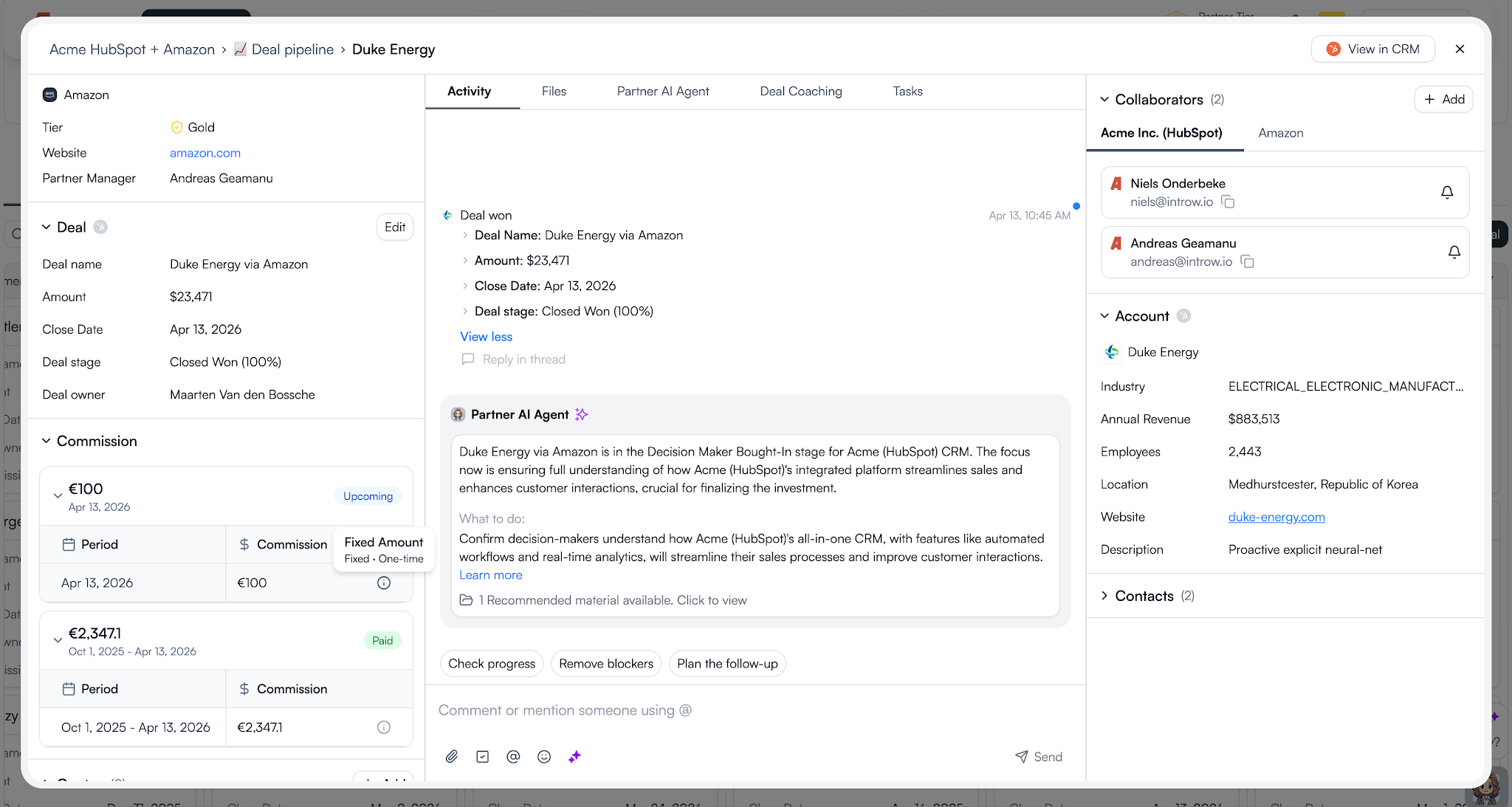
Visibility keeps sales teams driven and helps motivate channel partners throughout the entire campaign.
Step 6: Automate the payout process
A reward loses power when the payout process becomes a project.
A simple flow looks like this:
- The deal closes.
- The SPIFF calculates automatically.
- Eligible rewards are added to a statement.
- The partner uploads an invoice.
- Finance approves the payment.
- The reward is marked as paid.
Introw’s AI Agent can also help surface information and reduce admin work, making it easier to manage larger incentive programs without creating extra overhead.
The easier the process, the more likely partners are to participate.
Here's what this all looks like in action:
Step 7: Review and improve
Every SPIFF should teach you something.
After the campaign ends, review:
- How many partners earned the reward?
- How much sales revenue was generated?
- Which partner segments responded best?
- Did sales activity increase?
- Did you achieve the original sales goals?
Use those insights to improve future iterations.
The best partner programs don’t rely on one successful SPIFF. They run targeted incentives throughout the year as part of a broader incentive strategy.
A few well-designed SPIFFs will usually outperform one giant annual campaign.
The best way to see these principles in action is through real SPIFF program examples.
7 SPIFF program examples you can steal
Not every SPIFF needs to be complicated. Here are seven proven SPIFF program examples you can adapt for your partner program.
1. The activation accelerator
Use this SPIFF when you want new partners to take action quickly instead of waiting months to engage.
Rule: Earn $750 on your first closed-won deal as a new partner.
Trigger: First deal where deal stage = Closed Won.
Bonus: $750 flat fee.
Best for: New partners in their first 90 days.
Why it works: Early sales success builds confidence. Partners who close their first deal quickly are more likely to stay active and become a team motivated by results.
2. The Q3 pipeline push
This is one of the simplest sales SPIFF programs for accelerating pipeline movement before a deadline.
Rule: Earn $500 for every deal above $25,000 closed this quarter.
Trigger: Deal amount > $25K AND deal stage = Closed Won.
Bonus: $500 flat fee.
Best for: Active reseller partners.
Why it works: Short-term incentives and cash SPIFFs create urgency. Partners focus on closing deals before the deadline instead of letting opportunities sit in the pipeline.
3. The EMEA expansion bonus
Geographic incentives work well when you’re trying to grow partner activity in a specific market.
Rule: Earn an extra 5% on every DACH deal closed this quarter.
Trigger: Deal country = Germany, Austria, or Switzerland AND deal stage = Closed Won.
Bonus: 5% of deal value.
Best for: Reseller and referral partners expanding into new markets.
Why it works: Supports broader sales strategies without changing existing sales compensation plans. The bonus stacks on top of normal sales commissions.
4. The product launch SPIFF
When product launches need momentum, a targeted SPIFF can help direct attention where you want it.
Rule: Earn $300 for every deal that includes the new product.
Trigger: Deal contains the new product SKU AND deal stage = Closed Won.
Bonus: $300 flat fee.
Best for: New product launches.
Why it works: Partners sell what they’re rewarded to sell. This type of sales incentive helps boost sales of new offerings and improves product adoption.
5. The speed-to-close SPIFF
If deals are moving slowly through the pipeline, this type of SPIFF encourages faster action.
Rule: Earn $400 for any deal closed within 45 days of registration.
Trigger: Deal registration date to close date < 45 days.
Bonus: $400 flat fee.
Best for: Programs with a slow sales cycle.
Why it works: It encourages faster sales activity and helps prevent deals from becoming stale. The goal is to stop partners from letting opportunities delay closing deals.
6. The certification reward
Not every incentive program needs to be tied directly to revenue.
Rule: Earn $200 for completing an advanced certification.
Trigger: Certification completed with a passing score.
Bonus: $200 flat fee.
Best for: Individual salesperson development.
Why it works: Better-trained sales professionals often deliver stronger sales performance. It can also boost morale, improve job satisfaction, and increase long-term sales performance.
7. The stacked deal bonus
This example shows how SPIFFs and recurring commissions can work together.
Rule: Earn your standard commission plus a $1,000 bonus on deals above $100,000.
Trigger: Deal amount > $100K AND deal stage = Closed Won.
Bonus: $1,000 flat fee plus existing commission.
Best for: Gold and Platinum partners.
Why it works: SPIFFs don’t replace long-term compensation plans. They complement them. In Introw, partners can be enrolled in multiple plans at the same time, including recurring commissions, tiered SPIFFs, and one-time bonuses. Both rewards are calculated independently and rolled into the same statement.
Notice the pattern
Every example focuses on one behavior, one reward, and one clear trigger. That’s usually all you need to create a successful sales performance incentive fund that partners actually remember and act on.
So, what are things you should watch out for to make things go smoothly?
Common SPIFF mistakes to avoid
Even a good SPIFF program can fail if the execution is poor. Here are the most common mistakes to avoid.
.png)
Making the rules too complicated
If sales reps, channel partners, or an individual salesperson need a guide to understand the reward, participation drops.
Keep the program rules simple. A well structured SPIFF program should be easy to explain in one sentence.
Trying to reward too many behaviors
Some sales SPIFF programs try to influence multiple sales behaviors at once.
For example:
- Sell a new product
- Increase deal size
- Enter a new market
- Complete training
Pick one goal per campaign. The most effective SPIFF programs focus on a single outcome.
Offering rewards that don’t motivate action
A $25 reward on a six-month deal won’t motivate salespeople.
The reward should match the effort required. Whether you use cash SPIFFs, non cash rewards, prepaid debit cards, annual bonuses, or instant rewards, the incentive needs to feel worthwhile.
Making rewards hard to track
Partners should never wonder whether they’ve earned a reward.
Poor visibility hurts a program’s effectiveness and can damage team morale. Clear tracking helps motivate channel partners and supports healthy competition.
Ignoring payouts and compliance
Rewarding participants is only half the process.
You also need clear reward distribution, payment records, and tax compliance processes. This becomes even more important when managing channel partners across different regions.
Forgetting to measure results
After every SPIFF campaign, ask:
- Did sales targets improve?
- Was more sales activity generated?
- Did revenue increase?
- Did the SPIFF help move old inventory?
- Was the behavior change worth the cost?
The answers will help improve future SPIFF campaigns and strengthen your overall sales performance management approach.
Here is how partner teams run SPIFFs with Introw
Designing a SPIFF is only half the job. You also need a reliable way to track earnings, manage payouts, and keep channel partners informed.
Here’s what that looks like in Introw.
.png)
1. Create a SPIFF plan from CRM conditions
SPIFFs are created as commission plans using CRM data.
Set your date range, define the qualifying conditions, and choose the reward amount. Introw supports flat-fee and percentage-based rewards, and you can preview matching deals before the plan goes live.
2. Assign the plan to partners
Assign the SPIFF to individual partners or entire partner groups.
Partners can participate in multiple plans at the same time, including recurring commissions, certification rewards, and short-term incentive programs.
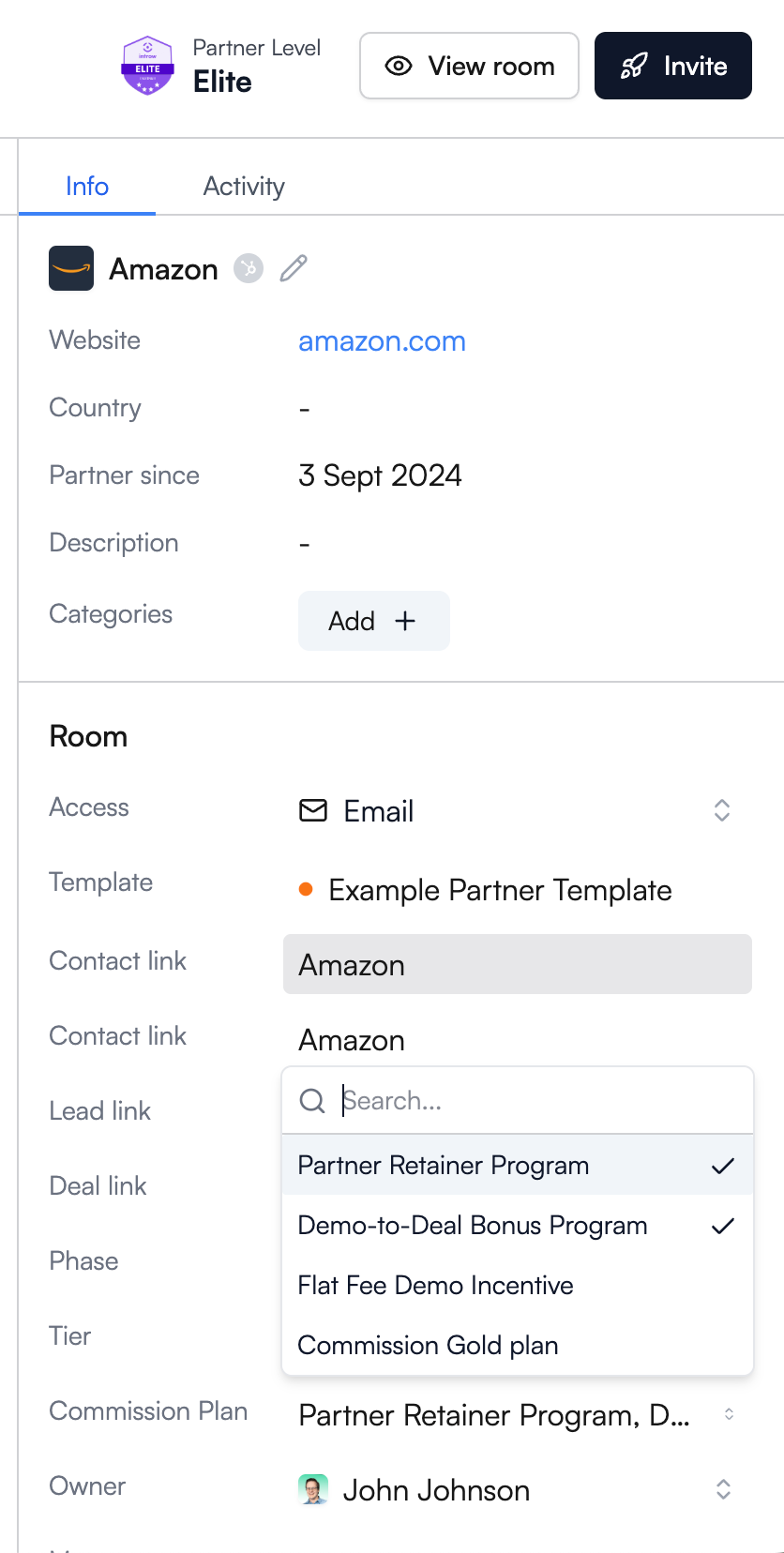
3. Partners see earnings in real time
Once the plan is active, partners can see expected earnings directly inside Introw.
Pending and confirmed rewards appear alongside deal information, helping partners stay focused on the opportunities that matter most.
4. Generate statements and collect invoices
When it’s time to pay, generate a statement with a few clicks.
Introw bundles eligible SPIFF rewards, sales commissions, and other payouts into a single statement. Partners can then upload invoices through the portal or simply reply to the notification email.
5. Approve payments and track everything
Every action is logged.
Partner managers and finance teams can review invoices, approve payments, and trace every reward back to the original CRM record. This creates a clear audit trail and simplifies reward distribution.
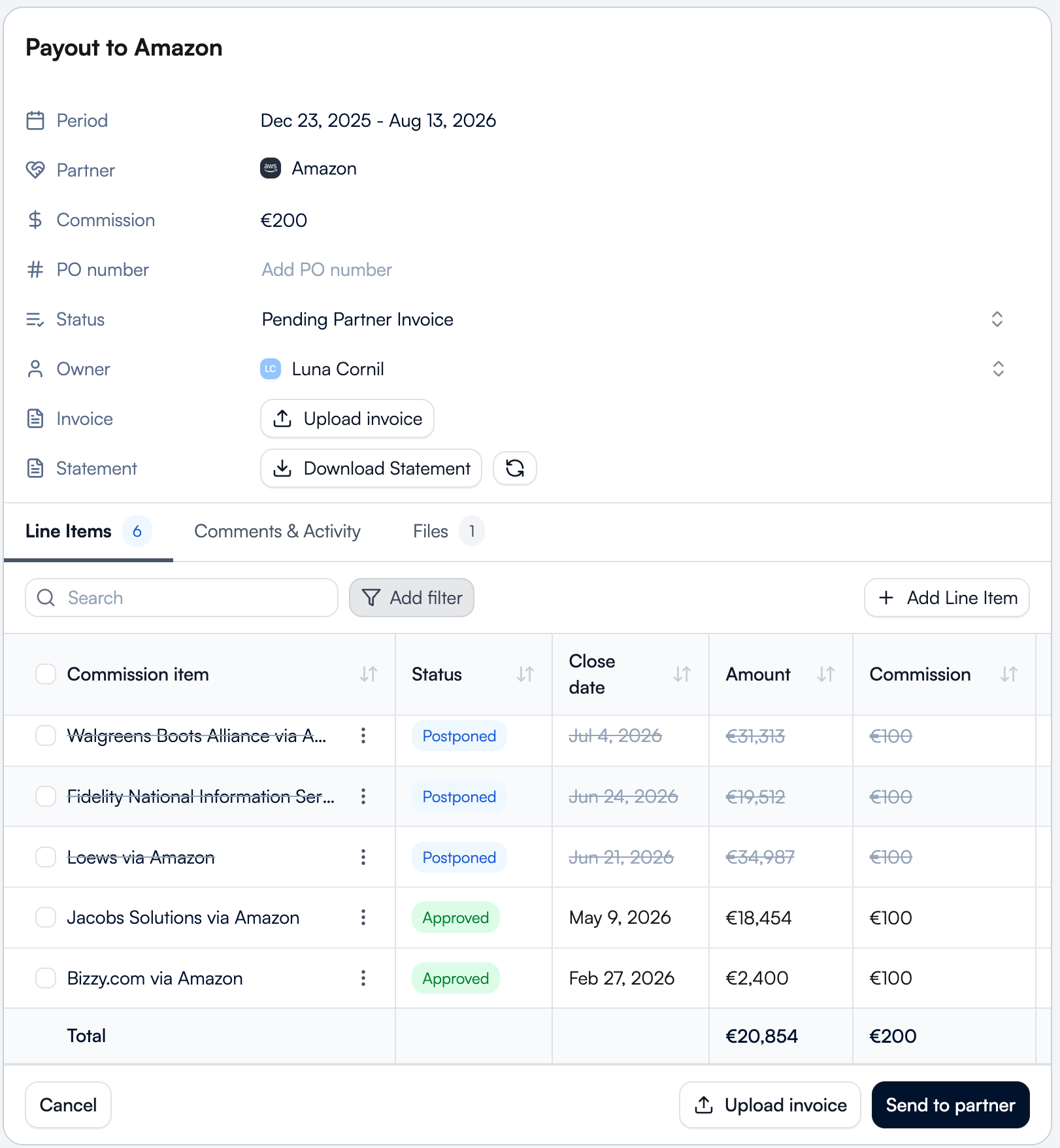
The commission overview ties it all together
The commission overview gives you one place to track SPIFF rewards, upcoming payments, and payout history.
Instead of managing spreadsheets, email chains, and separate systems, partner teams get a single source of truth for commissions, incentives, and partner earnings.
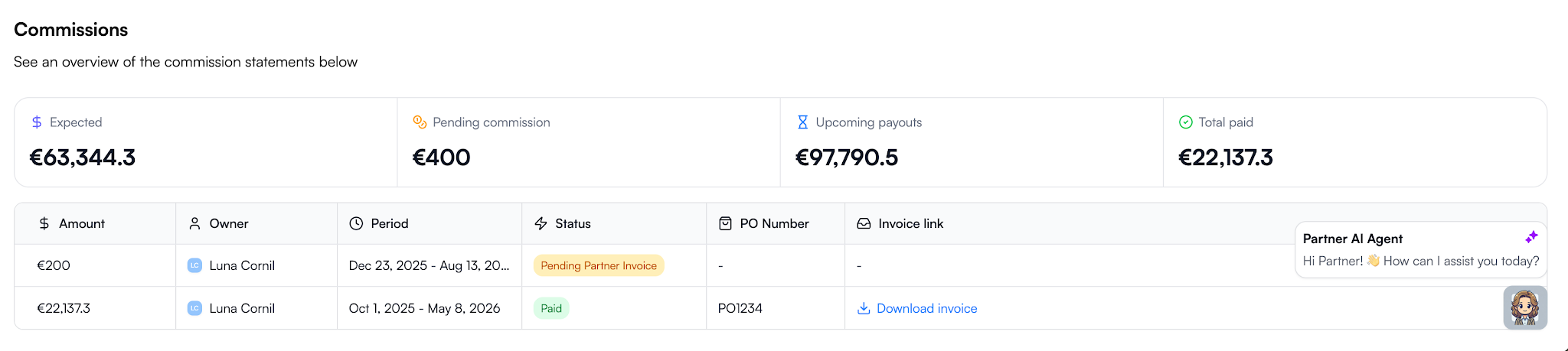
The result is a SPIFF program that’s visible to partners, tied directly to CRM data, and easy for finance teams to manage. Instead of tracking rewards across spreadsheets, email threads, and disconnected systems, everything lives in one workflow from deal registration to payout.
Ready to stop managing SPIFFs in spreadsheets? Request a demo and see how Introw automates partner incentives, commission tracking, invoicing, approvals, and payouts in one place.
15 MDF Best Practices for High-Impact Partner Programs
Why most MDF programs underperform
Most MDF programs don’t fail because the strategy is wrong. They fail because the operations around them are unclear, slow, or invisible to partners. Aligning early on expectations, ownership, and even the definition of MDF helps teams avoid the most common execution gaps.
The budget exists, but partners often don’t use it. In fact, roughly 60% of market development funds go unclaimed each year, not because partners aren’t interested, but because the process makes participation difficult.
.png)
Across many partner ecosystems, the same issues show up repeatedly:
- Channel partners don’t know funds are available
- The approval process takes too long
- Requests get lost in email or spreadsheets
- Marketing activities run without measurable outcomes
- Finance teams can’t track how marketing dollars were used
- Partner marketing teams can’t connect MDF investments to pipeline
Without structure, market development funds rarely support partner engagement or revenue growth. When MDF programs are tied to clear execution plans and measurable partner marketing campaigns, they become a predictable lever for demand generation instead of unused budget.
15 MDF best practices for SaaS partner programs
If you want market development funds to drive pipeline instead of sitting unused, you need a repeatable system. The following market development funds best practices are the framework strong SaaS teams use to make MDF programs predictable, measurable, and aligned with revenue.
.png)
1. Design your fund structure before you launch
Start with the question most teams skip: how should we allocate MDF in the first place?
Decide early whether MDF allocation is:
- Fixed per partner tier
- Performance-based
- Motion-based across reseller, referral, or integration channel partners
Also define:
- Eligible marketing activities
- Fiscal period (quarterly vs. annual)
- Whether unused MDF funds expire or roll over
Without this structure, approvals become inconsistent, and partners lose confidence in the program.
This is the foundation of strong MDF program management and best practices.
2. Make budget visibility self-service
Ask yourself this: can partners see their available budget without emailing you?
If not, adoption drops immediately.
Partners should always see:
- Total MDF allocation
- Pending requests
- Approved spend
- Remaining marketing budget
Real-time visibility improves partner engagement and increases participation in MDF campaigns faster than almost any other change you can make.
3. Build a standardized request form, not email
Inbox-driven requests slow everything down.
Instead, create a structured marketing development funds template partners complete before submitting requests. At minimum, capture:
- Campaign type
- Target audience
- Expected pipeline or qualified leads
- Timeline
- Budget requested
- Success metrics
When requests attach directly to CRM records, your MDF process becomes measurable from day one. Platforms designed for managing marketing development funds handle this automatically.
4. Set approval SLAs and default statuses
Partners don’t stop submitting requests because budgets are small. They stop because responses are slow.
Set a clear approval process, such as:
Submitted → Under review → Approved or declined
Then define an internal SLA, for example, five business days.
Predictability increases participation and improves demand generation activities across your partner ecosystem. It is one of the simplest MDF program best practices to implement.
5. Require a campaign brief, not just a budget ask
If a partner asks for marketing budget without a plan, pause.
Strong MDF programs require a short campaign brief that explains:
- What they want to run
- Who they want to reach
- What results they expect
- How the activity supports your strategic objectives
This improves strategic alignment and makes it easier to compare performance across MDF campaigns later.
6. Enable collaboration, not just approval
Approval is not execution.
After funding is approved, partners still need shared visibility into assets, timelines, and next steps. Otherwise, marketing initiatives disappear into email threads.
A structured collaboration environment improves partner marketing outcomes and keeps joint marketing initiatives visible across teams. It also strengthens ongoing partner engagement during campaign execution.
7. Link campaigns to deals and leads
Here’s the question leadership eventually asks: what did this spend actually generate?
If MDF campaigns are not connected to deals or sales leads, you cannot answer it.
Linking MDF-funded activities directly to pipeline turns market development funds into a measurable growth lever. It also helps channel managers understand which partners consistently generate qualified leads.
This is where many MDF programs break, and where the biggest gains usually happen. Make sure to use modern PRM that links all these activities directly in you CRM.
8. Track ROI automatically, not manually
If ROI lives in spreadsheets, you’re always reacting too late.
Modern MDF programs are being tracked directly in your CRM where you can connect spend directly to pipeline contribution so you can see which partners, campaigns, and marketing efforts drive revenue growth in real time.
That visibility helps you shift marketing investment toward activities that expand market reach and improve sales performance.
9. Gate future funds on proof of performance
A simple rule improves accountability quickly: show results before requesting more budget.
Ask partners to demonstrate:
- Campaign reach
- Lead generation
- Pipeline contribution
before approving additional MDF funds.
This ensures MDF investments support partners who execute and helps drive partner success across co-op programs and co-op funds.
10. Review and iterate quarterly
Treat MDF like a planning lever, not a reimbursement process.
Each quarter, review:
- Which partners used their allocation
- Which MDF campaigns generated pipeline
- Which marketing activities underperformed
These reviews strengthen your channel partner marketing strategy and make future MDF allocation easier to justify.
11. Segment MDF by partner motion, not just partner tier
Many teams allocate development funds by partner tier alone. That’s rarely enough.
Referral partners, resellers, and integration partners contribute differently to market development. Segmenting MDF allocation by motion improves market presence and ensures shared marketing resources support the right expected outcomes.
This is one of the most overlooked market development fund best practices.
12. Pre-approve high-performing campaign templates
Instead of reviewing every request from scratch, give partners a shortlist of proven campaign options.
Examples include:
- Co-branded campaigns
- Digital ads
- Local events
- Vertical webinars
Pre-approved templates reduce approval time and increase the likelihood of generating qualified leads.
They also help partners understand how to obtain marketing development funds faster because expectations are clear.
13. Tie MDF allocation to pipeline coverage targets
Not every region needs the same level of funding.
If pipeline coverage is weak in a segment or geography, allocate MDF funds there first. If another area already performs well, shift marketing investment elsewhere.
This ensures MDF allocation supports strategic priorities instead of spreading budget evenly across the partner program.
14. Combine MDF with incentive programs to change partner behavior
Funding alone doesn’t change behavior. Incentives do.
Pair MDF campaigns with structured channel partner incentive programs to encourage participation in demand generation campaigns and improve execution quality across channel partners.
This combination helps generate leads faster and strengthens overall partner performance.
15. Reserve budget for strategic initiatives, not reactive requests
Leave part of your development funds unallocated at the start of the quarter.
Use that reserve to support:
- New product launches
- Expansion into new regions
- Demand generation for priority segments
- Initiatives that increase brand visibility
This ensures MDF investments stay aligned with long-term strategic priorities instead of being consumed by opportunistic requests.
MDF request form template and checklist
A strong MDF request form does two things at once.
It makes approvals faster for your team, and it makes it easier for partners to submit campaigns that actually generate pipeline.
Without a structured request format, MDF campaigns become hard to evaluate, hard to compare, and almost impossible to attribute later.
A standardized marketing development funds template fixes that by ensuring every request captures the information needed to support demand generation, track sales performance metrics, and align spend with strategic objectives.
Use the template below as a default structure inside your partner program.
.png)
MDF request form checklist
Use this checklist to confirm your MDF process captures everything required for attribution and execution:
.png)
In a CRM-connected workflow, this structure also gives both you and your partners real-time visibility into MDF campaigns from request through execution and attribution, which is what makes modern MDF programs scalable.
Where Introw comes in
If you follow the framework above, your MDF program becomes structured. What most teams still struggle with is proving what that structure actually produces.
Introw closes that gap by connecting MDF requests directly to the partners, campaigns, and deals they are meant to influence inside your CRM. Instead of tracking approvals separately from pipeline, everything lives in one workflow.
That changes how MDF programs operate day to day:
- Partners submit structured requests without email back-and-forth
- Every request attaches automatically to the right partner and campaign
- Approvals follow a consistent approval process instead of ad-hoc routing
- Both you and your channel partners see available MDF funds in real time
- Marketing campaigns link directly to qualified leads and influenced deals
- ROI updates automatically as pipeline moves
This is what makes market development funds (MDF) measurable.
When a deal is generated or closed, you can see whether MDF supported it. When planning next quarter’s MDF allocation, you can see which partners generated pipeline and which marketing initiatives did not.
It also changes adoption. Because partners can see their allocation, submit requests quickly, and stay aligned on campaign execution, MDF funds get used instead of sitting unused across the partner ecosystem.
For a partner marketing manager managing Market Development Funds, that means fewer spreadsheets, clearer attribution, and better conversations with leadership about where marketing investment should go next.
If you want to see how structured MDF programs work when requests, approvals, campaigns, and pipeline all stay connected in one place, request a demo today.
Latest articles
Top 15 Impact Alternatives for Effective Partner Management in 2026
Impact is a partnership management platform designed primarily for affiliate, influencer, and performance marketing programs.
It can be a handy tool if your business relies heavily on affiliates and influencers to generate sales.
However, if your partner program is broader in scope – perhaps your strategy is more channel-focused, for example – you’ll benefit from a more comprehensive partner relationship management (PRM) platform.
Ready to kick your partner management up a gear this year? Read on for our 15 top Impact.com alternatives in 2026.
Why Consider an Impact Alternative in 2026?
An end-to-end performance marketing tool, Impact excels at affiliate and influencer programs because that’s what it’s designed for.
However, there are four major areas in which SaaS outstrips this online platform.
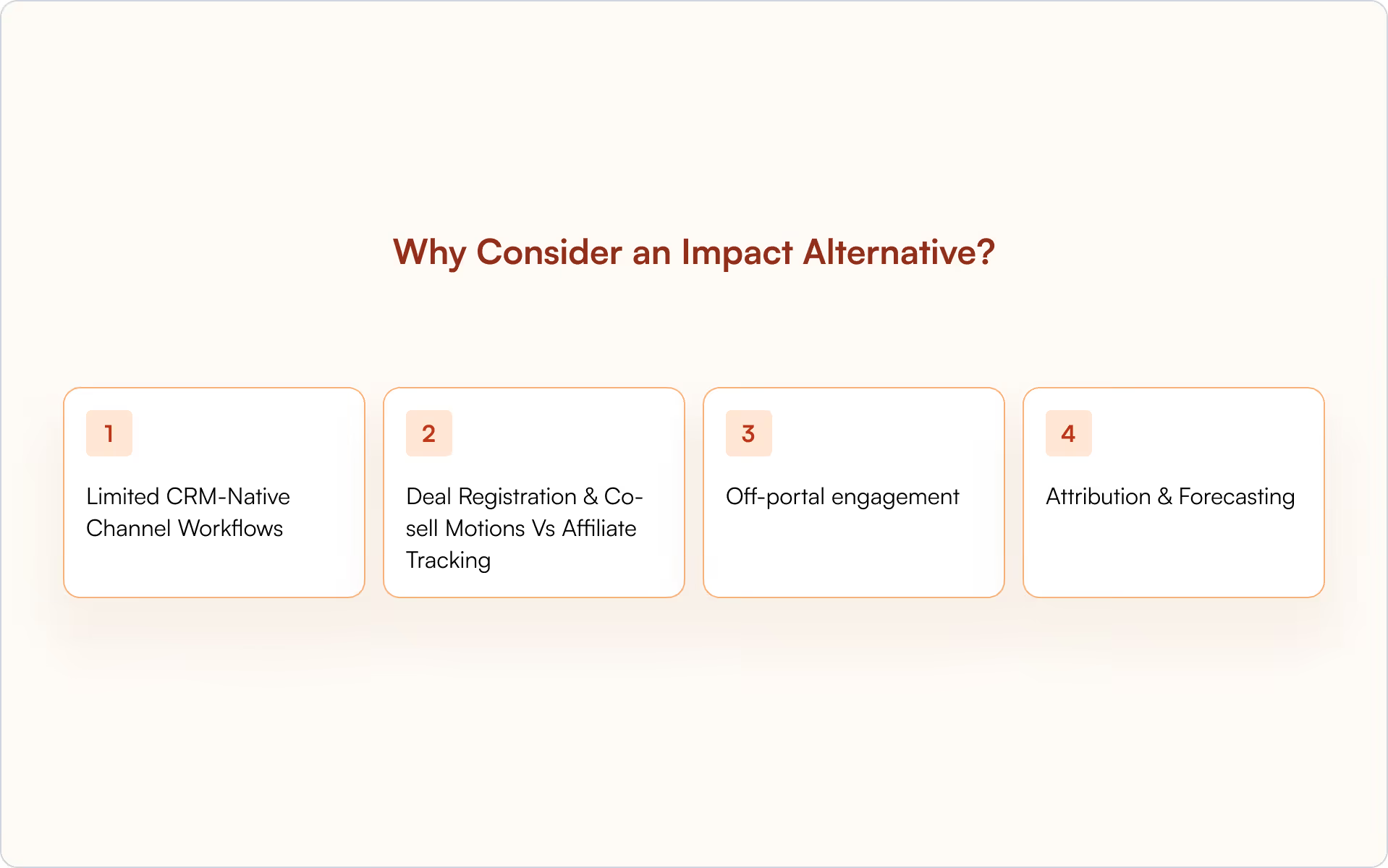
1. Limited CRM-Native Channel Workflows
Modern SaaS platforms like Introw work on top of your CRM, enabling seamless logging, tracking, and reporting directly inside Salesforce or HubSpot.
This deep embedding provides sales teams and all their partners with real-time visibility, eliminating the need to switch platforms.
However, Impact is browser and app-based, and requires teams and their partners to operate largely outside the CRM, which can create friction in channel workflows.
2. Deal Registration & Co-sell Motions Vs Affiliate Tracking
While Impact is certainly strong on affiliate tracking and commission management, it doesn’t fully support deal registration and co-sell motions.
Affiliate link tracking is primarily focused on click attribution, but SaaS functionality goes deeper, enabling joint selling motions, more meaningful collaboration, and improved pipeline visibility.
Indeed, try out a modern SaaS platform and you’ll generally find a structured deal registration pipeline, where partners can submit opportunities, collaborate with sales teams, and track progress through the funnel.
3. Off-portal engagement
Impact relies heavily on its portal for communication with partners.
In contrast, modern SaaS solutions meet partners where they already work – for example, email, Slack, or other collaboration tools.
What’s more, in 2026, this off-portal engagement is mostly automated, delivering updates surrounding deal stages, approvals, or payments into partners’ daily workflows.
And when it comes to saving time and boosting engagement, you can't beat automated outreach.
4. Attribution & Forecasting
Impact will track conversions and clicks, but SaaS platforms will typically offer more robust attribution and forecasting capabilities than this.
Indeed, SaaS tools directly tie partner activities to pipeline metrics, making it clear how each partner impacts revenue.
This makes strategic planning and forecasting much easier.
➡️ This is why, if your B2B partnerships include referral, reseller, or co-sell, it’s worth considering a CRM-first alternative to Impact. Learn more about Introw here, or read on for more information on shopping for the best alternative.
What to Look For in an Impact Alternative in 2026
Considering swapping Impact for a modern PRM?
Here’s what you should be looking for when it comes to choosing your next PRM.
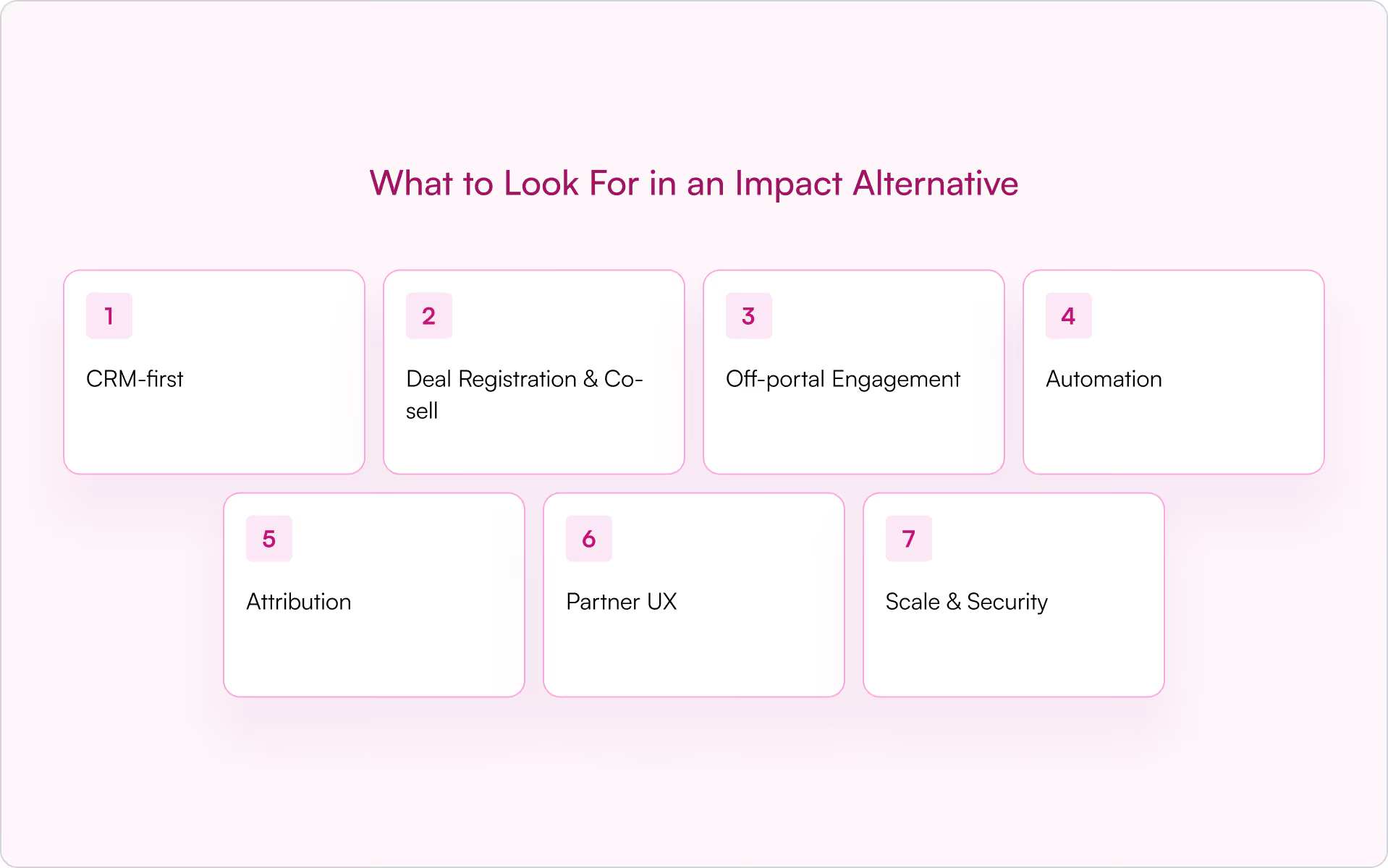
- CRM-first: Look for a PRM that integrates directly with your CRM, so partner records, fields, and reporting live natively in Salesforce or HubSpot.
- Deal Registration & Co-sell: Your new PRM should support seamless deal registration and co-selling by enabling a shared pipeline, mutual action plans, and conflict prevention.
- Off-portal Engagement: Forcing partners to log into a portal every time they need a quick update will put you on a fast track to disengagement. Instead, prioritize a PRM that delivers automated updates and alerts in channels they already use, such as email or Slack.
- Automation: Automation is a must-have in 2026. These tools help you launch and optimize campaigns, onboard partners, engage partners, send activity reminders and prepare for QBRs much more quickly, and with much less manual labour, than in the past.
- Attribution: Make sure your new platform provides clear attribution, from partner engagement through to pipeline and revenue impact.
- Partner UX: Your PRM must deliver a frictionless experience, making the user journey as easy as possible for your partners. Look out for features like a simple submission process, easy access to branded assets, and self-serve tools.
- Scale & Security: As your partnership program grows, you’ll need to be able to easily manage different partner tiers, regions, and types. Choose a PRM with strong security and role-based access controls.
The 15 Best Impact Alternatives for SaaS Partner Programs (2026)
If you’ve been using Impact, but are keen to see what other alternatives could offer you, you’re in the right place.
Here’s our pick of the 15 best Impact alternatives on the market in 2026.
1) Introw
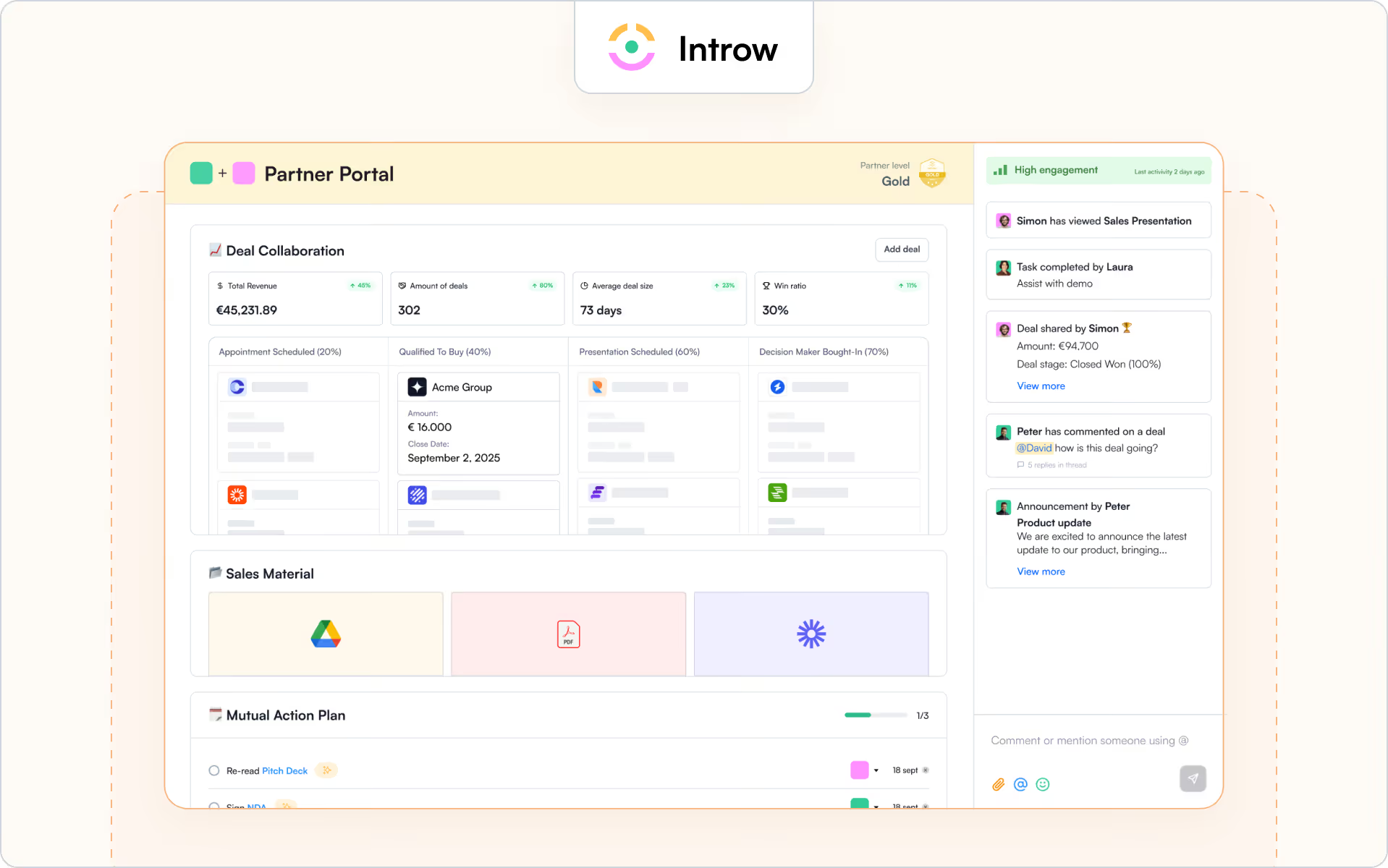
A CRM-first PRM designed for SaaS, Introw is perfect for teams that already use Salesforce or HubSpot, and are running referral, reseller, and/or co-sell programs at scale.
So, why should you choose Introw over Impact?
Introw is purpose-built for channel partnerships — with CRM-native, partner-first workflows that streamline co-selling and co-marketing across your ecosystem.
It embeds deal registration, co-sell updates, and engagement tracking directly inside your CRM, while off-portal updates via email and Slack keep partners engaged without forcing them to log into another tool.
Key capabilities:
- Campaign management features
- Partner engagement analytics (visits, content usage, opens/clicks)
- Outreach automation including automated deal updates
- White-labeled experiences
- Role-based dashboards
- Integrates with Salesforce, HubSpot, Slack
- Responsive customer support
🚀Ready to take your partner program to the next level? Request an Introw demo here.
2) PartnerStack

Looking to combine affiliate programs, referral marketing, and reseller partners while gaining marketplace reach?
Take a look at PartnerStack.
Unlike Impact, which is primarily affiliate-focused, PartnerStack is built with SaaS go-to-market strategies in mind and extends well beyond affiliate-only use cases.
Please note that PartnerStack is not CRM-native, so advanced co-sell programs may require additional tools.
Key capabilities:
- Partner marketplace
- Payouts
- Referrals/reseller workflows
💡Looking for some great PartnerStack alternatives? Here are some of the best.
3) Kiflo
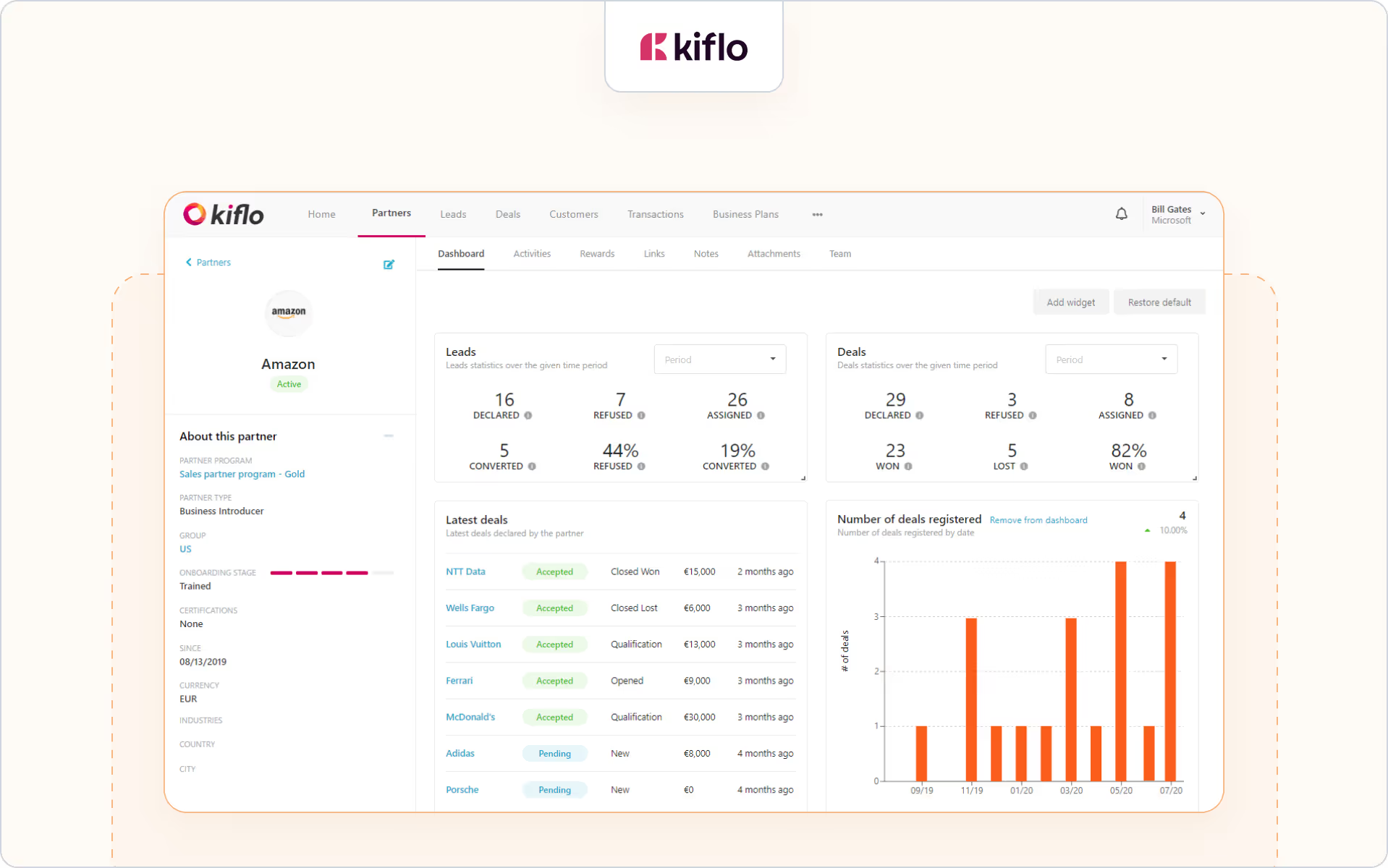
Kiflo is a PRM that works well for small to mid-market SaaS companies just starting their formal channel or partner programs.
This platform offers a lighter-weight PRM approach compared to Impact, making it easier for companies to launch and manage reseller or referral programs.
However, bear in mind that it has limited enterprise-grade analytics and deep CRM workflows, so it’s much better suited to smaller businesses looking for a simpler solution.
Key capabilities:
- Deal registration
- Incentives
- Enablement basics
➡️ You can see our top Kiflo alternatives here.
4) Channelscaler

Channelscaler offers a full PRM and partner automation stack for companies running channel or partner programs.
It’s perfect for companies looking for modular solutions, but if you’re planning to run a simple program, be careful you don’t end up implementing more modules than you actually need.
How does it compare to Impact? Channelscaler delivers a channel-centric platform with a wider scope, while Impact is an affiliate-first tool.
Key capabilities:
- Deal registration
- Incentive and rebate management
- Content & enablement
- Partner journey automation
- Performance tracking dashboards
5) Impartner
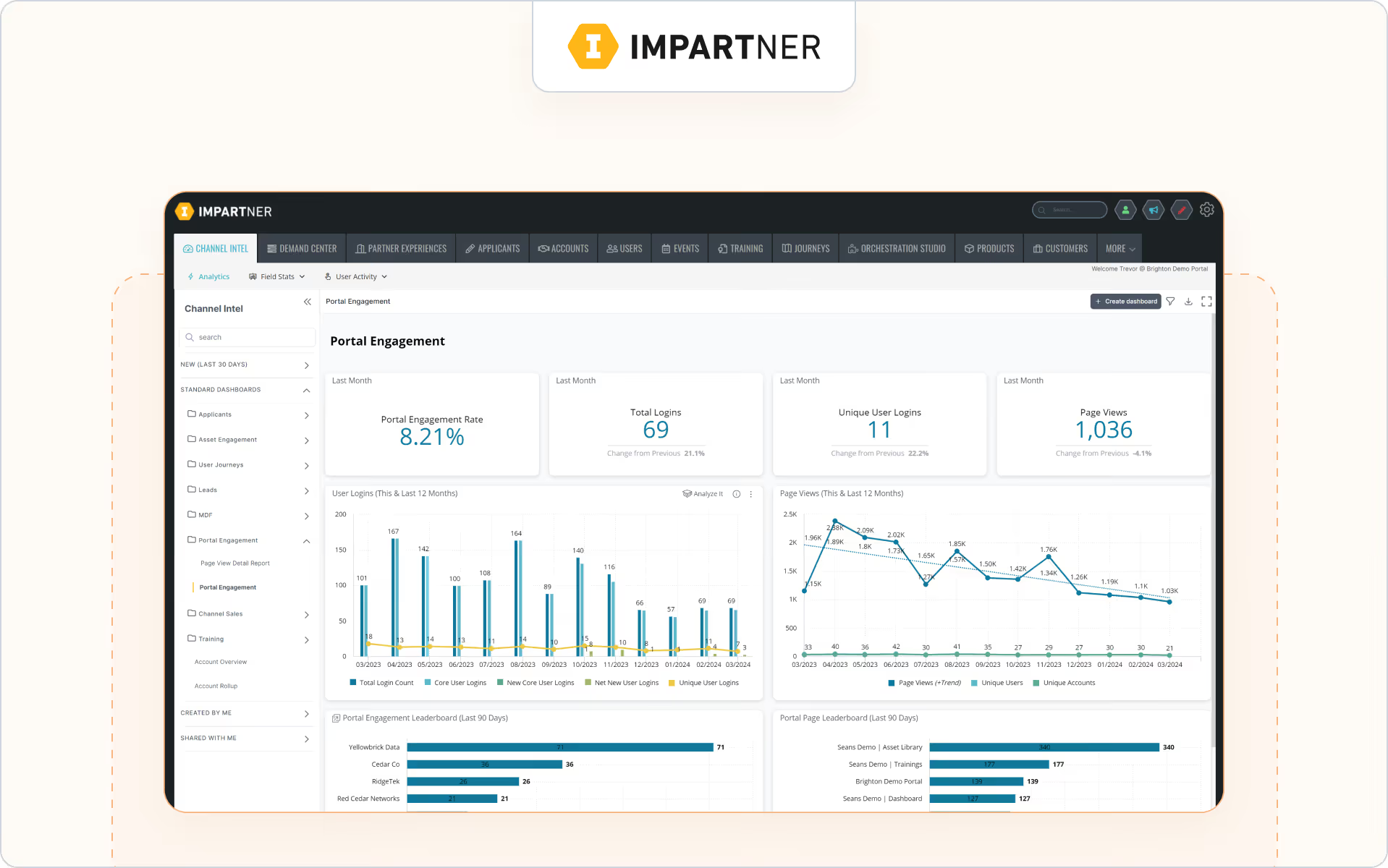
Partner marketing automation platform Impartner caters to enterprises with complex, global channel operations.
Consider this platform if you need a system robust enough to handle multiple regions, tiers, and partner types.
If you’re considering switching from Impact to Impartner, you’ll notice a huge difference: namely, that this solution provides a full-stack PRM built for deep governance and enterprise-grade scale, while Impact has a more narrow focus.
Of course, Impartner’s more complex system comes with a heavier implementation and administrative lift, so it’s vital to ensure your business has the resources to manage it effectively.
Key capabilities:
- Tiering
- MDF
- Workflows
- Robust analytics
6) Unifyr

Unifyr is an all-in-one, AI-enabled PRM and channel growth platform.
It is designed for organizations managing partner ecosystems and aiming to centralize and streamline their operations, particularly in dealing with maturing or enterprise-scale channel programs.
This SaaS platform offers a wider variety of features than Impact, which focuses on performance marketing.
However, this does mean there can be a learning curve and it can be a little heavy for smaller brands, with some advanced features more applicable to mid-size or large companies.
Key capabilities:
- Partner onboarding & activation
- Deal registration & lead management
- Supplier/multi-vendor support
- AI-enabled features
7) Magentrix
Magentrix is made for Salesforce-centric teams that need deeply integrated custom portals.
It’s a good match for teams that require close alignment between their CRM and the partner-facing portal, as well as powerful customization and scalability.
When compared to Impact, it’s worth noting that Magentrix offers deep Salesforce alignment, along with robust community and portal features that go beyond what the other platform provides.
However, since Magentrix is portal-first, it’s important to ensure that partner engagement does not rely solely on logging in.
Key capabilities:
- Resource library
- Case collaboration
- Portal UX
8) Channeltivity
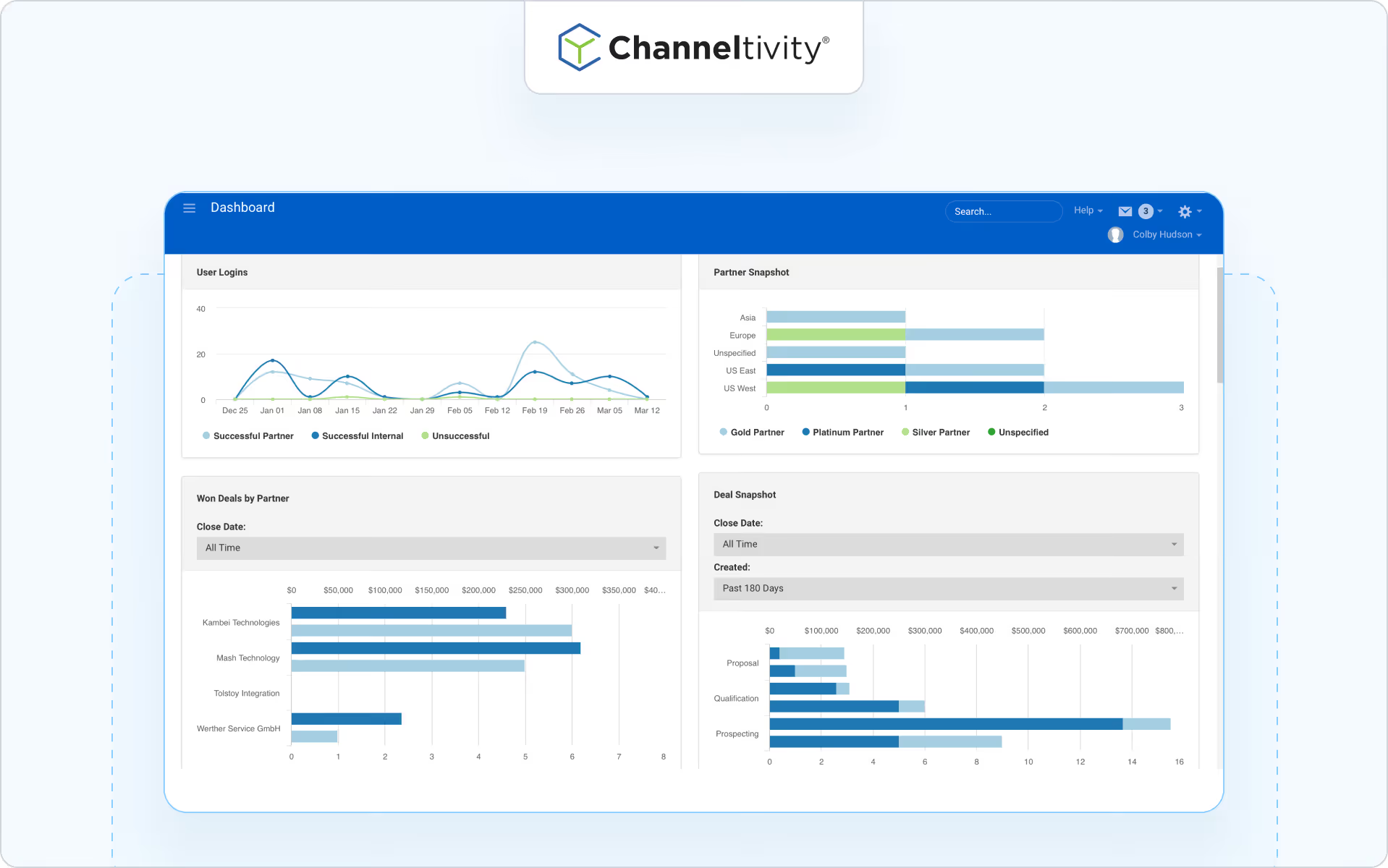
Channeltivity is designed for mid-market SaaS companies that need a comprehensive PRM to effectively manage and scale their channel programs.
This SaaS tool offers a solid foundation for channel operations, while Impact is more focused on affiliate programs.
For example, Channeltivity offers robust features, including deal registration, Market Development Fund management, and detailed reporting.
Just bear in mind that Channeltivity is primarily portal-centric, which could limit off-portal engagement.
Key capabilities:
- Partner onboarding
- Tiering
- Approvals
9) WorkSpan
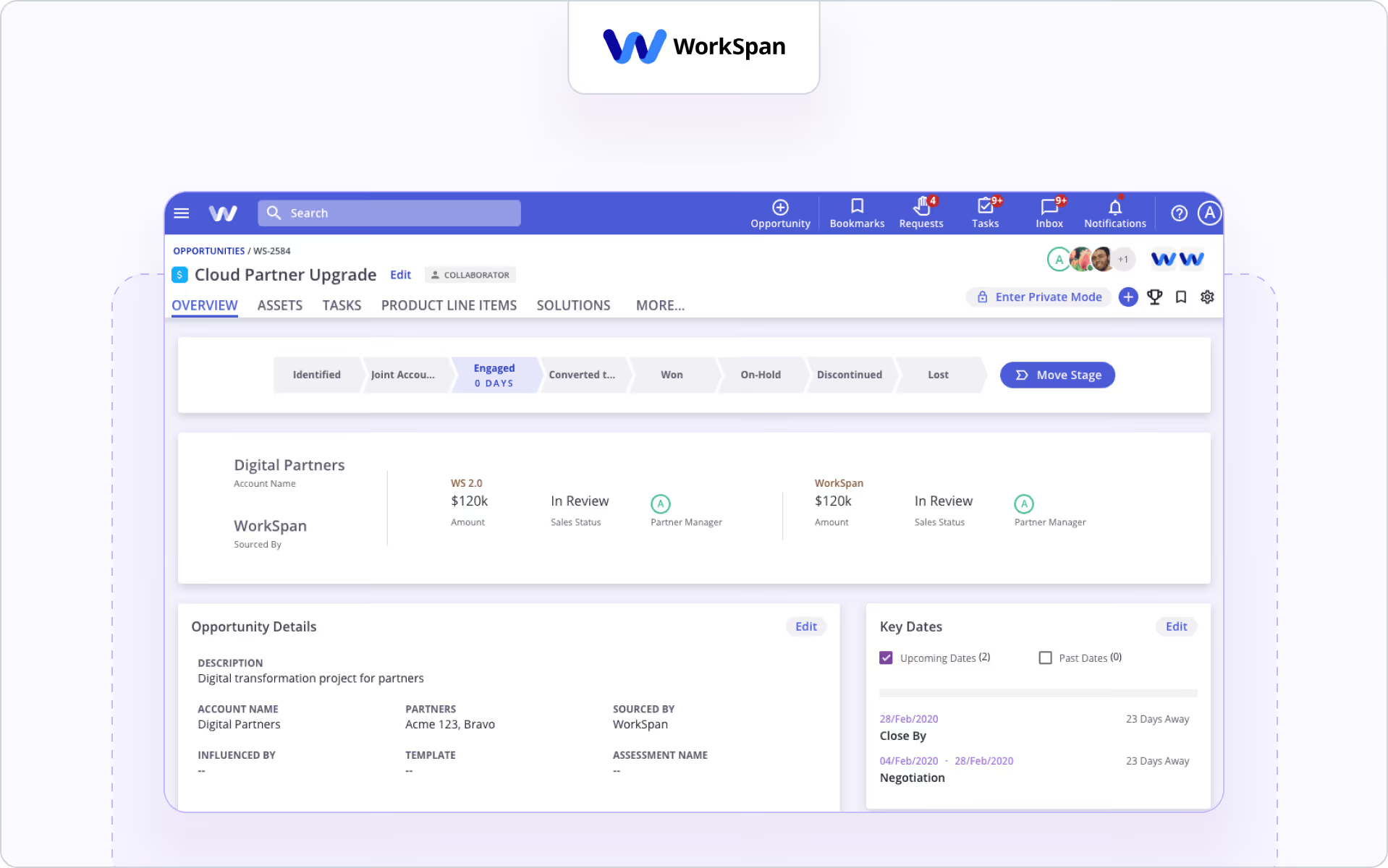
Are you tasked with managing alliance and co-sell ecosystems?
WorkSpan facilitates collaboration between multiple partners on shared opportunities and joint sales initiatives.
This solution stands out over Impact because it’s built to manage joint pipelines across partners, which helps partners to coordinate sales efforts more effectively than an affiliate-focused platform like Impact.
However, WorkSpan is not a full PRM – it’s typically used alongside a PRM or CRM to enhance partner management.
Key capabilities:
- Co-sell workflows
- Joint planning
- Pipeline tracking
10) Partnerize

This one has an enterprise focus.
Partnerize provides a single platform for diverse partner types, making it particularly useful for those who manage both affiliate programs and broader partnership initiatives.
This platform supports a much wider range of partner types than Impact and provides robust optimization tools.
However, Partnerize does have a strong e-commerce and affiliate focus.
This means that if you’re looking for a B2B partnership solution, it’s vital to consider whether this platform caters best to your specific requirements.
Key capabilities:
- Contracting
- Payouts
- Advanced analytics features
11) TUNE

TUNE is designed for performance and affiliate marketing teams – especially those focused on mobile and app-based campaigns.
Businesses might pick this platform over Impact because of its flexible tracking capabilities and developer-friendly tools, which offer plenty of customization for technical integrations.
It’s important to note that TUNE is not built for B2B channel or co-sell programs.
This means while the platform might be useful for affiliate-focused retail brands aiming for ecommerce sales, it may not meet the needs of organizations looking to manage complex partner ecosystems beyond performance marketing channels.
Key capabilities:
- Custom tracking
- APIs
- Mobile SDKs
12) Affise

Built with affiliate networks and performance marketing in mind, Affise helps teams to streamline their operations and manage multiple affiliate performance programs efficiently.
While there’s overlap between Affise and Impact, Affise offers a more streamlined approach to affiliate operations and automated affiliate payouts.
Please note that Affise offers limited support for channel co-sell workflows, so it may not be suitable for organizations looking to manage broader B2B partner ecosystems.
Key capabilities:
- Tracking
- Fraud tools
- Program management
13) Everflow
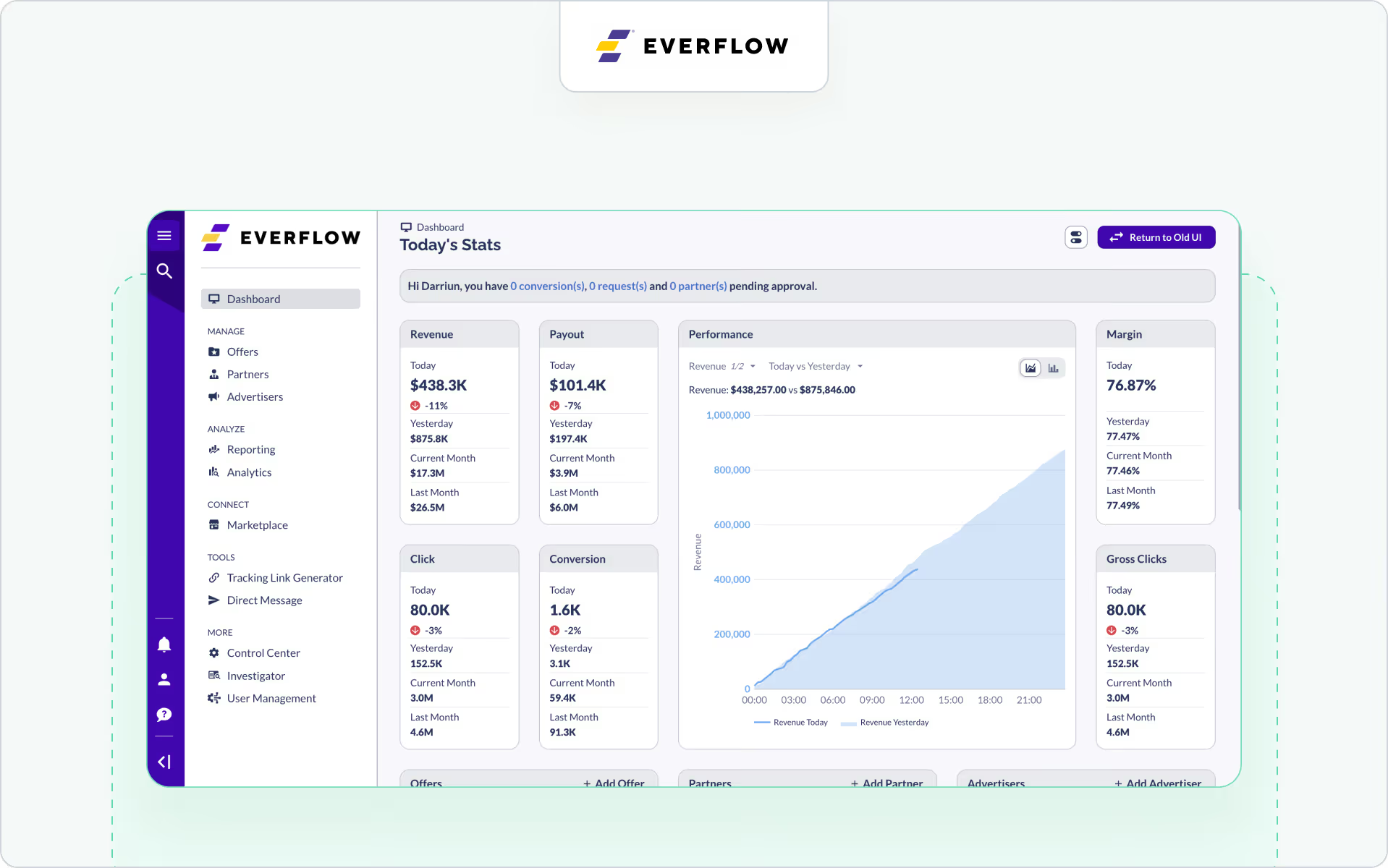
Everflow is designed for performance and affiliate programs, especially those that demand comprehensive analytics and reporting capabilities from their partner marketing platform.
Indeed, this tech offers an alternative tracking stack to Impact, with flexible reporting and detailed analytics.
Keep in mind that Everflow is primarily affiliate-focused and offers limited support for CRM-native channel operations.
So think carefully about whether it’s suitable for complex B2B co-sell programs.
Key capabilities:
- Partner tracking
- Fraud prevention
- APIs
👉Discover some top Everflow alternatives here.
14) Salesforce PRM

Already work on Salesforce? Opting for Salesforce PRM could make your team’s life a lot easier.
Salesforce PRM is designed for teams that want their partner management fully integrated within their CRM – and it’s a very different solution to Impact.
Indeed, Salesforce PRM offers native Salesforce records, reporting, and extensibility, making it a strong choice for organizations that need a deeply integrated solution rather than an external affiliate-focused platform.
It’s worth noting that the out-of-the-box user experience is pretty basic, so the success of Salesforce PRM often depends on internal resources and technical assistance.
Or, in other words, how well you’re able to customize and optimize the system for your partner programs.
Key features:
- Partner accounts
- Deal reg
- Workflows
15) HubSpot + PRM Add-Ons
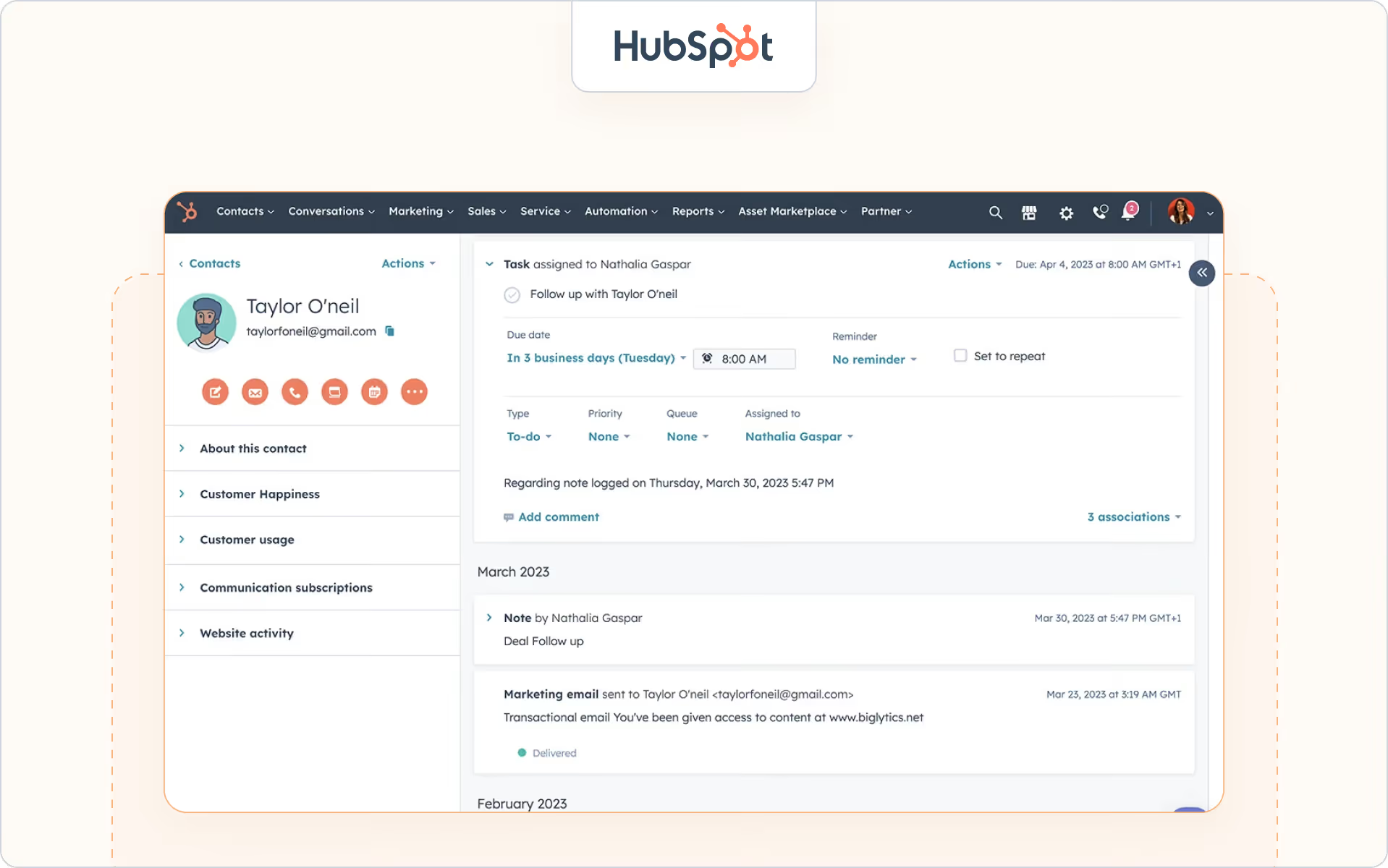
Looking for tailored solutions?
HubSpot-led go-to-market teams may decide to stick with their CRM and invest in some PRM add-ons.
By simply extending their CRM to manage partner programs, these teams can work with CRM-native performance data while selecting the partner extensions that best serve their purposes.
However, there are downsides to this approach.
Indeed, for organizations that need deeper PRM functionality, a dedicated PRM platform like Introw will be required.
HubSpot supports:
- Objects
- Workflows
- Partner tagging
- Reporting
Why SaaS Teams Pick Introw Over Impact
Introw is a very different solution to Impact, but if you’re looking for a PRM that supports SaaS partner management, it’s a powerful alternative.
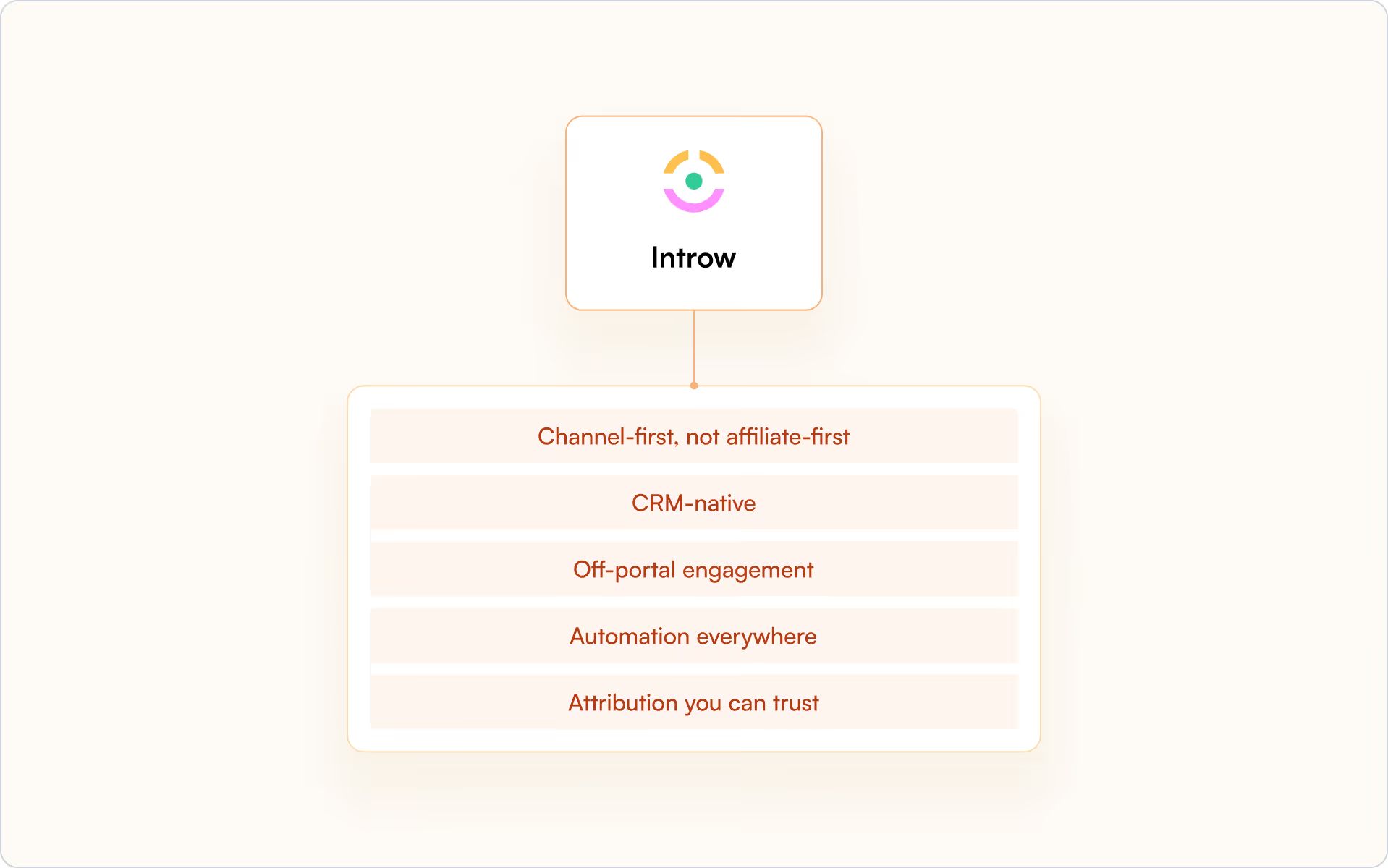
Here’s why SaaS teams benefit from choosing Introw:
- Channel-first, not affiliate-first: Impact was designed for affiliate management and influencer programs, so its workflows revolve around clicks, payouts, and referral tracking. But Introw is purpose-built for SaaS, making deal registration, co-selling, and partner engagement its core focus.
- CRM-native: With Introw, all partner activity lives directly inside Salesforce or HubSpot, eliminating silos and giving you a single source of truth.
- Off-portal engagement: Many PRMs rely on portals that require logins. This adds friction to the partner journey and limits engagement. Introw meets partners where they work (such as email or Slack) for seamless collaboration.
- Automation everywhere: Eliminate tedious administrative tasks with Introw, and spend your time adding genuine value. Introw automates onboarding, campaign management, nudges, and even QBR prep.
- Attribution you can trust: Affiliate-first tools typically track clicks and last-touch referrals, which don’t accurately reflect the influence of SaaS partners. Introw ties content usage, notifications, and partner activity directly to pipeline and revenue for attribution you can feel confident in.
📣 Want to see Introw in action? Request a demo here.
Conclusion
Is it time to seek alternatives to Impact?
You’ll know when you’ve found the right Impact alternative for B2B SaaS, because it will improve co-selling, engagement, and attribution directly in your CRM.
When shopping around for Impact.com alternatives, take a step back to review how your current partner program works.
Consider whether your channel strategy is as effective as you’d like it to be, and identify any gaps.
Then:
1️⃣ Shortlist CRM-first PRMs
2️⃣ Run a live pilot
3️⃣ Choose the platform your partners actually respond to
👉 See how Introw can power your partner program – book a demo today.
Channel Partner Marketing Guide 2026: Strategies and Tactics
What would change if every partner campaign were easy to launch, easy to join, and easy to measure?
Most teams still juggle scattered content and manual follow-ups, which slows down even the best channel partner marketing programs.
A focused channel partner marketing strategy removes that friction by meeting partners where they work, using repeatable assets, and keeping everything aligned in your CRM.
With CRM-native tools like Introw, partner channel marketing programs become easier to run and easier for partners to engage with across both to-partner and through-partner motions.
If predictable revenue is the goal, clarity and automation are the starting point.
So what does channel partner marketing actually mean in 2026?
What is channel partner marketing? (SaaS 2026 definition)
Channel partner marketing is the work you do with and for partners to create demand, drive adoption, and grow revenue together.
In 2026, it’s a mix of to-partner enablement and through-partner campaigns, all tied back to your CRM so nothing gets lost in the shuffle.
To-partner vs through-partner
Here’s the quick way to think about the two motions:
Most strong partner programs run both motions at the same time.
Channel marketing vs partner marketing
People use these terms interchangeably, but they’re not the same.
- Channel marketing is your route-to-market strategy
- Partner marketing is the actual programs and campaigns you run with partners
Your channel partner marketing strategy sits right in the middle of the two.
Who counts as a channel partner?
A channel partner can be a reseller, referral partner, MSP, SI, tech integration partner, agency, or consultant.
Each one brings different strengths and sits at a different stage of the channel partner marketing journey, which is why segmentation early on matters so much.
Why this definition matters
To run channel partner marketing activities that move pipeline, you need clarity about who you’re enabling and what you expect from them.
When everyone shares the same definition, partner managers and RevOps can set goals and measure success directly in Salesforce or HubSpot.
A shared foundation makes your channel partner marketing plan easier to build and scale. Everything else in this guide builds on that framework.
The 4-part framework: Plan → Enable → Run → Measure
Every strong channel partner marketing strategy follows the same rhythm.
These four stages help you plan campaigns partners actually want to use, run consistent through-partner plays, and measure every result directly in Salesforce or HubSpot.
Think of this as the backbone of your entire channel partner marketing journey.
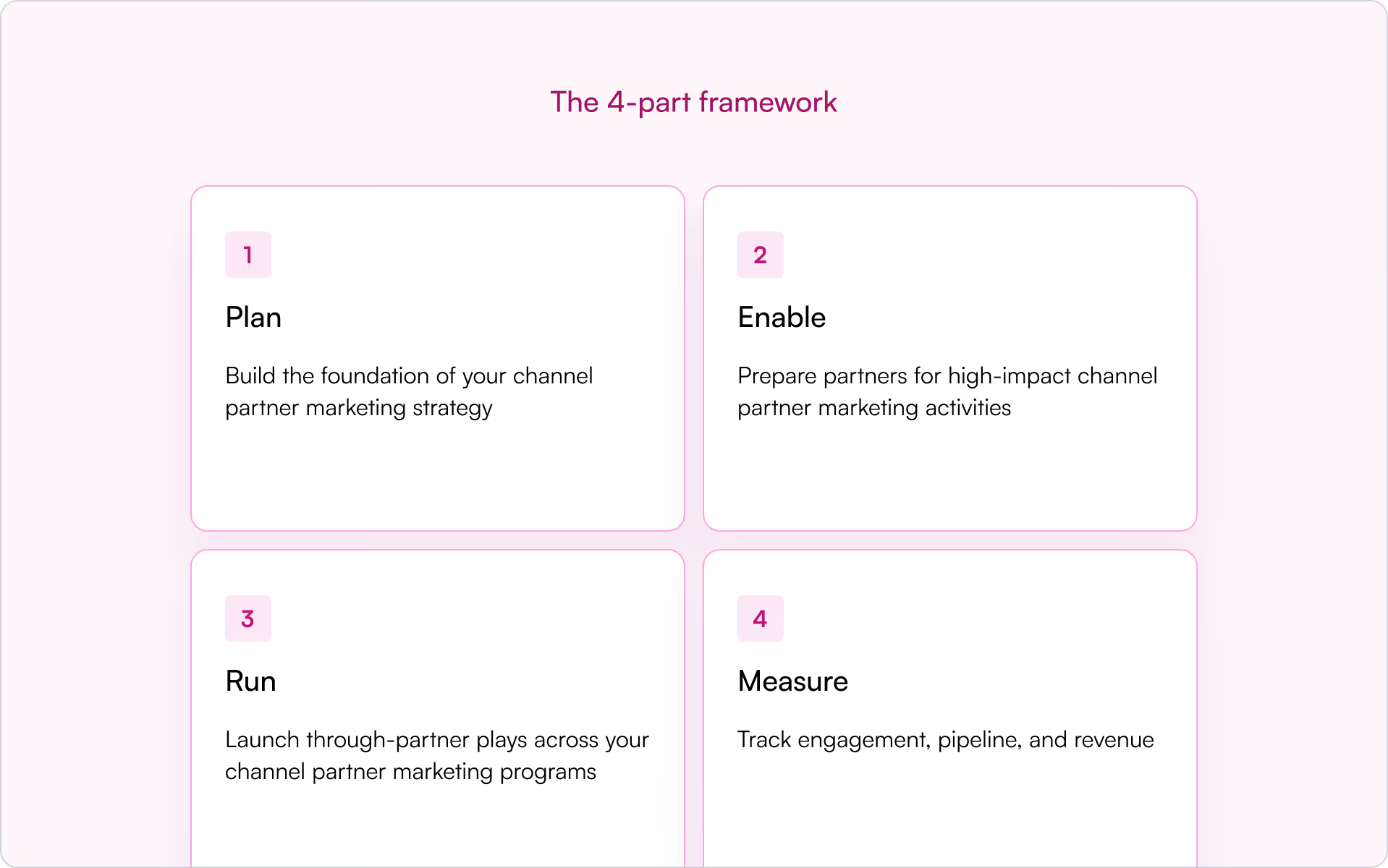
Plan: Build the foundation of your channel partner marketing strategy
Before you launch a partner campaign, you need a quick, clear plan that keeps everyone aligned
This stage shapes the full channel partner marketing journey. It also gives partner managers and RevOps the structure they need to measure outcomes in the CRM.
What to define
- Your partner ICP for each segment in your channel partner marketing programs
- A clear offer for referral, reseller, SI, MSP, or tech partners
- Goals tied to registered deals, qualified intros, and pipeline
- Quarterly focus areas that support your wider channel partner go-to-market strategy
- MDF guidelines and how they connect to channel partner marketing activities
- A campaign calendar with repeatable moments partners can rely on
Why it matters
This is one of the simplest channel partner marketing best practices to get right. If the plan is unclear, partners won’t know how to participate, and your channel partner marketing plan becomes harder to scale.
Example
A strong plan might segment partners by type and region, then map one or two through-partner plays to each group so marketing and partner teams stay aligned.
For a deeper starting point, the How to build a channel partner program guide is a helpful reference.
Enable: Prepare partners for high-impact channel partner marketing activities
Enablement is where your strategy becomes real for partners. When partners know what to say, what to share, and how the campaign works, execution gets a lot easier.
What to provide
- Campaign-in-a-box kits
- Talk tracks and positioning
- Onboarding materials that match each channel partner marketing segment
- Localizable content and co-brandable assets
- Email and social templates that reduce friction
- Clear instructions for through-partner execution
Why it matters
Enablement is the moment partners decide whether they will actually run your campaign. If assets are simple and accessible, your channel partner marketing programs instantly become more repeatable.
Example
A partner might open a kit, grab the email sequence, and start outreach the same day. This is the kind of activation every channel partner marketing plan aims for.
For more ideas, the partnership marketing guide offers helpful examples.
Run: Launch through-partner plays across your channel partner marketing programs
This stage turns planning into real execution. Through-partner campaigns should feel easy for partners and easy for your internal teams to manage.
What execution looks like
- Multi-channel campaigns that match each partner’s motion
- Off-portal updates through email or Slack so partners never need extra logins
- Automated reminders for deadlines, events, and asset usage
- Co-selling handoff steps that roll directly into Salesforce or HubSpot
Why it matters
If execution feels heavy, your partner channel marketing efforts slow down fast. When updates and communication run off-portal, channel partner marketing activities scale without manual follow-ups.
Example
A partner might receive a Slack update about a new campaign and start promoting it without ever logging into a portal. This keeps momentum high and adoption consistent.
Measure: Track engagement, pipeline, and revenue
Measurement is what turns channel partner marketing strategy into a predictable engine. It removes guesswork and shows exactly which partners and campaigns drive revenue.
What to track
- Engagement with assets and campaign kits
- Deal registration volume and influenced pipeline
- Co-selling activity tied to partner channel marketing plays
- Activation rates across each segment
- Conversion rates and influenced ARR
- Examples of channel partner marketing impact across the quarter
How Introw supports this
With Introw, every partner email click, asset download, deal update, and campaign touchpoint syncs directly into Salesforce or HubSpot.
RevOps, partner managers, and CROs get clear dashboards that tie channel partner marketing activities to pipeline and revenue. No portals, no manual reporting.
10 proven partner marketing plays for 2026
These plays help your partner program stay consistent without overloading your marketing team or your partners.
Each one can fit neatly into your channel partner marketing strategy and can support both lead generation and revenue growth.
Feel free to treat this list as a starting point and choose the plays that match your channel partnerships best.
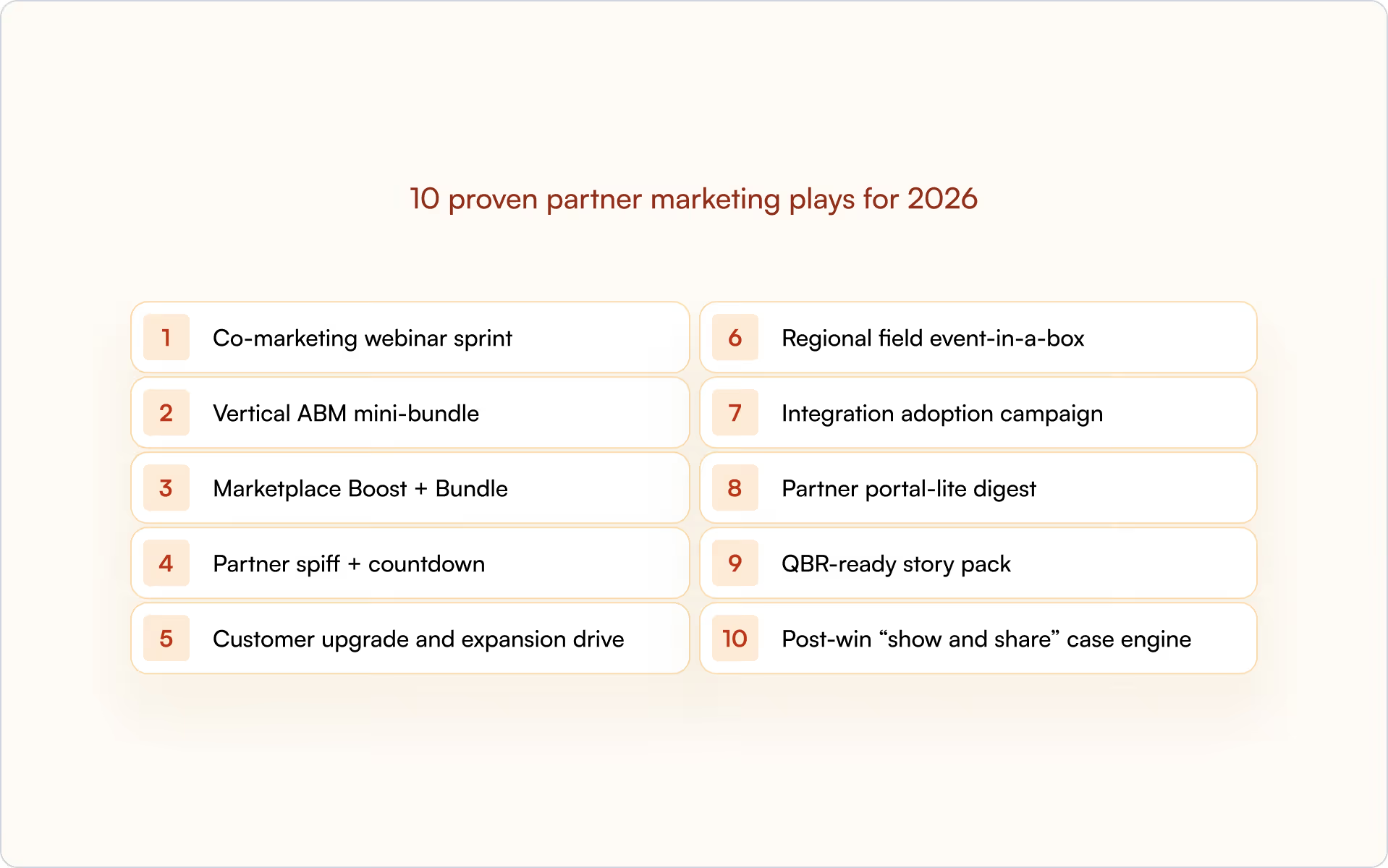
1. Co-marketing webinar sprint
What it is: A short, focused webinar campaign partners can run with you.
Why it works: Partners bring warm audiences, and your sales team gets qualified conversations.
How to launch: Pick a joint topic, share your campaign in a box, run a promo for two weeks, then follow up on attendees.
KPI: Registrations, attendance, meetings booked.
Introw tip: Automated announcements and attendance tracking show which partners amplify the campaign most.
2. Vertical ABM mini-bundle
What it is: A ready-made industry-specific bundle partners can use for targeted outreach.
Why it works: Vertical relevance increases conversion and helps partners tailor messaging.
How to launch: Give partners a landing page, case study, and email set for one key vertical.
KPI: Meetings booked in in-segment accounts.
Introw tip: Segment partners by vertical and schedule updates that match their territory.
3. Marketplace Boost + Bundle
What it is: A small campaign that refreshes your marketplace listing and gives partners a bundled offer to promote.
Why it works: Marketplaces are high-intent surfaces that help boost sales.
How to launch: Update your listing, share a co-branded bundle, and offer promotional copy partners can use.
KPI: Listing traffic, trials, influenced opportunities.
Introw tip: Track which partners use your marketing materials and which bundles drive activity.
4. Partner spiff + countdown
What it is: A short, incentive-based push for intros or registered deals.
Why it works: Deadlines create energy inside your partner ecosystem.
How to launch: Set a timeline, define a reward, and share daily reminders.
KPI: Registered deals, pipeline created.
Introw tip: Automated countdown nudges keep partners engaged without your team chasing updates.
5. Customer upgrade and expansion drive
What it is: A simple play where partners help existing customers adopt more features or expand usage.
Why it works: Partners already know shared accounts and can influence timing.
How to launch: Give partners an expansion playbook and match them with eligible accounts.
KPI: Expansion opportunities and ARR added.
Introw tip: Signals inside the CRM can trigger partner notifications with no manual work.
6. Regional field event-in-a-box
What it is: A small local event your partner can run with your support.
Why it works: In-person time improves partner engagement and helps your sales team move deals forward.
How to launch: Share a checklist, invite templates, and quick follow-up scripts.
KPI: Show rate, meetings booked after the event.
Introw tip: Use RSVPs and automated follow-ups to keep the momentum strong.
7. Integration adoption campaign
What it is: A targeted push promoting a shared integration.
Why it works: Integration usage is strongly tied to retention and expansion.
How to launch: Give partners “why this matters” messaging, in-product prompts, and ready-to-send emails.
KPI: Integration activations and related opportunities.
Introw tip: Track activation-related content usage to see which partners drive adoption.
8. Partner portal-lite digest
What it is: A monthly Slack or email roundup instead of a traditional partner portal experience.
Why it works: Partners stay informed without logging into another tool.
How to launch: Send a simple digest with top assets, deadlines, wins, and next steps.
KPI: Engagement score, reactivation of dormant partners.
Introw tip: Announcements show exactly which partners interact with each update.
9. QBR-ready story pack
What it is: A lightweight deck partners can use to plan next-quarter actions.
Why it works: Partners see their wins clearly and agree on priorities faster.
How to launch: Share a short deck with highlights, content performance, and next steps.
KPI: Quarterly commitment and pipeline alignment.
Introw tip: CRM-powered story packs help your marketing team and partner managers prep in minutes.
10. Post-win “show and share” case engine
What it is: A quick process for turning partner wins into case snippets.
Why it works: Proof points help partners sell more confidently.
How to launch: Offer a simple template and share the stories across your channel partnerships.
KPI: Case assets created, influenced pipeline lift.
Introw tip: Track downstream clicks to see which stories support your partner marketing strategy best.
These plays help your partner program focus on campaigns your partners can launch quickly, and your marketing team can measure easily.
Which tools actually support this level of consistency without overwhelming your business?
The tech stack you actually need (and nothing more)
A strong channel partner marketing strategy doesn’t require dozens of marketing tools.
Your marketing team, sales team, and partner managers only need a few systems that help you work with the right partners, support effective channel partner motions, and keep everything tied to your customer journey.
Core tools
- CRM (Salesforce or HubSpot): Your single source of truth for pipeline, attribution, sales qualified leads, and the full sales process.
- PRM and partner management: A CRM-native tool like partner management software keeps deal registration, partner engagement, and channel marketing activity aligned across third-party partners and strategic partnerships.
- Content hub: Stores the marketing materials your marketing department uses for each campaign in a box.
- Webinar or event tool: Helps your team run through-partner plays that fit your target audience.
- Light design tools: Support quick co-branding and save marketing resources when working with external partners.
Why this matters for your partner program
A simple tech stack helps channel partnerships move faster and reduces work for your marketing department.
It keeps your partner marketing strategy aligned and gives your team clear CRM reporting, partner clarity, and more predictable revenue growth.
A simple stack sets the stage. The final step is bringing your strategy together in a way partners can trust and act on.
Over to you: Bring your partner strategy to life
A strong channel partner marketing strategy comes down to clarity, simple campaigns, and tools that make it easy for partners to take action.
Your next steps
- Choose two or three channel partner marketing activities your partners can launch quickly
- Give them a campaign in a box with clear messaging and ready-to-use assets
- Measure engagement and pipeline in your CRM, so you know what to repeat
Ready to run high-performing partner campaigns without chasing updates? Request a demo!
Benefits of Selling SaaS on Cloud Marketplaces (And How Partners Make It Even Better)
You’re shipping a great SaaS product and your sales team keeps running into the same blockers: new vendor onboarding takes months, security reviews stall, and finance wants a cleaner procurement process. Listing on cloud marketplaces fixes a big chunk of that. When your SaaS solution is available via AWS Marketplace or Google Cloud Marketplace, enterprise buyers can use existing contracts and committed spend to purchase in days, not quarters. Below, we unpack the core benefits of selling SaaS on cloud marketplaces, how marketplace transactions actually work, and where partners turn a good motion into a great one.
Why cloud marketplaces matter right now
Enterprise buyers are already in the cloud. Procurement teams prefer buying cloud solutions through the platforms they trust because the vendor risk work is largely done, billing is centralized, and usage rolls into existing financial processes. That means your SaaS product benefits from shorter transaction time, cleaner paperwork, and access to budget buckets like committed spend.
For sellers, the advantages stack up: you tap into the marketplace’s global reach, ride the brand trust of the cloud provider, and remove “new vendor” friction from legal and finance. In most cases, the question isn’t “if” you should list — it’s “when” and “where” to start so you don’t spread product teams too thin.
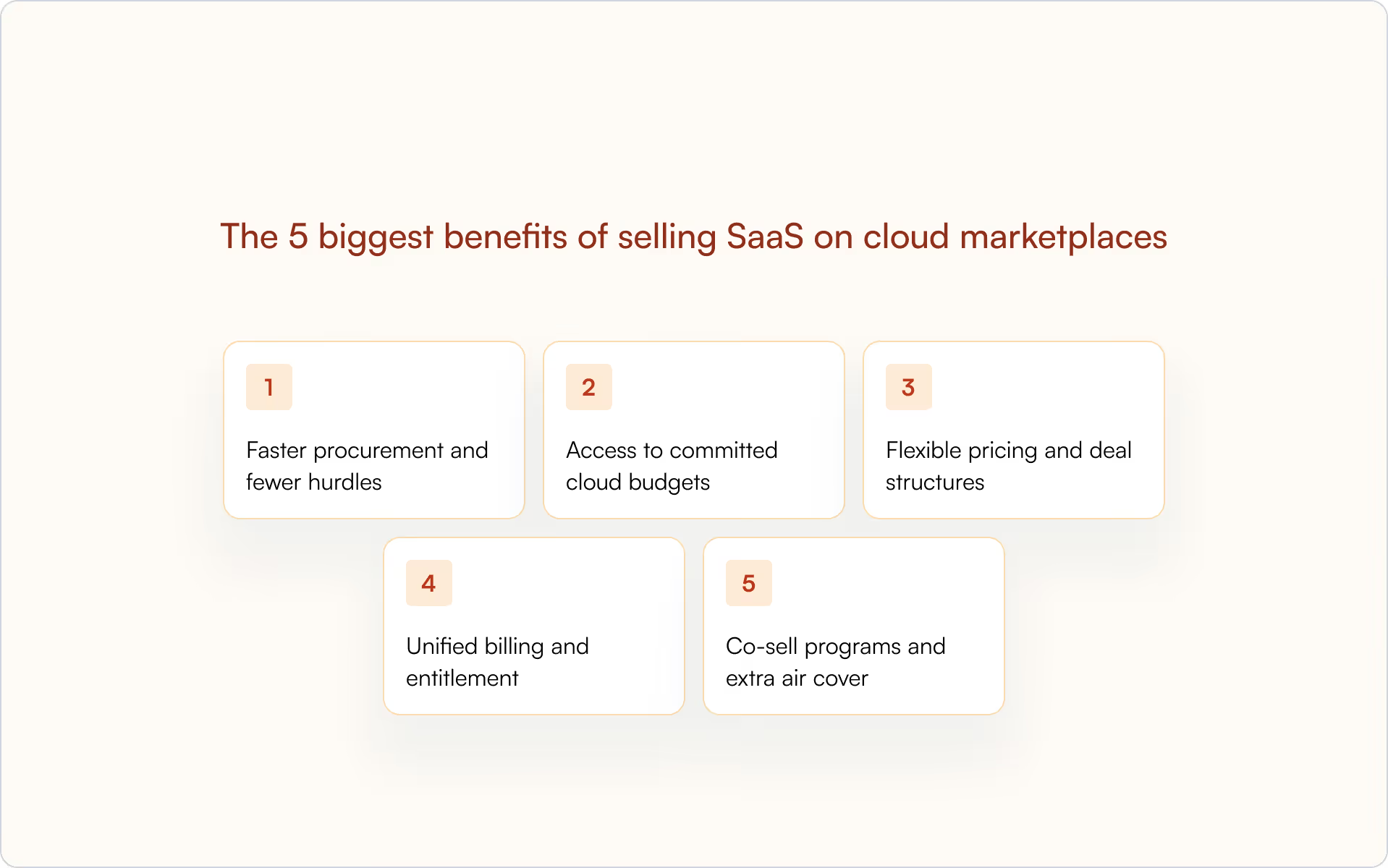
The five biggest benefits of selling SaaS on cloud marketplaces
Let’s get specific. These are the wins you can count on when SaaS companies list and transact on a marketplace.
- Faster procurement and fewer hurdles
Purchase via the buyer’s existing MSA with AWS or Google; no duplicate vendor onboarding. Security and commercial terms inherit marketplace protections, so the procurement process is simpler, and approvals move quicker.
- Access to committed cloud budgets
Many enterprises must burn down committed spend with the cloud provider. Buying your SaaS applications through the marketplace helps buyers hit those targets, which can be the deciding factor late in a cycle.
- Flexible pricing and deal structures
Public listing with pricing plans (monthly/annual), pay as you go, or bespoke private offers for large deals. This flexibility lets your sales team meet the buyer where they are without new paperwork each time.
- Unified billing and entitlement
Marketplace handles invoicing, collections, taxes, and remittance. Entitlements flow automatically to your system once the marketplace transactions close, reducing manual ops and mistakes with sensitive data.
- Co-sell programs and extra air cover
Marketplaces reward aligned co selling motions. When you work with cloud field reps, they bring intros, help shape procurement strategies, and often unblock tough accounts. That creates net-new buyers and sellers connections you won’t get elsewhere.
AWS Marketplace vs Google Cloud Marketplace (in practice)
Both platforms deliver the core value, but they feel different in the details:
- AWS Marketplace: deep maturity, broad buyer base, extensive private offers tooling, and robust Vendor Insights for security. Great for ISVs selling into teams already living in AWS services.
- Google Cloud Marketplace: strong if your customers are heavy Google Cloud users or lean into data/AI workloads on GCP. Co-sell alignment with Google field teams can be a force multiplier for marketplace success.
Most companies start with the platform that matches their customer base, then add the second once the operational motion hums.
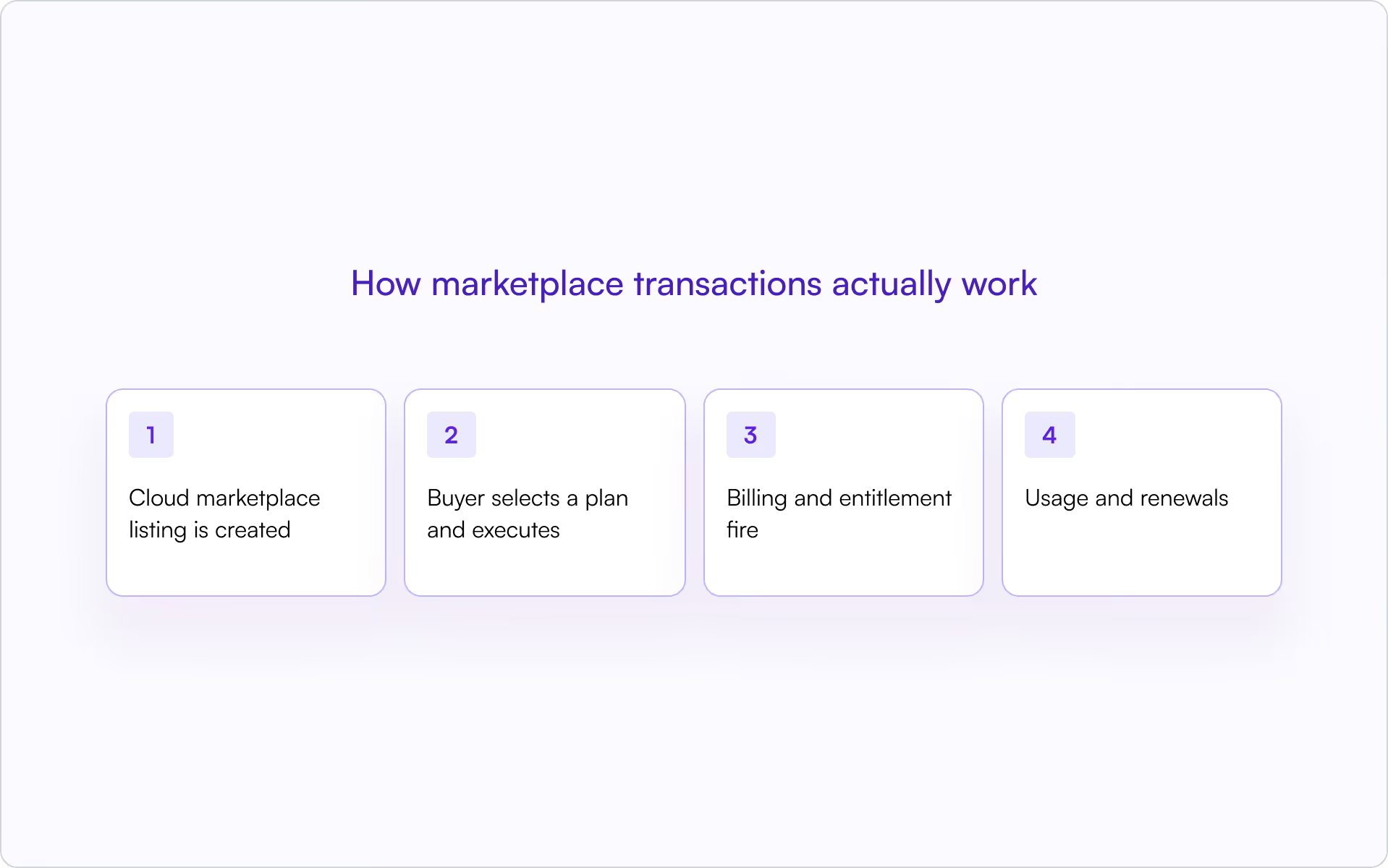
How marketplace transactions actually work (the short version)
Understanding the flow helps you design a listing that closes smoothly:
- Cloud marketplace listing is created
You publish a concise product page: value prop, supported regions, pricing model, technical overview, and free trials if offered. You also set the fulfillment method (SaaS callbacks, entitlement API, or private offer only).
- Buyer selects a plan and executes
For public pricing, it’s a click-through; for enterprise deals, your rep sends a private offer with negotiated terms. The buyer approves inside their console.
- Billing and entitlement fire
The cloud marketplace invoices the buyer; you receive payouts per their schedule. Your backend gets the entitlement signal (activate, upgrade, cancel) and provisions the account automatically.
- Usage and renewals
If metered, your service reports usage back to the marketplace. Renewals can be automated or handled via new private offers.
The key to cloud marketplace success is keeping this plumbing reliable and your product page crystal clear so buyers and sellers don’t stall on basics.
What to include on your listing (to build trust and conversions)
Think like a skeptical enterprise architect and a busy procurement lead. Your page should answer both in under two minutes.
- Who it’s for: ICP, industries, common use cases.
- What it does: outcome-first description; avoid jargon.
- How it deploys: regions, data residency, identity model, SSO/SCIM.
- Security & compliance: SOC 2/ISO, encryption, links to docs.
- Commercials: pricing plans, pay as you go, free trials, and contact for private offers.
- Proof: named customers, case studies, benchmarks.
- Integration notes: APIs, SDKS, popular connectors.
This is also where you anchor co selling: add a clear “Contact Sales” path for bespoke deals and a “Try Free” button for survey respondents who prefer self-serve.
How partners make marketplaces even better
Listing unlocks speed; partners create scale. Three partner types amplify the motion:
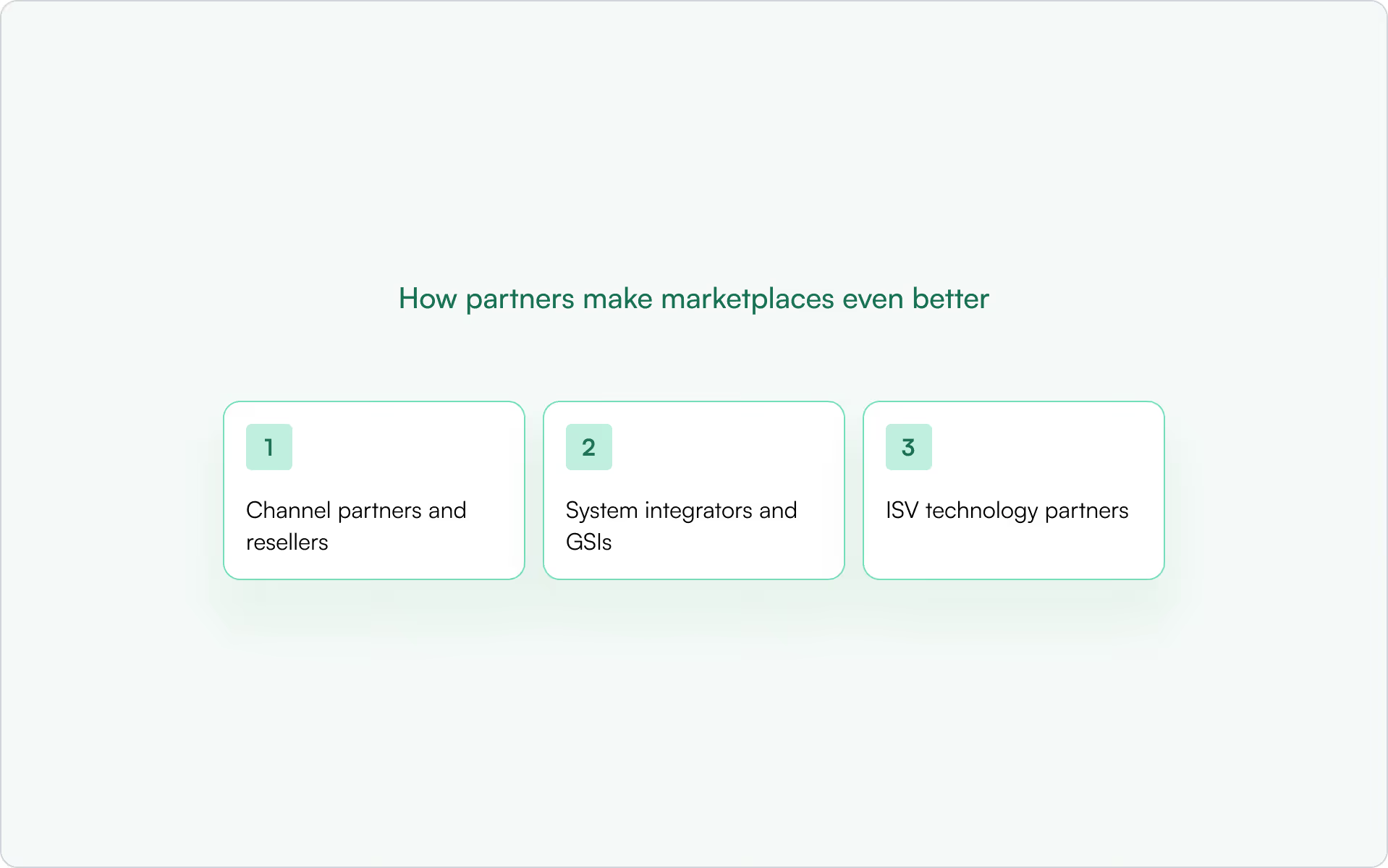
- Channel partners and resellers
They package your SaaS with services or other cloud solutions, route the purchase through the marketplace, and manage customer onboarding. Because they already handle compliance, they can move deals through vendor onboarding faster than you can alone.
- System integrators and GSIs
They design the business case, run pilots, and own rollout and change management. In enterprise accounts, the SI’s advocacy often determines whether an evaluation becomes a marketplace purchase.
- ISV technology partners
They turn your offer into part of a solution — especially for data, security, or observability. These integrations lift win rate and reduce churn because the SaaS offer fits the buyer’s stack from day one.
When you track partner engagement inside CRM and map it to the marketplace opportunity, the value is obvious: shorter cycles, larger ACVs, and higher expansion.
A pragmatic launch plan (without burning your team out)
You can ship a credible first listing in 8–12 weeks if you stay focused:
- Pick one marketplace that matches your customers.
- Choose the initial pricing model (simple subscription or pay-go) and add private offers later.
- Wire entitlement and billing callbacks; keep the technical surface small to start.
- Publish the trust signals (security, compliance, data flow).
- Train the sales team on how marketplace transactions work and how to ask about committed spend.
- Add a short free trial only if it mirrors your product-led experience — otherwise route to a public offer with a clear demo path.
- Stand up a partner brief so channel partners and SIs know how to transact your product and what services to add.
As you learn, expand pricing plans, launch co selling plays with the cloud field, and layer in a second marketplace.
What to watch after you go live (signals that matter)
Skip vanity stats and track the metrics that prove revenue impact:
- Marketplace-sourced pipeline and win rate
- Days from intro to executed marketplace listing purchase (vs direct)
- Share of deals using private offers
- Percentage of bookings tied to committed spend
- Time to provision and first value after entitlement
- Attach rate with partners (SI involvement, reseller influence)
- Renewal rate and expansion from marketplace cohorts
If cycles aren’t shrinking, tighten your listing, simplify commercial options, and make the “how to buy” path obvious. If attach rates lag, recruit services partners with clear plays and co-market together.
Where Introw fits
Marketplaces move fast; partner motions can lag if they’re stuck in spreadsheets. Introw keeps your partner GTM CRM-first: deal and lead registration for marketplace opportunities, co-sell tracking with field teams, and clean workflows for SIs, resellers, and ISV integrations. You’ll see exactly which partners helped drive revenue, which co selling plays convert, and where to double down. When you’re ready to turn marketplace momentum into a repeatable partner engine, Introw shows the path in Salesforce or HubSpot — no extra portals required.
Ready to accelerate marketplace deals and scale with partners? Request an Introw demo.
17 Salesforce PRM Alternatives to Choose From in 2026 (Partner Cloud)
Salesforce’s native PRM — now packaged as Partner Cloud on Experience Cloud — lets you build a partner portal, run deal registration, and connect partner activity into Sales Cloud and other Salesforce products. If your team is already all-in on Salesforce, it can be compelling. Still, many SaaS companies consider alternatives in 2026 for faster rollout, lower total cost, stronger HubSpot coexistence, or deeper support for motions like hyperscaler co-selling deals and affiliate marketing. The right partner relationship management software should automate sales processes, support opportunity management, and surface real time data for pipeline inspection across partners, customers, and channel sales.
Who this guide is for: B2B SaaS teams with active partner programs, at least two channel managers, and Salesforce or HubSpot CRM as the source of truth.
How we evaluated: CRM alignment (Salesforce and HubSpot), time-to-value, partner performance and adoption without logins, co-sell capability, affiliate needs across various industries, governance for RevOps, and reporting in the CRM. We also looked at AI capabilities, content management for enablement, and operational efficiency to drive long term success.
What to look for instead of Salesforce PRM
If you are replacing Experience Cloud for partners, prioritize CRM-first operations so sellers never leave Sales Cloud or HubSpot. Look for partner relationship management PRM workflows that reduce channel conflict, guide partners with in app guidance, and enable real time collaboration by email or Slack. You also want clean attribution and forecasting in the CRM, outcome based enablement that helps partners track progress and monitor performance, plus role-based access that keeps RevOps happy as you scale. Tools that automate sales processes, support custom objects, and give a complete view of customers, partners, and deals on a single platform will help many businesses improve market reach and reduce costs.
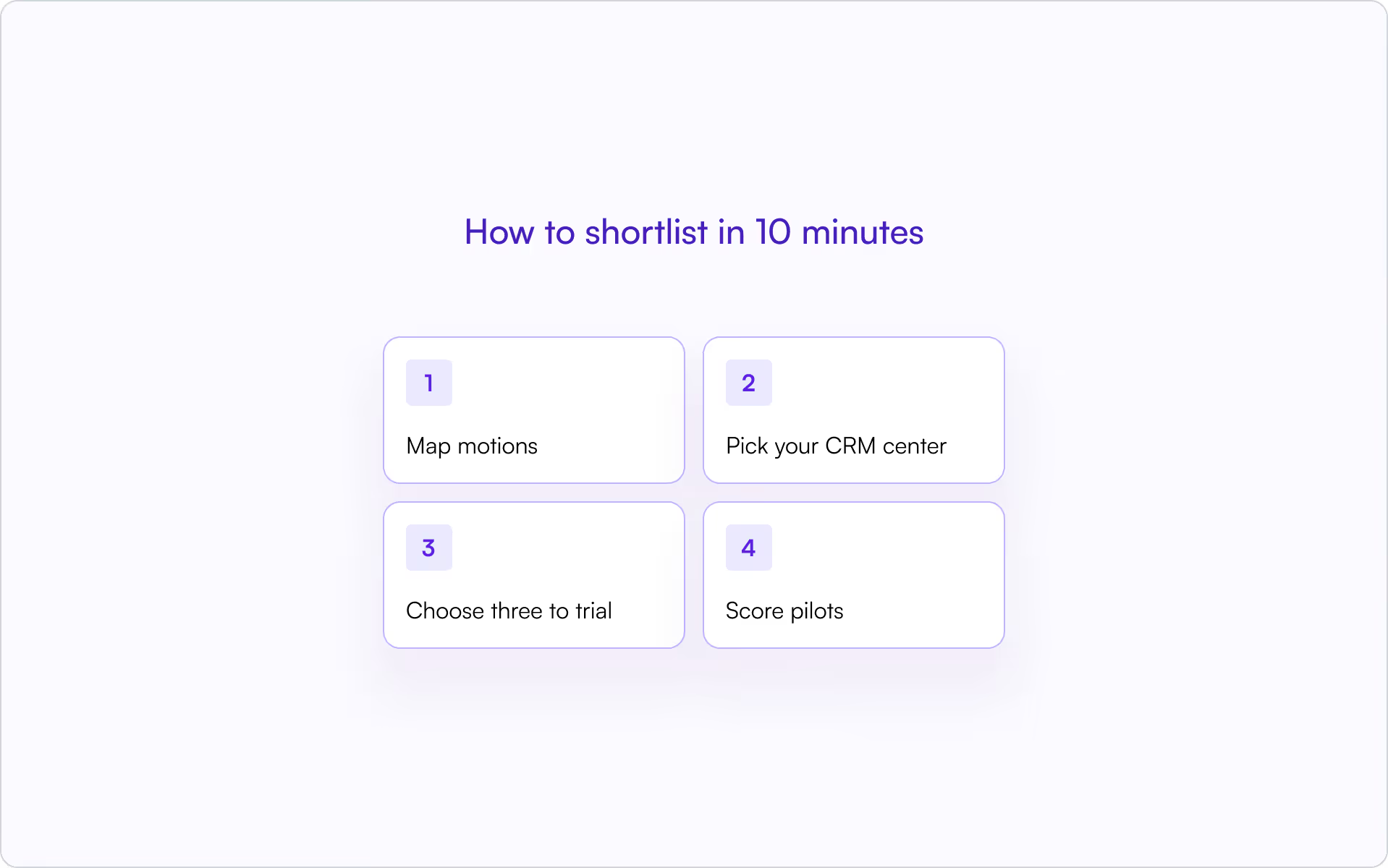
How to shortlist in 10 minutes
- Map motions — reseller, referral, co-sell, affiliate.
- Pick your CRM center — Salesforce only or Salesforce + HubSpot.
- Choose three to trial — e.g., Introw, Channeltivity, and Magentrix for CRM-first PRM; Impartner, ZINFI, Unifyr for enterprise channel scale; impact.com or Everflow for affiliate-heavy strategies; WorkSpan for hyperscaler co-sell.
- Score pilots on — time to first live deal registration, partner engagement without logins, CRM visibility, pipeline inspection, and forecast accuracy.
The 17 best Salesforce PRM alternatives in 2026
Whether you lean into referrals, resellers, co-sell, or affiliate, the options below span pure PRM software, co-sell orchestration, and performance-partner tools. For each, we highlight key features that affect partner productivity, customer data hygiene, and how easily channel managers can manage leads and opportunities across third party partners while staying fully integrated with your AI CRM and other Salesforce products like Service Cloud.
1) Introw
Best for: SaaS companies running referral, reseller, and co-sell motions that want the entire partner workflow to live in Salesforce or HubSpot — while keeping partners engaged through email and Slack so no one is forced to log in.
Why it’s an alternative: Instead of building a heavy Experience Cloud site, Introw keeps deal registration, collaboration, and reporting in your CRM and uses off-portal notifications so partners can reply to updates by email or collaborate via Slack — all synced back to Salesforce or HubSpot. That is a practical way to reduce portal fatigue, track deals and track leads with real time data, and speed time-to-value.
Callouts: Native integrations for Slack, HubSpot, and Salesforce help you capture leads and opportunities quickly. Partners can submit leads via public forms, email, or Slack, and every submission maps to the right CRM fields for clean attribution. If you are scaling a mixed motion — reseller, referral, MSP — the no-code partner portal, content management for enablement, and analytics make it easy to personalize experiences by partner type and monitor performance.
2) Impartner
Best for: Enterprises with global channels that rely on structured tiering, incentives, and MDF — and need proven governance at scale.
Why it’s an alternative: If custom-building PRM on Experience Cloud is too slow or complex, Impartner delivers mature modules out of the box — recruitment, enablement, deal reg, and MDF — with a track record in large channel programs.
Callouts: Its MDF tooling stands out — budgeting, approvals, reimbursements, and notifications are built into the PRM, which is valuable if partner funding drives growth. Third-party directories and analyst sites also show broad deployments and comparisons, plus AI functionality appearing across enablement and analytics.
3) ZINFI (Unified Partner Management)
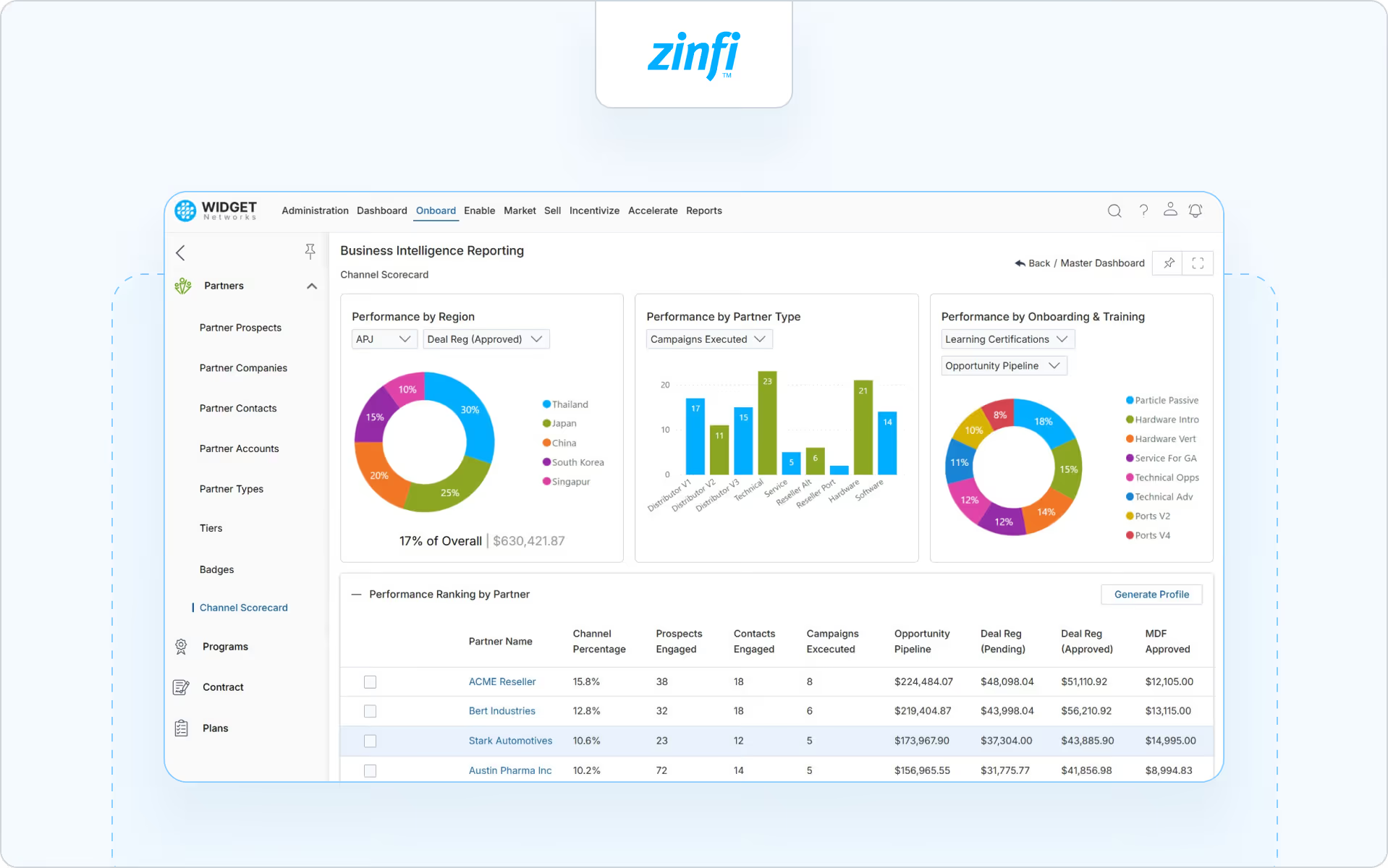
Best for: Teams seeking a comprehensive PRM suite with strong analyst and peer recognition, plus a steady cadence of product updates.
Why it’s an alternative: ZINFI’s Unified Partner Management spans recruit, enable, market, sell, and incentivize. In 2026 the company continues to emphasize AI-assisted workflows — useful if you want breadth without assembling point tools.
Callouts: The company highlights ease of use and modularity across UPM. If you have multiple partner types and need one platform to cover lifecycle workflows end to end, this is a credible shortlist option for partner enablement and opportunity management.
4) Unifyr (formerly Zift Solutions)
Best for: Channel-heavy orgs that prefer one vendor for PRM, through-channel marketing, and training — rather than stitching together separate systems.
Why it’s an alternative: Zift Solutions rebranded as Unifyr and now positions an AI-enabled partner ecosystem platform. If your Experience Cloud setup became a patchwork of apps, Unifyr’s all-in-one packaging can simplify operations.
Callouts: Messaging focuses on onboarding, activation, and performance insights across the partner lifecycle — helping guide partners, track progress, and align sales processes with marketing.
5) Channelscaler (Allbound + Channel Mechanics)
Best for: Companies that want modern PRM UX combined with enterprise-grade pricing, rebates, and incentive automation — all in one platform.
Why it’s an alternative: Allbound and Channel Mechanics merged and rebranded as Channelscaler. For teams that would otherwise combine a PRM front end with a separate channel automation engine, this unified approach is attractive.
Callouts: Press and analyst notes highlight scalability and intelligence post-merger, with emphasis on accelerating indirect revenue, expanding market reach, and improving operational efficiency.
6) Channeltivity
Best for: Mid-market teams looking for fast time-to-value and clicks-not-code integrations with Sales Cloud or HubSpot.
Why it’s an alternative: Channeltivity’s plug-and-play CRM integrations minimize implementation risk versus custom sites. Deal reg and referrals sync into the CRM so sales and RevOps get partner pipeline inspection and visibility without manual work.
Callouts: The HubSpot marketplace listing and help center show two-way sync, field mapping, and setup guides — handy if you want to go live quickly without heavy IT, and still monitor performance and track deals.
7) Magentrix
Best for: Salesforce-centric programs that want a configurable partner portal tightly coupled to CRM objects and data.
Why it’s an alternative: Magentrix is a long-standing AppExchange PRM. Its approach centers on mirroring CRM structure and reducing brittle syncs, which can be smoother than building and maintaining a bespoke Experience Cloud site.
Callouts: Features include deal registration and assignment with automated notifications. The company also publishes guidance on CRM-to-PRM data mirroring — useful for teams managing customer data at scale.
8) PartnerStack

Best for: SaaS teams combining affiliate, referral, and reseller motions — and wanting marketplace reach plus automated payouts.
Why it’s an alternative: PartnerStack pairs PRM-like workflows with a robust rewards engine and partner marketplace. If paying many partners on time is your bottleneck, this can be more turnkey than building equivalents on Salesforce.
Callouts: Flexible commission triggers and scheduled payouts help finance and ops keep partners confident, especially when scaling long-tail programs across partners and customers.
9) Kiflo
Best for: SMBs and scale-ups formalizing their first partner program with a straightforward CRM sync.
Why it’s an alternative: Kiflo focuses on PRM basics — referrals, resellers, simple enablement — and integrates natively with HubSpot to sync leads, deals, and contacts. If Experience Cloud feels over-powered for your stage, this is a pragmatic start.
Callouts: Marketplace listings and docs show two-way sync and mapping, which reduces swivel-chair work for partner managers and RevOps.
10) WorkSpan
Best for: ISVs pursuing hyperscaler co-sell with AWS, Microsoft, or Google — and running marketplace private offers — who want those processes embedded in Salesforce.
Why it’s an alternative: WorkSpan is purpose-built for co-sell and marketplace operations and ships a Salesforce app to automate referral sharing with AWS ACE and Microsoft Partner Center. If your gap with Salesforce PRM is hyperscaler motion, this is a strong fit.
Callouts: The Hyperscaler Edition supports marketplace listings and private offer workflows and integrates with Salesforce, HubSpot, and Dynamics so alliance teams and AEs can operate from the CRM with real time data.
11) impact.com
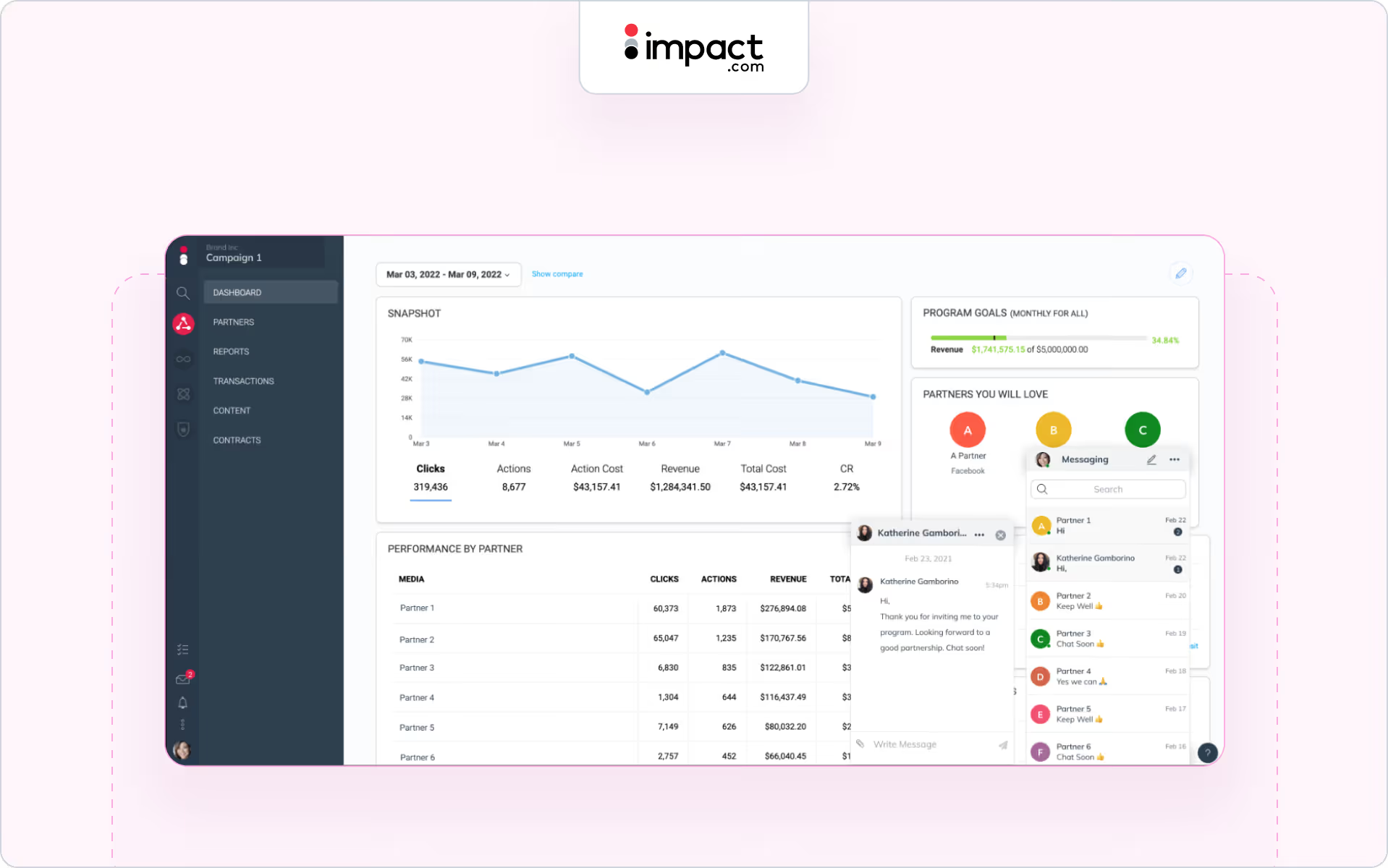
Best for: Affiliate, influencer, and advocacy programs where discovery, contracting, tracking, and payouts need to live together.
Why it’s an alternative: Rather than bolt affiliate tools onto a PRM, impact.com centralizes the performance side of partnerships and automates contracts and payments. Many B2B brands pair it with CRM reporting to measure influenced revenue.
Callouts: Reviews and third-party roundups repeatedly highlight automation, fraud controls, and reporting — useful if partner marketing is your growth lever.
12) Everflow
Best for: Advanced partner and affiliate programs that need granular tracking, analytics, and a white-label experience for agencies or multi-brand portfolios.
Why it’s an alternative: Everflow emphasizes measurement — cross-channel tracking, detailed attribution, and integrations — so you can quantify pipeline and revenue without stitching multiple tools.
Callouts: Independent reviews point to robust analytics, clickless tracking, and marketplace options that help teams scale efficiently and track leads from various industries.
13) TUNE
Best for: Marketers who need a highly customizable partner marketing platform — flexible commissioning, deep tracking, and brandable partner experiences.
Why it’s an alternative: TUNE is known for configurability. If your commissioning logic or partner types do not fit a standard mold, TUNE’s platform can be easier than forcing that complexity into a generic affiliate add-on or a DIY Experience Cloud build.
Callouts: The product’s positioning around flexibility across mobile and web, plus pricing options, makes it an option when you want control more than templates.
14) Partnerize
Best for: Global brands scaling affiliate and partnership channels with AI-assisted optimization.
Why it’s an alternative: Partnerize has invested in AI functionality and data intelligence — helpful for predictive insights in partner recruitment and optimization. If your Salesforce PRM alternative needs performance marketing depth, shortlist this.
Callouts: Public posts underscore ambitions for category growth and an AI-powered roadmap, pointing to continued velocity.
15) PartnerPortal.io
Best for: HubSpot-centric channel managers who want a portal to capture leads and deals, share resources, and push updates — without heavyweight implementation.
Why it’s an alternative: Rather than rolling your own Experience Cloud site, PartnerPortal.io is plug-and-play for HubSpot. Partner-submitted leads can create or link deals, and the product ships a simple resource center and accounting integrations. There is even native Crossbeam support for attribution and account mapping.
Callouts: The marketplace pages show quick deployment, two-way sync, and a focus on keeping everything inside HubSpot — handy for teams trying to avoid net-new systems.
16) Partnero

Best for: Lean partner teams that need low-friction lead submission and simple affiliate or referral flows rather than a full PRM suite.
Why it’s an alternative: Partnero makes it easy to accept partner or public lead submissions through a customizable page and manage the accept or reject workflow — a lightweight way to operationalize referrals without a big build.
Callouts: Product updates highlight continued investment in lead submission, attribution, and payouts — useful when simplicity and speed matter most.
17) RocketPRM (Impulse Creative)
Best for: Organizations that are all-in on HubSpot and want a turnkey PRM built entirely on HubSpot CRM and CMS — no separate platform to administer.
Why it’s an alternative: RocketPRM lives inside HubSpot, so you can keep your existing deal pipeline and manage a partner-facing portal with HubSpot page layouts and forms. If your team wants to avoid juggling another vendor while staying native to HubSpot, this is a clean option.
Callouts: The vendor site and community posts explain the architecture and implementation, emphasizing a HubSpot-only approach that keeps partner data and workflows in one place.
When to stay with Salesforce PRM
Stick with Salesforce Partner Cloud when your GTM is truly Salesforce-only, you want to keep data and AI CRM investments under one roof, and your team can support an Experience Cloud build. Salesforce provides native deal registration, lead distribution, and partner portals within that ecosystem — which can be the most straightforward path if you are standardized on Sales Cloud, Service Cloud, and related platform services that collaborate with other Salesforce products on a single platform.
Switch when you need HubSpot coexistence, faster rollout, off-portal engagement, or hyperscaler co-sell. Those needs are precisely where the alternatives above usually win on time-to-value, partner productivity, and adoption.
Why Introw is your choice in 2026
If your team wants partner relationship management that is fully integrated with your CRM, Introw’s CRM-first approach keeps partners, AEs, and RevOps in one workflow. You can create and manage leads and opportunities, use custom objects where needed, and rely on real time data for tracking deals, attribution, and forecasting.
Off-portal email and Slack let third party partners collaborate without friction; outcome based enablement and a lightweight content management layer help guide partners, share resources, and monitor performance. The result is higher partner productivity, fewer sync issues when managing customer data, and measurable revenue impact across sales, marketing, and service teams — without the overhead of a custom Experience Cloud build. For many businesses, this combination of automation, AI capabilities, and operational efficiency translates to lower total cost and long term success. Book a demo to see for yourself.
A Guide to Choosing the Best CRM for Partner Management: 15 Top Tools For 2026
A strong CRM system should be the backbone of your partner programs.
Embrace your CRM when it comes to partner management, and you can expect centralized relationships, seamless collaboration, full alignment with business operations, fewer channel conflicts, and improved revenue projections.
What's more, by embedding partner management within a CRM, businesses gain a unified source of truth, improving efficiency, accountability, and long-term success in partner ecosystems.
Traditional, siloed partner tools simply can't keep up with the power of modern CRMs.
It makes sense, then, that businesses are increasingly shifting to CRM-first workflows, integrating partner management into broader customer and revenue strategies.
This transition eliminates inefficiencies caused by disconnected systems, enabling real-time visibility into partner performance.
When moving to a CRM-first workflow, businesses must understand the importance of native integrations, deal tracking, and forecasting.
Look for CRM tools that offer native integrations with marketing automation, sales pipelines, and support tools to ensure that partner activities are fully aligned with business operations.
Meanwhile, deal tracking within a CRM allows businesses to monitor partner-driven opportunities, assign leads effectively, and prevent channel conflicts.
And forecasting capabilities provide data-driven insights into revenue projections, helping companies optimize their partner strategies.
To sum up, a CRM-first approach fosters stronger, data-backed partnerships that drive sustainable growth.
⬇️In this guide, we'll cover everything you need to know to make the best CRM decision for your business and your partners.
What to Look for in a CRM for Partner Management
When considering which CRM to go for, you'll undoubtedly already have several 'must have' features in mind.
But here are the most important features to look out for when it comes to partner management:
- Partner lead/deal registration
- Custom fields and workflows for channel/reseller/referral types
- Engagement tracking and collaboration tools
- Reporting and forecasting across partner-attributed pipeline
- Integration with PRM tools like Introw
- Scalability and API access for custom automation
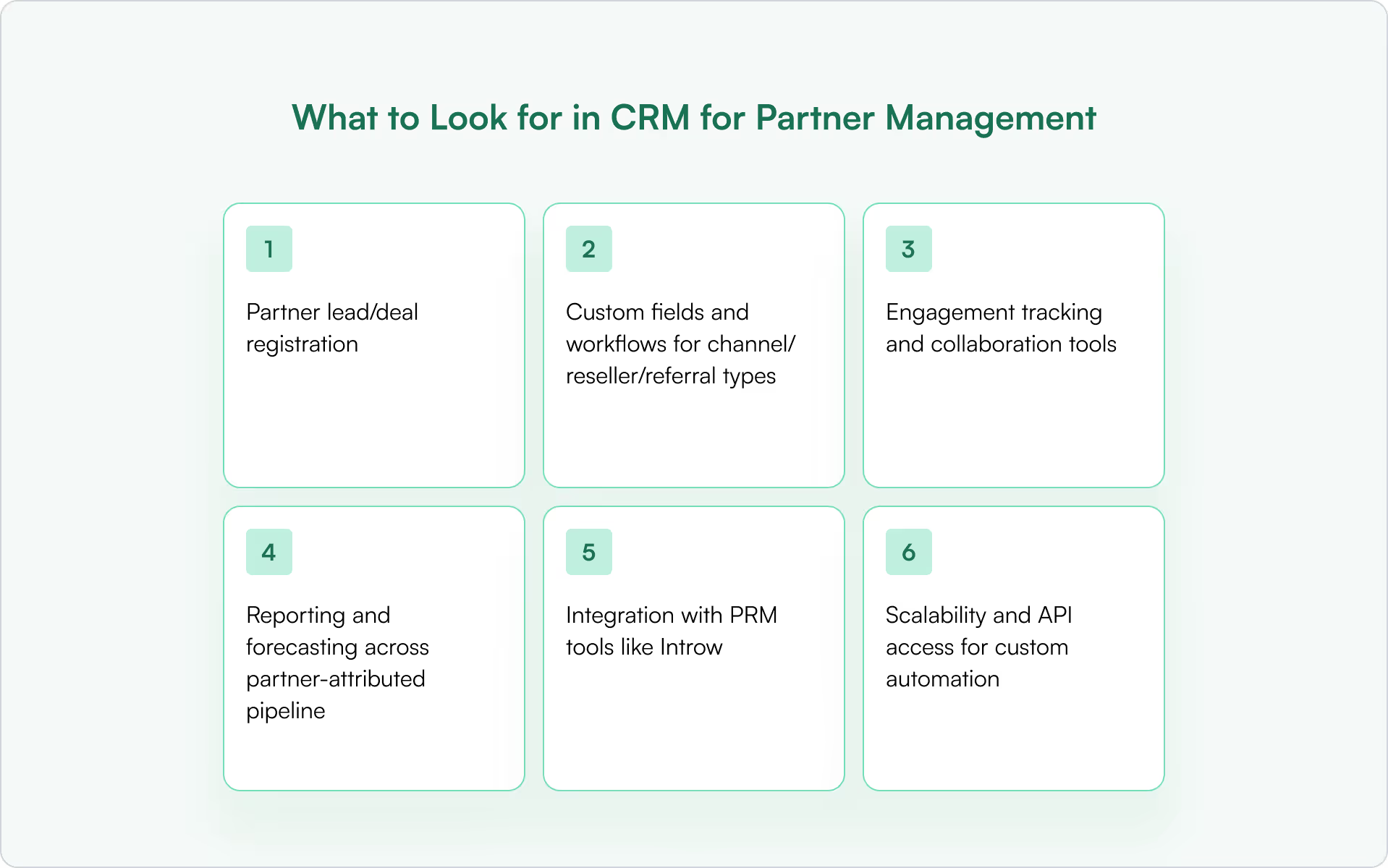
15 Best CRM Platforms for Partner Management in 2026
So, we know that a CRM-first approach has a wide variety of benefits for partner management.
But choosing the right CRM can be daunting; after all, it's a pretty big decision.
And not every CRM is fit for partner management.
To help you out, we've compiled a list of the best 15 CRM for partner management, along with their pros and cons.
#1 HubSpot
A giant of the CRM world, HubSpot's CRM is super popular among growing SaaS teams.
This comprehensive, AI-powered platform is designed to unify customer data, streamline business operations, and enhance customer experiences.
It offers a suite of tools across marketing, sales, customer service, content management, and operations, all integrated into a single system to facilitate seamless collaboration and efficiency.
And when it comes to partner management, Hubspot's CRM boasts several key features, including:
For partner management, HubSpot CRM provides several key features:
✅ CRM partner relationship management (PRM) integrations: Access PRM software Introw through HubSpot's App Marketplace for partner engagement tracking, lead registration, and Slack-based collaboration.
✅ Association labels: Define and manage relationships with partners by labelling companies as "Partner" or "Distributor," clarifying roles and facilitating targeted communication.
✅ Partner services: Utilize Partner Services to track and manage services provided by partners, ensuring organized and efficient collaboration.
✅ Automation: Save time by automating workflows and repetitive processes
These features enable businesses to effectively manage and nurture their partner relationships within HubSpot CRM.
🔗 Find out more about how Introw and Hubspot work together
#2 Salesforce

Salesforce remains the gold standard for enterprise partner programs.
This comprehensive, cloud-based platform streamlines customer relationship management and partner relationship management by integrating sales, marketing, customer service, and more into a unified system.
It empowers businesses to enhance customer interactions, improve satisfaction, and drive growth through data-driven insights and automation.
For partner management in CRM, Salesforce CRM offers several key features:
✅ Partner relationship management software integration: Seamlessly integrates with Introw to place PRM functionalities firmly within the CRM, enabling tracking of partner pipeline, engagement, and performance — all natively.
✅ Powerful reporting and forecasting: Delivers key data insights to enable data-driven decisions, as well as accurate forecasting.
✅ Personalized partner engagement: Provides personalized templates and data-driven enablement tools to engage partners effectively, enhancing communication and collaboration.
✅ Automated processes: Automates marketing fund requests, discounting, and service case management, reducing manual tasks and increasing efficiency in partner interactions.
✅ Real-time updates with partner connect: Facilitates secure deal tracking and real-time, automated updates on co-selling deals across different CRMs, ensuring transparency and reducing data duplication.
✅ Scalability: Built on the Salesforce platform, it scales easily to accommodate growing partner ecosystems, adapting to evolving business needs.
🔗 Learn more here: Introw + Salesforce Integration
#3 Zoho CRM
Zoho offers a flexible, cloud-based CRM that helps businesses manage sales, marketing, and customer relationships efficiently.
It's also a good option for those looking for a CRM that will support partner relationship management for sustainable business growth.
✅ Territory management: Organize and manage partner territories effectively, aligning sales strategies with specific regions or market segments.
✅ Workflow automation: Automate routine tasks and processes, enabling partners to focus on strategic activities and improving overall efficiency.
✅ Advanced analytics: Gain insights into partner performance through detailed reports and dashboards, facilitating data-driven decision-making.
✅ Customizable modules: Tailor CRM modules to fit specific partner management needs, ensuring a personalized and relevant experience.
✅ Multi-channel communication: Engage with partners across various channels, including email, phone, and social media, ensuring seamless communication.
Pros: Affordable, customizable, partner portal add-on
Cons: Weaker reporting, fewer native integrations
Best For: SMEs or mid-market teams just starting their partner motion.
#4 Microsoft Dynamics 365
Microsoft Dynamics 365 is an AI-powered suite of business applications that combines CRM and ERP capabilities to enhance customer experiences and business operations.
It integrates sales, marketing, service, and financial data to help organizations innovate, automate processes, and drive growth.
It encompasses several key features for partner management:
✅ Manage partner relationships with shared data insights
✅ Automate lead and opportunity tracking
✅ Integrate partner sales data for streamlined collaboration
✅ Enable partner performance monitoring through analytics
✅ Use AI to provide personalized partner support
Pros: Deep integrations, enterprise-friendly
Cons: Steep learning curve, dev-heavy
Best For: Enterprises already deep in Microsoft's stack or those with in-house CRM admins
#5 Pipedrive
Pipedrive offers a clean, simple CRM that's easy to use.
It automates repetitive tasks, tracks communications, and provides actionable insights to help sales teams optimize performance.
Admittedly, this one isn't purpose-built for partners, but it can support small partner programs with the right tagging and workflows.
When it comes to partner management, Pipedrive allows you to:
✅ Organize and track partner interactions in one space
✅ Automate partner follow-ups and communications
✅ Visualize partner pipeline for better decision-making
✅ Use AI for personalized partner management insights
✅ Centralize partner data for easy collaboration and reporting
Pros: Visual pipeline, easy setup
Cons: Limited partner automation, no partner-specific fields
Best For: Early-stage teams experimenting with partnerships
#6 Close.com

Close CRM is a platform designed to streamline sales processes for small businesses, focusing on automation, communication, and deal management.
It offers an intuitive, fast interface for managing leads and communications — and can also prove useful for partner relationship management.
Here's how:
✅ Track partner interactions and pipeline progress
✅ Automate partner outreach and follow-ups
✅ Centralize partner data and activity
✅ Monitor partner performance with analytics
✅ Seamlessly integrate with other tools for collaboration
Pros: Simple, easy-to-use
Cons: Limited customization
Best For: Small businesses with big growth ambitions
#7 Freshsales
Freshsales by Freshworks is an AI-powered sales CRM that enhances revenue growth with automation, lead scoring, and predictive analytics.
It streamlines workflows and provides insights to improve sales efficiency.
Here's how it can boost partner management:
✅ Track and manage partner relationships efficiently
✅ Automate follow-ups and communication with partners
✅ Centralized data for seamless collaboration
✅ AI-powered insights to optimize partner engagement
✅ Customizable pipelines to monitor partner deals
Pros: Easy to use and excellent customer support
Cons: Limited features and a steep learning curve
Best For: Start-ups and SMEs that need a friendly, affordable CRM solution.
#8 Copper
A relationship-focused CRM designed for Google Workspace users, Copper is all about streamlining contact management, deal tracking, and workflow automation.
It also minimizes data entry and integrates seamlessly with Gmail.
Key features for partner management:
✅ Centralized partner contact and activity tracking
✅ Automated workflows for partner communications
✅ Custom pipelines to monitor partner deals
✅ Seamless integration with Google Workspace
✅ Real-time reporting and analytics for partner performance
Pros: Easy integration with Google properties, user-friendly
Cons: Limited scalability
Best For: Businesses that depend on Google Workspace
#9 Insightly
Insightly is a scalable CRM designed for businesses to manage customer relationships, sales, and marketing in one platform.
It offers automation, project tracking, and analytics to drive growth and efficiency.
Looking for a CRM to boost partner management?
Here's how Insightly can support PRM:
✅ Centralized partner relationship tracking
✅ Automated workflows for partner interactions
✅ Customizable pipelines for deal management
✅ Advanced analytics for partner performance monitoring
✅ Integration with third-party apps for collaboration
Pros: Great customer support and deep customization
Cons: Steep learning curve
Best For: SMEs and start-ups looking for a customizable and scalable CRM.
#10 SugarCRM
A flexible, AI-driven CRM platform, SugarCRM is designed for B2B sales, marketing, and customer service.
It automates data collection, provides predictive insights, and streamlines workflows for enhanced efficiency.
Key features for partner management include:
✅ Centralized partner relationship tracking
✅ AI-powered insights for partner engagement
✅ Automated workflows for seamless collaboration
✅ Custom dashboards for partner performance monitoring
✅ Integration with third-party tools for extended functionality
Pros: Lots of features, good customer support
Cons: Long implementation, steep learning curve
Best For: Large businesses and enterprises looking to commit to a CRM long-term
#11 Nutshell CRM

Nutshell is a user-friendly CRM that combines sales, marketing, and pipeline management into one intuitive platform.
It simplifies lead tracking, automates workflows, and integrates with essential tools to enhance team collaboration and efficiency.
Here are Nutshell's most useful partner management features:
✅ Centralized partner contact and deal tracking
✅ Automated follow-ups and task reminders
✅ Customizable pipelines for partner relationship management
✅ Integration with marketing automation tools for outreach
✅ Real-time reporting and analytics for partner performance
Pros: Simple, easy to use, great customer support
Cons: Steep learning curve, limited integrations
Best For: Smaller businesses looking for a simple, affordable CRM
#12 Creatio
Creatio is an AI-powered, no-code CRM platform.
It automates workflows and customer relationship management for sales, marketing, and service teams, empowering businesses to streamline operations, optimize engagement, and enhance productivity.
It's pretty helpful when it comes to partner management, too.
Here's how:
✅ Centralized partner relationship tracking
✅ AI-driven insights for partner engagement
✅ No-code automation for partner collaboration
✅ Custom dashboards for performance monitoring
✅ Seamless integrations for extended functionality
Pros: Great automation, customization, and usability
Cons: Steep learning curve
Best For: Large businesses with multiple departments that require smooth company-wide adoption
#13 NetSuite CRM
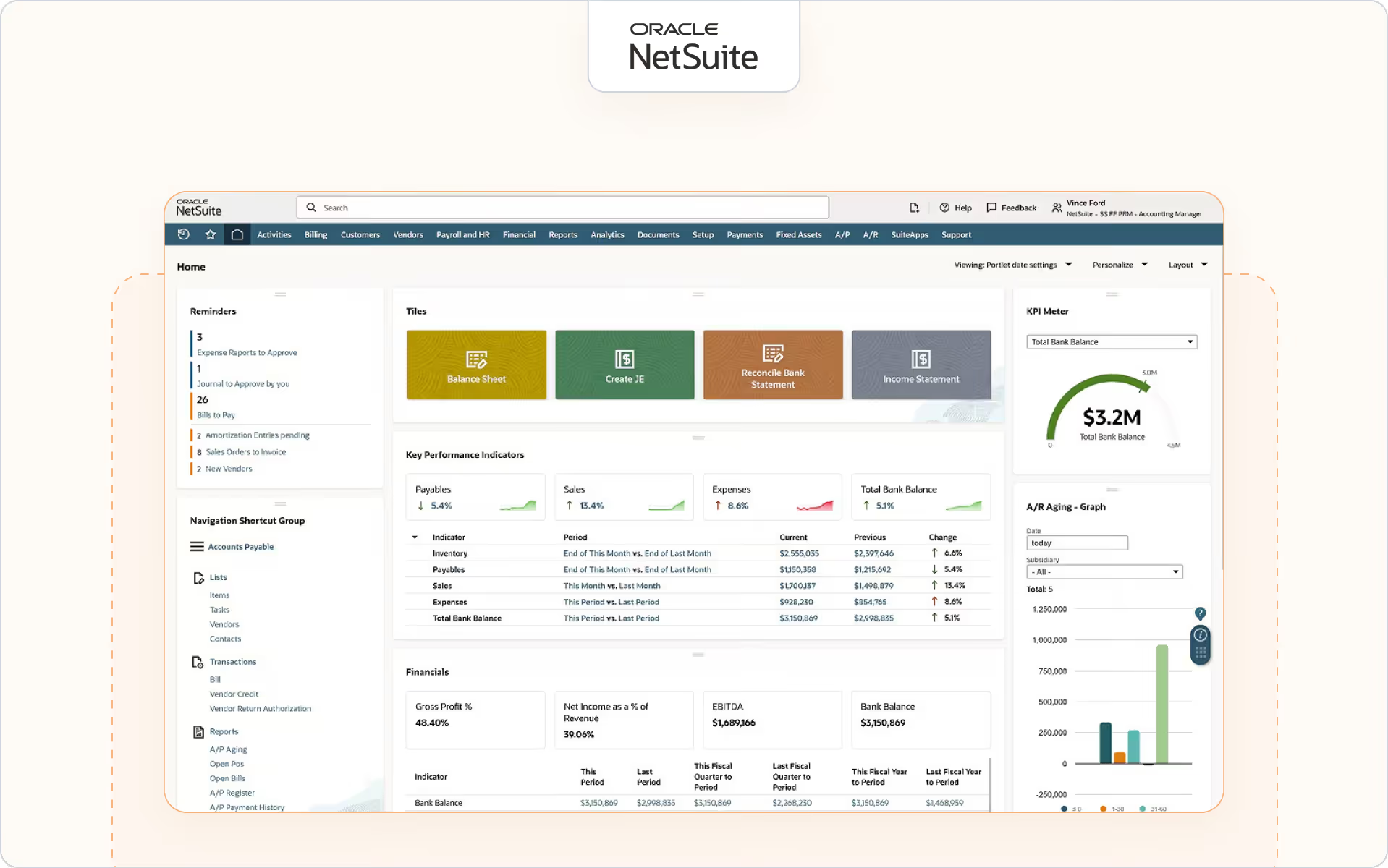
NetSuite is a cloud-based business management suite that includes CRM, ERP, and financial tools to streamline operations, automate workflows, and improve decision-making.
It provides robust partner management capabilities, such as:
✅ Partner relationship management with centralized data
✅ Automated workflows for seamless collaboration
✅ Real-time analytics for partner performance tracking
✅ Custom dashboards to monitor deal progress
✅ Integration with third-party applications
Pros: Great functionality and ease of use.
Cons: Steep learning curve, expensive, complex implementation
Best For: Enterprises that need to streamline their processes.
#14 Monday CRM

Monday CRM is a flexible, no-code customer relationship management platform that helps businesses manage sales, projects, and workflows.
It centralizes data, automates tasks, and enhances collaboration to improve efficiency.
Monday's key features for partner management include:
✅ Centralized partner tracking and collaboration
✅ Automated workflows for partner onboarding and engagement
✅ Customizable pipelines to manage partner deals
✅ Integration with third-party tools for seamless operations
✅ Real-time analytics for partner performance insights
Pros: Great range of features, scalable, easy to customize
Cons: Steep learning curve
Best For: SMEs and service businesses
#15 Zendesk Sell
A modern sales CRM, Zendesk Sell enhances productivity, provides full pipeline visibility, and integrates automation to streamline deal management.
It helps sales teams manage leads, track interactions, and optimize workflows.
However, its features can also be used for PRM, including:
✅ Centralized partner tracking and collaboration
✅ Automated workflows for partner engagement
✅ Customizable sales pipelines for partner deals
✅ Real-time analytics for partner performance insights
✅ Seamless integrations with external tools
Pros: Simple user interface, intuitive to use, good automation features
Cons: Complex setup
Best For: Businesses of any size that want to streamline their processes
How to Choose the Right CRM for Partner Management
Ready to decide on your new CRM?
Here are some handy guidelines.
Make sure your new CRM has:
- Native or customizable deal reg
- CRM alignment with partner program complexity
- Integration with a PRM like Introw
- Automation and reporting
And watch out for these common pitfalls:
- No partner-specific fields or segmentation
- Manual tracking outside the CRM
- No integration between CRM and partner activities
Three final tips for choosing a CRM for partner channel management:
- Align with RevOps early
- Evaluate scalability and workflow compatibility
- Test integrations with tools like Introw
How Introw Supercharges CRM for Partner Management
Of course, when it comes to partner relationship management, a CRM alone won't do.
Sure, investing in the right CRM can significantly boost your partner relationships, but if you aim to establish a profitable ecosystem, PRM software is crucial.
And your PRM must integrate seamlessly with your CRM.
This is where state-of-the-art PRM Introw comes in.
Here's why Introw stands out among other PRMs:
- CRM-first: your team works entirely within Salesforce or HubSpot — no extra logins, no tool-switching. Partners still collaborate via a dedicated portal, fully synced with your CRM.
- Deal and lead registration are mapped directly to the CRM
- Partner engagement tracking is synced with both the CRM and Slack
- Forecasting and visibility operates across all partner-attributed revenue
- No-code workflows for referrals, resellers, and MSPs
But don't just take our word for it — book your personalized demo today and see Introw in action.
Conclusion
The message is clear — choosing the right CRM is foundational to scaling partner revenue.
The best CRMs support visibility, collaboration, and clean partner data.
They also integrate seamlessly with your PRM, empowering you to effectively manage your partners without leaving your CRM.
To recap, here are the 15 best CRMs for partner management in 2026:
- HubSpot
- Salesforce
- Zoho CRM
- Microsoft Dynamics 365
- Pipedrive
- Close.com
- Freshsales
- Copper
- Insightly
- SugarCRM
- Nutshell CRM
- Creatio
- NetSuite CRM
- Monday CRM
- Zendesk Sell
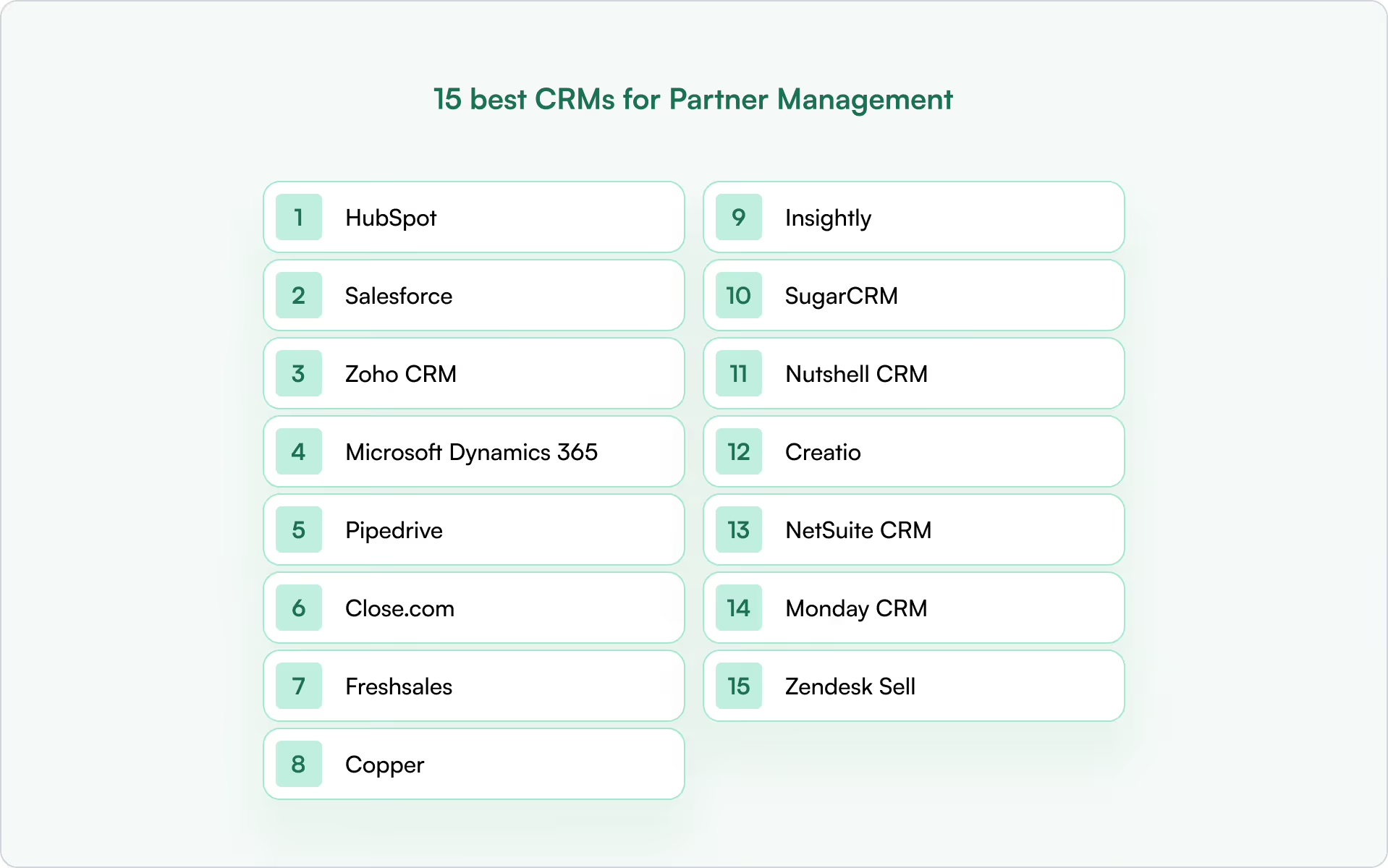
Want to manage your entire partner program from your CRM? Try Introw — the CRM-first PRM.
Channel Partner Gamification (How to Motivate Without Overpaying)
The moment a steady program stops feeling steady
Most channel partner programs start strong: a few champions engage early, sales teams celebrate quick wins, and the partner community feels energized. Then the pattern settles in. A small group stays active while others only show up at quarter-end. Traditional incentive programs and one-off sales contests give you brief spikes, not durable habits.
That is the point where a simple, thoughtful gamification strategy earns its place. Instead of chasing attention with bigger prizes, you clarify desired behaviors, make progress visible, and reward movement that matters. Done right, channel partner gamification becomes the connective tissue between your goals and partner engagement — not a gimmick, but a system that encourages healthy competition and lifts sales performance quarter after quarter.
What channel partner gamification actually means
Before you pick any game mechanics, align on meaning. Channel partner program gamification is the use of straightforward game design elements to motivate specific behaviors — completing training, registering qualified opportunities, advancing stages, running tactical promotions, and closing the loop with customer success. The goal is simple: boost channel partner engagement by making the path to success transparent and fair.
To keep it trustworthy, anchor to four guardrails and return to them often as you scale:
- Specific to business goals and sales targets — no vanity clicks.
- Visible in your PRM or partner portal — no folklore or screenshots.
- Fair across partner sizes — cohort logic keeps healthy competition intact.
- Measurable with clean performance metrics — every point maps to CRM data.
With those principles in place, you can move from concept to practice without confusing partners or creating side spreadsheets.
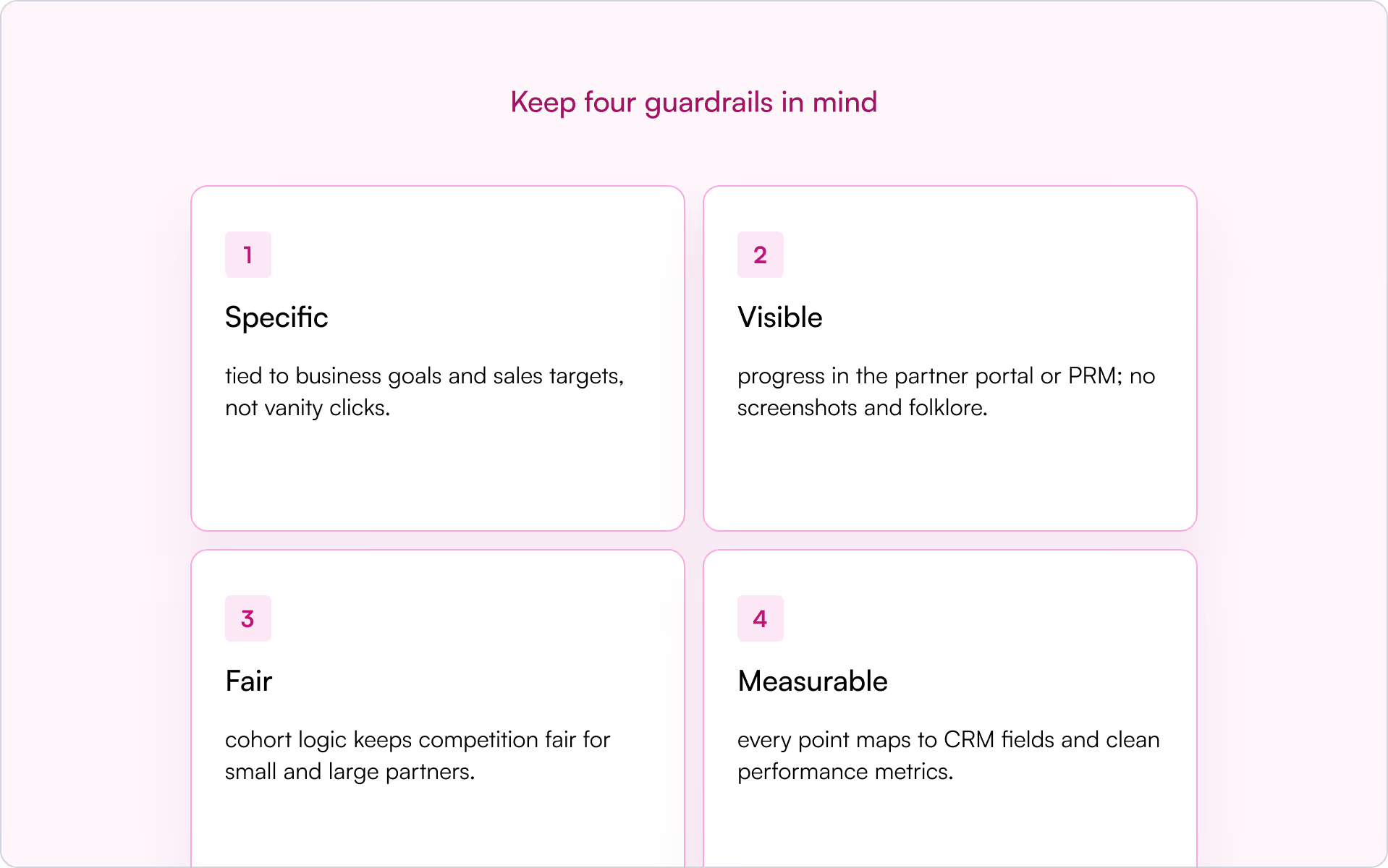
From strategy to practice: choose outcomes first, then mechanics
Great programs start with outcomes, not features. Decide what matters this quarter — higher training completion, more qualified deal registration, better first-meeting rates — and then choose the lightest game elements that reinforce those outcomes. This keeps focus on partner success and prevents your plan from turning into a “points for everything” distraction.
Three mechanics that move numbers
- Levels that mirror your tiers
When levels match your tiered structure (Registered, Select, Elite), partners always know what unlocks the next rung. They complete onboarding, validate a use-case pitch, meet a modest sourced-pipeline target, and keep renewals clean. In return, they unlock tier-specific benefits like priority support, co-marketing funds, and early access to features — real advantages that motivate partners without inventing a parallel system.
- Badges for skills and proof
Badges highlight skill development and credibility: certified individuals, solution validation, successful implementations. Link each badge to evidence (certification IDs, case studies, customer quotes) so sales reps route opportunities confidently and customers see the quality. This strengthens partner relationships and brand loyalty while encouraging partners to complete training modules quickly.
- Team challenges for joint outcomes
Short, time-boxed challenges create momentum and community. Run a 30-day sourced-pipeline sprint in a key vertical, a co-marketing push with shared UTMs, or an adoption wave for a new module. Publish standings weekly and recognize both absolute leaders and cohort winners so smaller firms compete fairly. This is encouraging healthy competition without skewing toward the biggest players.
With Introw, these gamification mechanics live where partners already work — email, Slack — so partners participate actively without extra tools and your channel partner programs avoid complexity.
Reward structure: behavior first, cash last
Picking mechanics is half the story. The other half is fuel. Recognition sustains habits; financial rewards should amplify outcomes. This balance motivates channel partners, keeps budgets sane, and avoids the pitfalls of traditional incentive programs.
- Immediate recognition
When partners complete training, register a qualified deal, or move a stage, trigger instant recognition: progress bars update, badges appear, and the partner community sees a shout-out. Immediate recognition creates motivation, reinforces desired behaviors, and costs nothing.
- Access that accelerates wins
For intermediate milestones, access beats cash. Offer priority support with named escalations, exclusive training and office hours with product, early access for ISVs, and simple MDF with quick approvals. These reward systems directly improve partner performance and help partners hit sales targets.
- Real rewards for real outcomes
Use financial rewards for outcome milestones — sourced-revenue bands, multi-logo wins, regional breakthroughs. Publish the rules, make them predictable, and time-box them. That way your gamification initiatives strengthen your channel strategy instead of distorting it.
These layers move naturally from learning to doing to achieving — the same arc a healthy sales process follows.
5 metrics that make the game fair and productive
Now tie each mechanic to one KPI you already trust. Keep the set short so everyone understands how points become progress and progress becomes revenue. Comparing like with like keeps the competitive spirit healthy and prevents gaming.
Five practical anchors:
- Training completion rates from your learning management system — onboarding, role-based certifications, product updates.
- Pipeline quality — qualified registrations, deal registration records, stage progression, next-step hygiene.
- Meeting momentum — first-meeting rate and discovery-to-proposal conversion to lift sales productivity.
- Delivery quality — on-time milestones, CSAT after go-live, low escalation rate to protect customer experience.
- Co-marketing impact — form-fills from partner audiences, event attendance, sourced opportunities.
Introw maps each signal to CRM fields and renders partner-visible progress tracking. Managers see one source of truth for performance metrics and partners see exactly how to earn rewards — no confusion, no duplicated data.
The quiet growth engine: onboarding and learning
Most teams jump to quarterly games, but the biggest lift often starts earlier. By incorporating simple game elements into enablement, you help partners complete training modules, adopt sales enablement content, and turn knowledge into action faster — shortening the sales cycle and improving buyer engagement.
Three quick plays:
- Onboarding streak — five tasks in 14 days: portal setup, ICP training, demo pass, one use-case pitch, first registration. Outcome: Ramp-Ready badge plus a co-sell office hour.
- Learning ladders — two tracks: Field-Ready for sales reps (discovery practical) and Deploy-Ready for delivery (sandbox build).
- Enablement quests — watch a short play, send the snippet to three prospects, log outcomes for a micro-badge and a community callout.
If you already use sales enablement tools or an LMS, sync completion so badges and levels show up alongside open opportunities. That integration helps partners and your internal sales team keep energy on actions that move the funnel.
A rollout that respects day jobs
You do not need a big bang. A calm, six-week rollout gives partners a clear start line, removes ambiguity for sales teams, and sets up clean measurement from day one.
- Week 1 — Pick three behaviors: training completion, qualified registrations, first-meeting rate.
- Week 2 — Choose two or three mechanics: levels, badges, one 30-day team challenge.
- Week 3 — Wire definitions to CRM and set cohorts for fairness.
- Week 4 — Publish a one-page playbook in the partner portal with rules, examples, screenshots, and FAQs.
- Week 5 — Pilot with ten partners, gather partner feedback, and tune scoring where needed.
- Week 6 — Launch broadly, send weekly standings, highlight next steps, and support sales reps with talking points.
Introw compresses the middle weeks by turning CRM fields into progress bars, automating nudges, and letting partners engage from email or Slack, which keeps partners engaged without adding a new login.
Guardrails that keep trust high
Every fair game needs boundaries. These five keep your program credible and effective:
- One source of truth — if it is not in CRM or PRM, it does not count.
- No vanity metrics — score qualified actions and outcomes, not logins or clicks.
- Cohort fairness — compare similar partner types so smaller firms can earn rewards on merit.
- Expiring points — score within the current quarter so momentum matters.
- Fast appeals — partners submit evidence, you respond with dates and thresholds.
These constraints keep gamification techniques aligned to business growth and partner satisfaction, not noise.
Where Introw fits when you are ready to operationalize
Introw brings partner relationship management gamification into the everyday flow of your channel strategy. Levels mirror your tiers, badges reflect real certifications and case evidence, and leaderboards run on live Salesforce or HubSpot data. Partners see their standings, immediate recognition, and next steps without extra portals. Because the gamification elements map to tier criteria and deal registration, recognition fuels mobility and partner programs stay coherent.
Ready to boost channel partner engagement without overpaying? Request an Introw demo and see how gamification initiatives, tiering, and co-selling come together in one CRM-first workflow.
Top 9 PartnerStack Alternatives to Consider in 2026
While partner platform PartnerStack works well for some businesses, it can fall short for SaaS teams needing deep CRM integration, a custom partner portal, and more reporting and automation capabilities.
If you're struggling with data silos, limited automation, or partner portals that don't work with your needs, it's time for a change.
Look for a solution built for RevOps, embedded in your CRM, and focused on revenue—not vanity metrics.
➡️ Explore why Introw is a top PartnerStack alternative — book your live demo today.
Why Look for a PartnerStack Alternative in 2026?
As the SaaS landscape evolves, businesses must continually re-evaluate their partnership management tools.
While PartnerStack remains a strong contender, shifting needs around customization, reporting, automation, and integration options may prompt some SaaS brands to explore alternatives that better align with their growth strategies and tech demands.
Is it time for your business to consider PartnerStack alternatives?
Read on to find out.
Where PartnerStack Falls Short for Scaling SaaS Teams
PartnerStack can help launch a partner program — but once you're driving real revenue through partners, it often hits its limits.
Here are three common friction points for SaaS companies trying to scale with PartnerStack:
1. CRM Disconnect
A lack of seamless integration with your CRM can lead to data silos, duplicated work, and missed opportunities for cross-team alignment.
In short — a headache.
After all, when your sales and partnership marketing platforms don't speak the same language, efficiency and visibility suffer.
Instead, look for partner management platforms that are fully embedded in your CRM.
2. No Off-Portal Collaboration
If your partners have to log into a portal just to stay in the loop, you're already creating friction. PartnerStack requires portal access for updates or engagement — which often leads to drop-off and delays.
There’s no support for off-portal collaboration, like replying to deal updates via email or Slack and having it sync back to your CRM. That disconnect slows down momentum and makes it harder to keep partners engaged.
Modern partner teams need tools that meet partners where they are — with frictionless, off-portal collaboration baked in.
3. No Customizable Portal Experience
As your partner program matures, a one-size-fits-all portal just doesn’t cut it. PartnerStack offers limited flexibility when it comes to customizing the partner experience — making it hard to support different partner types, tiers, or regional nuances.
If your team needs to tailor onboarding, branding, or workflows for referral partners vs. resellers vs. MSPs, PartnerStack likely falls short.
Look for platforms that offer fully customizable, white-labeled portals with CRM-driven logic — so every partner gets the right experience, at scale.
What to Look for Instead
If you've decided it's time to move on from PartnerStack, what should you be looking for from your partner management system?
1. CRM-Native with Real-Time Sync
In 2026, your partner platform must live inside Salesforce or HubSpot. That means native CRM integration — not just pushing spreadsheets into a dashboard. Real-time deal sync, automated registration, and shared pipeline visibility help you eliminate silos and keep everyone on the same page.
2. Frictionless Off-Portal Collaboration
Look for tools that make it easy for partners to engage without logging in — think Slack or email updates that sync directly to your CRM. Off-portal collaboration keeps momentum high and ensures reps and partners stay aligned in real time, not stuck chasing each other across platforms.
3. Custom-Branded, Flexible Partner Portal
Your partner portal should reflect how your business operates — not force you into a rigid template. Look for a PRM that lets you fully customize the portal layout, branding, and workflows to match your processes, partner model, and go-to-market motion. From content to deal reg flows, every part should feel like an extension of your company — not a bolt-on.
If PartnerStack is starting to slow your momentum — whether due to collaboration friction, limited CRM alignment, or lack of customization — it’s worth evaluating purpose-built tools designed for scale.
Let’s see…
Top PartnerStack Alternatives to Consider
When considering moving on from PartnerStack, it's essential to explore your options and identify the best fit for you.
1. Introw — Best CRM-Native PRM for SaaS Teams
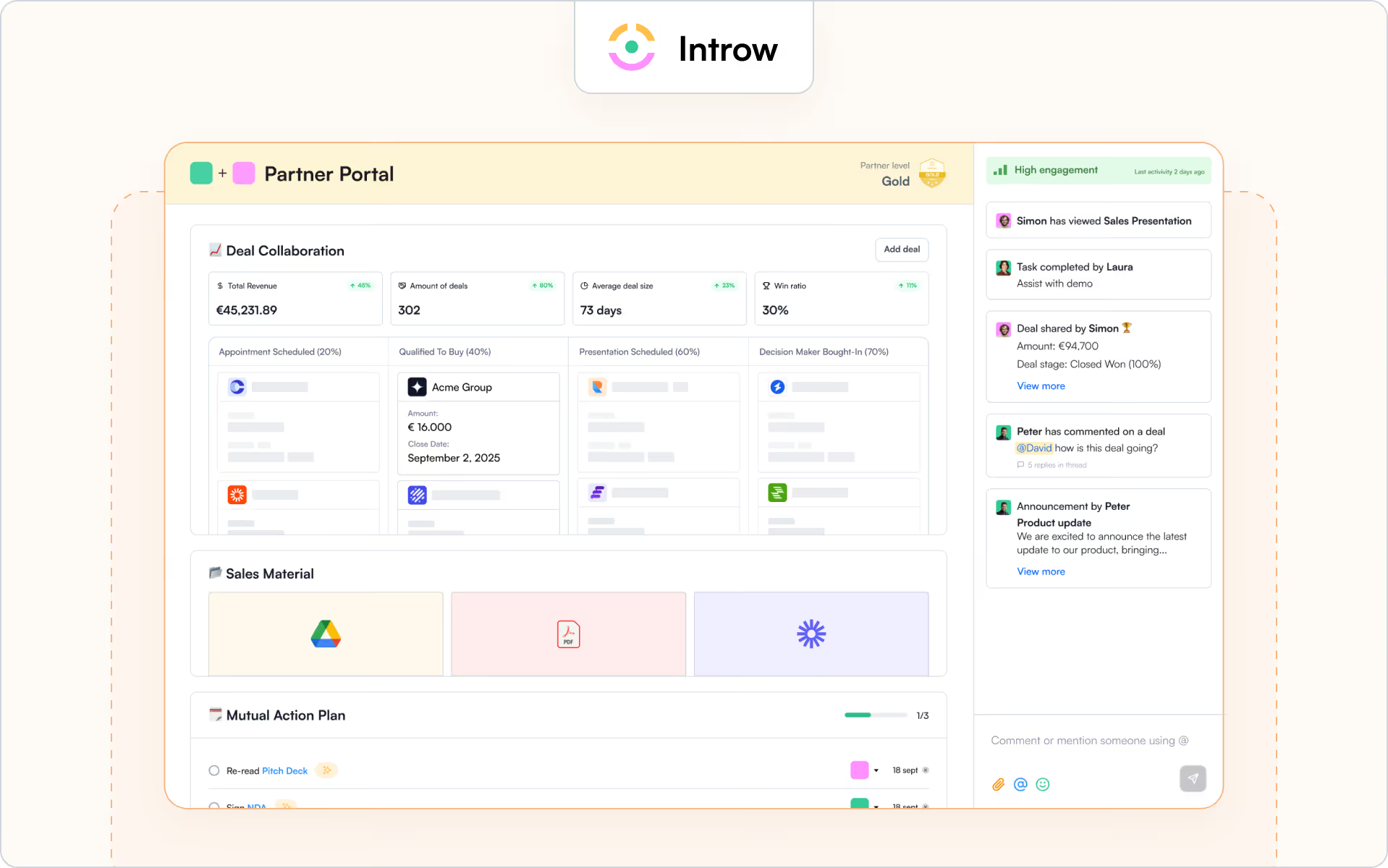
Introw is a sophisticated partnership relationship management (PRM) platform with deep Salesforce and HubSpot integrations.
Its CRM-first approach ensures that partnership data — such as leads, deals, engagement, and pipeline metrics — flows automatically between Introw and your CRM, keeping Salesforce or HubSpot as your single source of truth.
Other Introw highlights include:
- Real-time co-selling
- No-code partner portal builder
- AI Agent, providing 24/7 support to your partners
- No login needed for partners — off-portal experience
- Real-time deal reg, forecasting, and MAPs
- Modular workflows (referral, reseller, etc)
- Slack sync for nudges, updates
- Strong RevOps and CCO/CRO alignment
- Transparent pricing
Who Is Introw Best For?
Introw is perfect for SaaS teams with two or more partner managers and who already use (or intend to use) Salesforce or HubSpot.
Pricing: Introw is free for one partner, check the different plans via this link or start for free here.
2. Partnero

Partnero is an all-in-one partnership management platform designed for SaaS and e-commerce businesses to create, manage, and scale affiliate, referral, and newsletter referral programs.
Partnero supports automated payouts, offers fully customizable reward structures, white-label partner portals, and boasts seamless integrations with tools like Stripe, Shopify, PayPal, and WooCommerce.
Features include:
- All-in-one program management
- Customizable reward structures
- White-label partner portals
- Seamless integrations
- Automated payouts
- Real-time analytics
- Custom referral marketing links and coupons
- Partner enablement tools
- Developer-friendly API
Who Is Partnero Best For?
Partnero works best for companies running affiliate and influencer programs. Its lighter feature set works well for early-stage companies, but it's less ideal for scaling SaaS with mature CRMs.
Pricing: Partnero's starter bundle costs $49 per month, its Partner tier is $149 per month, and the Advanced option for larger companies comes in at $479 per month.
3. Kiflo
Kiflo is a PRM platform designed to help B2B companies grow and scale their partner programs.
It enables users to track partner-sourced revenue, manage leads, onboard and enable partners, and foster long-term, profitable partner relationships.
Specific features include:
- Partner onboarding and enablement
- Lead and deal management
- Revenue tracking and attribution
Who Is Kiflo Best For?
Kiflo is a great option for startups, with super easy onboarding.
However, it lacks a native Salesforce integration, so companies that rely on this CRM may want to consider alternatives.
Its analytics are also quite basic.
Pricing: Kiflo's Core tier — for teams just launching their partner program — starts at $359 per month. The Plus and Premier tiers operate on bespoke pricing plans.
4. Tolt
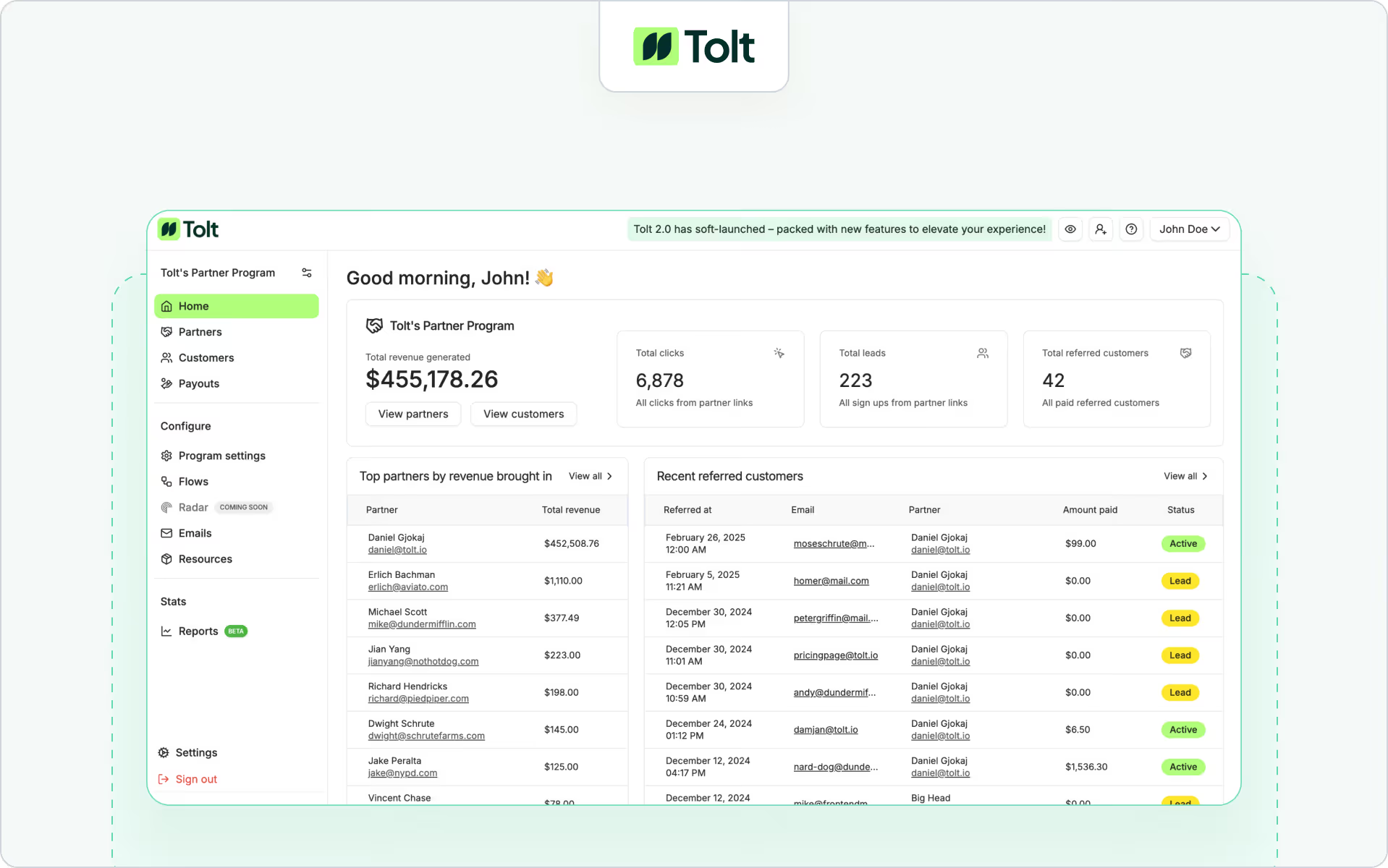
Tolt is an all-in-one affiliate marketing platform tailored for SaaS startups looking to swiftly launch and manage affiliate and referral programs.
With a heavy focus on partner onboarding, real-time analytics, and customizable commission structures, Tolt streamlines affiliate management, enabling startups to scale efficiently and cost-effectively.
Tolt's features include:
- Branded affiliate portals
- Real-time performance tracking
- Customizable commission structures
- Passwordless login for affiliates
- Quick setup within 15 minutes
Who Is Tolt Best For?
Tolt's focus is on partner onboarding, so it works well for companies that expect to attract a high number of new partners or simply want to impress their partners from the outset.
However, this tool is still maturing when it comes to deal registrations and pipeline management, and it doesn't natively support MAPs or Slack workflows — all of which make it a better option for startups and smaller businesses rather than mature partner programs.
Pricing: Tolt's Basic bundle starts at $49 per month, its Growth package is $99 per month, and the Pro option costs $199 per month.
5. Allbound

PRM Allbound is designed to streamline and automate every aspect of partner programs for B2B organizations.
It offers tools for onboarding, enablement, co-marketing, co-selling, and performance tracking, all within a unified interface.
Highlights include:
- Partner journey automation
- Content library and management
- Learning tracks and certifications
- Deal registration and playbooks
- Multi-tier distribution support
- Gamification and incentive dashboards
- Channel insights and reporting
- CRM integrations with real-time updates
Who Is Allbound Best For?
Allbound is a great option for mid-market to enterprise-level B2B tech businesses with mature or scaling partner ecosystems.
Pricing: Allbound's pricing is bespoke.
6. Impartner
Comprehensive PRM platform Impartner is designed to help B2B companies manage and scale their partner ecosystems effectively.
It supports all types of partners, including reseller partners, distributors, affiliates, ISVs, and more.
Impartner offers comprehensive tools designed to help businesses enhance partner engagement, streamline operations, and drive revenue growth through indirect sales channels.
Highlights include:
- Automated partner onboarding and training
- Centralized partner portals with role-based access
- Deal registration and lead management
- Performance tracking and analytics dashboards
- Co-branded marketing asset creation
- Partner business planning and goal-setting
- Tiering and compliance automation
- CRM integrations with real-time data sync
- Referral and affiliate program support
Who Is Impartner Best For?
Impartner is a comprehensive PRM solution that works best for mid-sized to enterprise-level B2B companies with complex, global, or high-growth partner ecosystems.
Pricing: Impartner offers tailored pricing.
7. Impact.com
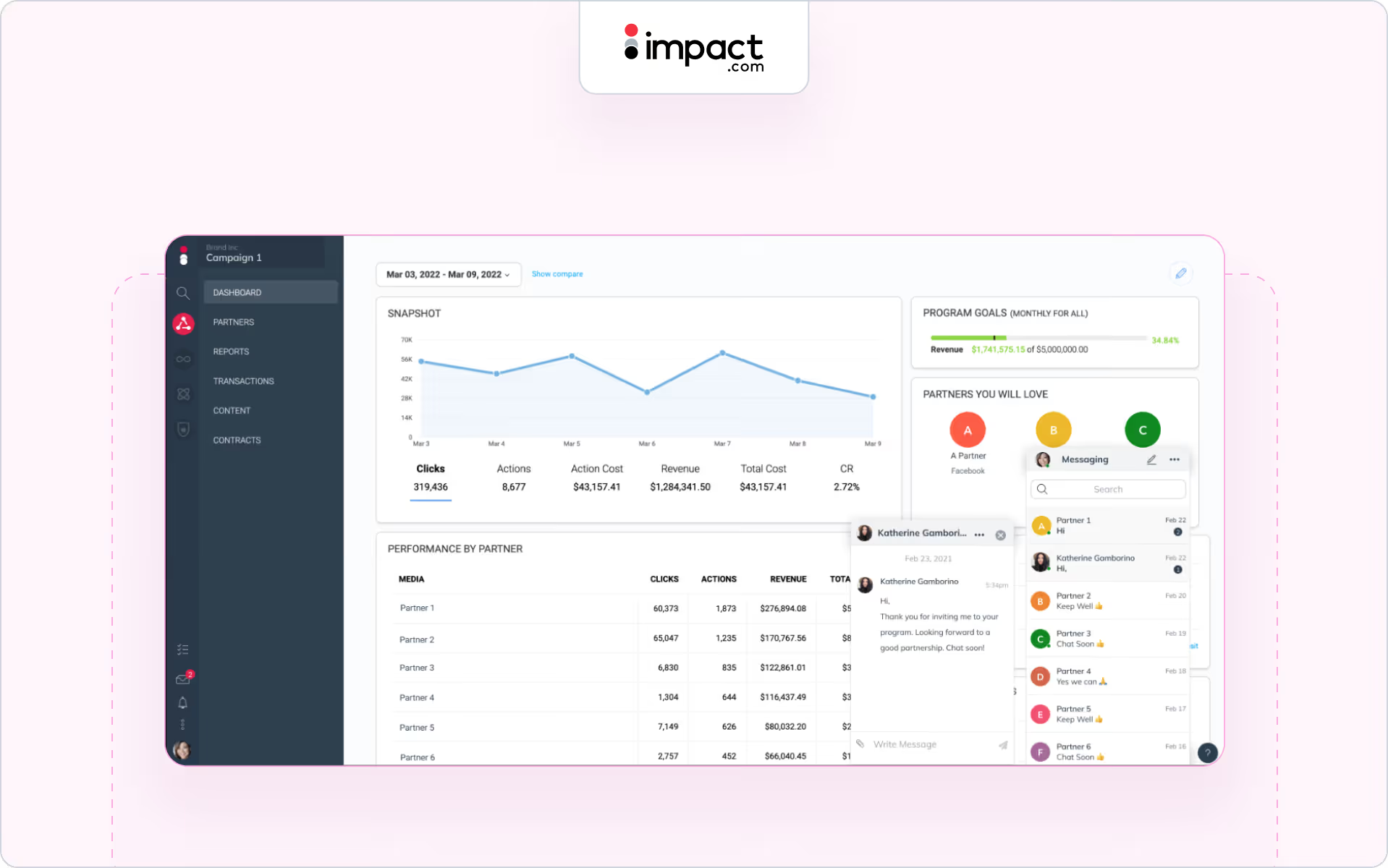
Impact.com is a comprehensive partnership management platform that enables businesses to manage and optimize various types of partnerships — including affiliates, influencers, creators, B2B partners, and referrals — within a single system.
Its features include:
- Partner discovery and recruitment automation
- Automated payments and contracts
- Real-time tracking and performance analytics
- Fraud detection and prevention
- Customizable attribution modeling
- CRM and e-commerce platform integrations
- Role-based access and permissions
- Automated partner onboarding workflows
- Benchmarking reports against industry peers
Who Is Impact.com Best For?
Impact.com is best for companies that want to build, manage, and scale diverse, performance-based partnerships in a unified platform.
It's particularly well-suited for large companies, e-commerce and DTC brands, and agencies and networks that are running partnership programs for multiple clients.
Pricing: Impact pricing is bespoke.
8. Rewardful

Rewardful is an all-in-one affiliate and referral management platform tailored for SaaS companies and subscription-based businesses.
It enables users to launch affiliate programs in under 15 minutes through seamless integrations with Stripe and Paddle.
Here are its top features:
- Easy Stripe and Paddle integrations
- Customizable commission structures
- User-friendly affiliate portal with branded customization
- Automated payouts via PayPal and Wise
- Real-time tracking of referrals and conversions
- Coupon code and link-based referral partners tracking
- Fraud detection and prevention mechanisms
- Affiliate finder tool
- White-label capabilities
- Analytics dashboard
Who Is Rewardful Best For?
Rewardful is best for bootstrapped to mid-sized SaaS companies that use Stripe or Paddle for billing and want fast, no-code affiliate setup.
It's also great for subscription businesses that need recurring or one-time commission models.
Pricing: Rewardful's Starter package costs $49 per month, and its Growth bundle is $99 per month, while Enterprise pricing starts at $149 per month.
9. Partnerize

Partnerize is a comprehensive end-to-end partnership management platform designed to help brands discover, manage, and optimize diverse partner relationships at scale.
It supports various partner types, including affiliates, influencers, and content creators.
Its key features are as follows:
- Automated partner discovery and recruitment
- Dynamic commissioning based on performance metrics
- Real-time tracking and analytics dashboards
- Brand safety and fraud prevention tools
- Customizable reporting and attribution models
- Integration with major e-commerce and CRM platforms
- Role-based access controls and user permissions
- Dedicated partner portals
Who Is Partnerize Best For?
Partnerize is ideal for mid-sized to enterprise-level businesses seeking to scale their partnership programs efficiently.
It's especially beneficial for companies that manage a diverse range of partners and/or operate in multiple regions.
Pricing: Fees vary depending on your requirements.
How to Choose the Right PartnerStack Alternative
Ready to find the very best partner management platform for your business?
Here are three major points to consider:
1. Prioritize CRM Compatibility
It's vital that your PRM integrates seamlessly with your CRM — such as Salesforce or HubSpot.
A partner management platform that doesn't sync in real time can create data silos, duplicate efforts, and missed opportunities.
So, look for a solution that supports native, two-way CRM integration to ensure accurate reporting, streamlined workflows, and a single source of truth.
2. Focus on Channel Revenue, Not Just Signups
It's easy to get caught up in growing partner signups — but quantity doesn't equal quality.
The right PRM should help you measure what really matters: channel revenue.
Prioritize tools that track partner-sourced and influenced deals, connect activity to pipeline stages, and surface performance metrics.
3. Evaluate User Experience for Partners
A great partner experience drives engagement and results.
If your PRM requires complex logins or clunky portals, partners simply won't use it.
It's crucial to find tools that offer frictionless interaction — like replying to deal threads via email or Slack without logging in.
The right platform should also provide visibility into partner activity (opens, clicks, replies), allowing you to track engagement and follow up effectively without requiring constant manual check-ins.
Why Introw Leads the Pack in 2026
Introw stands out as the leading PartnerStack alternative by delivering a modern, revenue-focused approach to partner management with deep CRM integration.
This user-friendly PRM platform delivers a fully embedded experience in platforms like Salesforce and HubSpot and offers real-time co-selling capabilities, keeping your partners and pipeline in sync.
Meanwhile, its no-code portal builder enables tailored partner experiences, and its Slack and email integration makes communication easy, while a built-in AI Agent offers 24/7 support.
Purpose-built for SaaS, RevOps, and scale, Introw prioritizes actual revenue over vanity metrics.
➡️ Ready to experience the future of partner management? Request a live Introw demo here.
Partner Deal Registration (How to Make It Easy, Fast, and CRM-Synced)
You can feel a channel program’s health in the quiet moments between emails. A reseller spots a promising account, sends details, and waits. Somewhere else, another partner mentions the same opportunity. Threads multiply. By the time someone checks the CRM, it’s unclear who arrived first or whether the end customer even wants a meeting. Trust dips; velocity stalls. That’s the mess partner deal registration exists to prevent. The fix isn’t more policy — it’s a cleaner flow that partners actually use.
What partner deal registration really is
Before we tune the mechanics, align on meaning. Partner deal registration is a simple agreement: a deal registration partner brings you a potential sales opportunity, you review it quickly, and if it qualifies you grant clear benefits for a fixed window and make it visible to your sales team. In return, the partner commits to next steps. The outcome is a single, CRM-synced record that guides the sales process rather than a separate system no one trusts.
This matters for three reasons: it protects partner investments, limits channel conflict when multiple partners touch the same opportunity, and gives early visibility into new business, which sharpens sales forecasting.
Why partners register — or quietly don’t
Partners do fast math. If submitting a partner deal registration form takes two minutes and decisions arrive quickly, they register. If the approval process is opaque or slow, they work the deal off-book. Adoption is earned by respecting partner time and by rewarding real progress, not just first clicks.
3 signals your program respects partner time
- Immediate acknowledgment after submission so partners know you received it.
- A short approval SLA — think two business days.
- Clear reasons for rejection and a lightweight appeal path.
These signals build partner satisfaction even when the answer is no, because the process feels fair.
Fair approvals without drama
Approvals are where programs build or lose trust. Partners don’t expect a blanket yes; they expect a clear, repeatable rule set. Publish simple criteria and stick to them: net-new opportunity, verified customer contact, plausible timeline, and no conflicting registered deals. Add a defined protection window with an equally clear extension rule tied to progress (for example: discovery booked or solution validation scheduled).
When your team decides quickly and explains why, partners stay engaged even if they don’t win every request. Internally, your sellers benefit too — registered deals show up in the same pipeline, with the same fields, and the same status values they already use.
Avoiding channel conflict without scaring partners
Conflict usually comes from ambiguity: multiple partners chase the same company name, or a protected registration goes cold but blocks others. Keep the temperature down with straightforward policies.
4 rules that prevent “same opportunity” fights:
- First qualified submission wins the registration.
- Protection lasts for a fixed period and auto-renews only with evidence of progress.
- Disputes are resolved with simple artifacts (meeting invite, notes, proposal date).
- Collaboration is allowed: multiple partners can be assigned roles on one opportunity when they bring distinct value (reseller plus services, ISV plus services), with benefits split accordingly.
A few plain rules, consistently enforced, do more for partner trust than a long policy in a portal no one reads.
Benefits that reward real work
A deal registration program should nudge the right sales efforts, not just hand out discounts. Offer light benefits for an approved registration, stronger support once momentum appears, and material rewards when the opportunity closes.
Examples, moving from light to strong
- Light: named solution engineer for discovery, faster answers from sales support, inclusion in a co-marketing calendar.
- Medium: eligibility for pricing discounts on qualified proposals, priority access to reference stories, help with enterprise security reviews.
- Strong: rebates or margin boosters on closed-won, eligibility for private offers in larger enterprise motions.
Tie each benefit to observable milestones in the CRM so partner rewards feel earned and finance sees clean attribution.
Everything belongs in your CRM
Programs falter when registered deals live in a portal and the sales team lives in a different system. End the split. Every registration should create or link to a CRM record and update status fields your team already understands. That keeps the sales pipeline honest, improves sales forecasting, and eliminates duplicate data entry.
Introw was built for this. Partners can submit a registration without a portal login. The system checks for duplicates in real time, creates the registration, links the opportunity, and sends the acknowledgment immediately. Status changes sync in both directions, so partners see what sellers see — no screenshots, no side spreadsheets.
What to measure so you can improve
Measurement is where a deal registration program becomes a growth engine instead of a queue.
5 metrics that tell the real story
- Time to decision: submission to approval or decline.
- Approval rate with top rejection reasons (duplicate, not qualified, customer in active cycle).
- Win rate and deal size for registered deals versus non-registered deals.
- Cycle times: registration to discovery, discovery to proposal, proposal to close.
- Protection expirations: how often registered deals die quietly and why.
Use these to tune the registration process, the benefits, and your enablement with channel partners.
How this scales as your partner ecosystem grows
Growth introduces edge cases — multiple partners on one opportunity, regional handoffs, co-sell with a cloud provider, or services-only plays after a direct sale. Resist inventing a new process for each scenario. Keep one consistent deal registration process, allow multiple roles on the same opportunity when justified, and split incentives according to documented contribution. Your partner program stays understandable; your team stays efficient.
Where Introw fits
Introw makes partner deal registration easy for partners and operationally clean for your team — without forcing partners into a portal they won’t use. Partners submit via link (no login), Introw validates and de-dupes in real time, and the registration syncs directly to Salesforce or HubSpot.
The big unlock is pipeline visibility the moment a deal is submitted: partner-sourced pipeline shows up inside your CRM where your team already runs pipeline reviews, reporting, and forecasting — so Partner/Channel Managers aren’t stuck chasing updates across email threads. Introw also maps registrations to the right CRM fields so reporting stays current without manual cleanup, which is what makes forecasting reliable at scale.
And because collaboration is off-portal, partners can get status updates via email or Slack and reply directly — keeping momentum high while still keeping the CRM record authoritative.
If you want channel partner deal registration that partners actually use — and a CRM view your sales and RevOps teams actually trust — book a short Introw demo. We’ll show what “easy, fast, and CRM-synced” looks like with live pipeline visibility from submission to close.
15+ Impartner Alternatives To Choose From in 2026
Let's start with an obvious question - why teams look beyond Impartner? Impartner is a leading partner relationship management and TCMA provider and remains popular with enterprise programs that need MDF, incentives, and a full management system for partner relationships. Still, many companies assess Impartner competitors to find a better fit for HubSpot coexistence, speed of deployment, lighter admin overhead, or specialized motions like hyperscaler co selling, affiliate partnerships, and marketplace listings.
To help you choose, we compared core PRM software key features — partner portals, partner onboarding and partner training, lead generation and registration, co selling workflows, content management for enablement, real time data sync, and analytics to monitor performance — plus security, global scale, and time-to-value. We also looked at AI capabilities that support partner adoption, guide partners, and automate or orchestrate tasks.
What to look for in an Impartner alternative
- CRM-first operations — keep sellers in Salesforce or HubSpot and give partners a portal that syncs customer and partner data without brittle connectors.
- Deal registration and opportunity management — clear conflict prevention, stage mapping, and SLA alerts so you can track deals, forecast, and run pipeline inspection.
- Partner onboarding and training — automate steps, certify roles, and deliver outcome based enablement that increases partner productivity and adoption.
- TCMA depth when needed — if local demand generation is core, ensure strong through channel marketing automation for brand-compliant campaigns and funding.
- Co-sell and marketplace — if you work with AWS or Microsoft, look for native hyperscaler integrations so alliance teams can collaborate and sell together from your CRM.
- Total cost and services — compare subscription, implementation, and ongoing admin. Lightweight tools can reduce costs and complexity for many businesses.
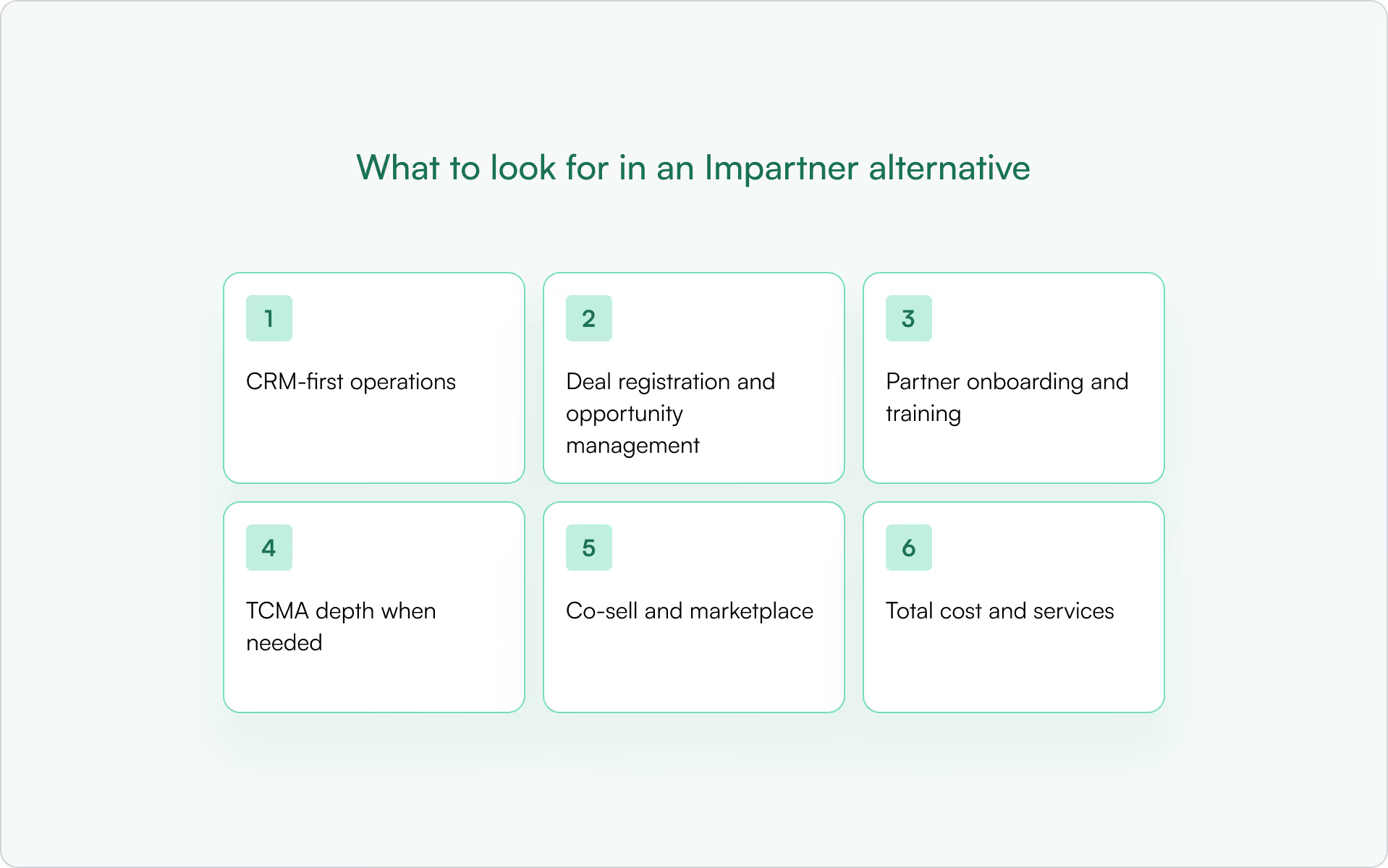
If you nodded along to most of the checklist above, you’re already thinking like a modern channel team — CRM-first operations, outcome-based enablement, and motion-specific depth where it actually moves the needle. The next step is matching those needs to a platform that your partners will adopt and your RevOps can trust.
How to shortlist in 10 minutes
If that sounds like your roadmap — faster time-to-value, fewer admin cycles, and motions your partners will actually use — the next step is turning options into a shortlist your team can pilot. Use the quick framework below to move from “interesting” to “in production” without stalling in analysis:
- Clarify motion — reseller, referral, co selling, affiliate.
- Set CRM center — Salesforce only, or Salesforce plus HubSpot.
- Pick three to trial — for CRM-first PRM consider Introw; for breadth and incentives consider ZINFI, Unifyr, Channelscaler; for performance-led programs consider impact.com or Everflow; for hyperscaler co-sell consider WorkSpan.
- Score pilots — time to first deal registration, partner adoption and engagement, CRM data quality, visibility for pipeline inspection, and ability to monitor performance.
The 17 best Impartner alternatives in 2026
Before we dive in, a quick orientation: the list mixes classic PRM, co-sell orchestration, and TCMA-led options. Skim the “Best for” line to see fit at a glance, then use the “Why it’s an Impartner alternative” line to understand how each platform approaches partner onboarding, deal registration, and day-to-day collaboration differently.
1) Introw
Best for: CRM-first teams that want partner relationship management embedded in Salesforce or HubSpot — including partner portals, deal registration, and Slack/email collaboration that keeps partners engaged without logins.
Why it’s an Impartner alternative: Introw keeps the portal simple and pushes updates to where people already work. Partners can create and update leads and opportunities; AEs see real time changes in the CRM; RevOps avoids duplicate records. This approach can shorten time-to-value for companies that don’t need a heavy management system.
Notable callouts: Native Salesforce and HubSpot integrations, off-portal Slack and email nudges, and templates that enable partners with the right content at the right time, plus support for custom objects and AI-assisted engagement.
2) Salesforce Partner Cloud (Salesforce PRM)

Best for: Channel partners operating in a single platform with tight ties to Sales Cloud and Service Cloud.
Why it’s an Impartner alternative: Partner Cloud provides partner portals, deal registration, lead distribution, and in app guidance on Experience Cloud with AI CRM alignment. It fits when your organization standardizes on other Salesforce products and wants to automate sales processes in the same data model.
Notable callouts: Strong configuration patterns for deal registration, lead distribution, portal security, and partner enablement practices.
3) ZINFI (Unified Partner Management)
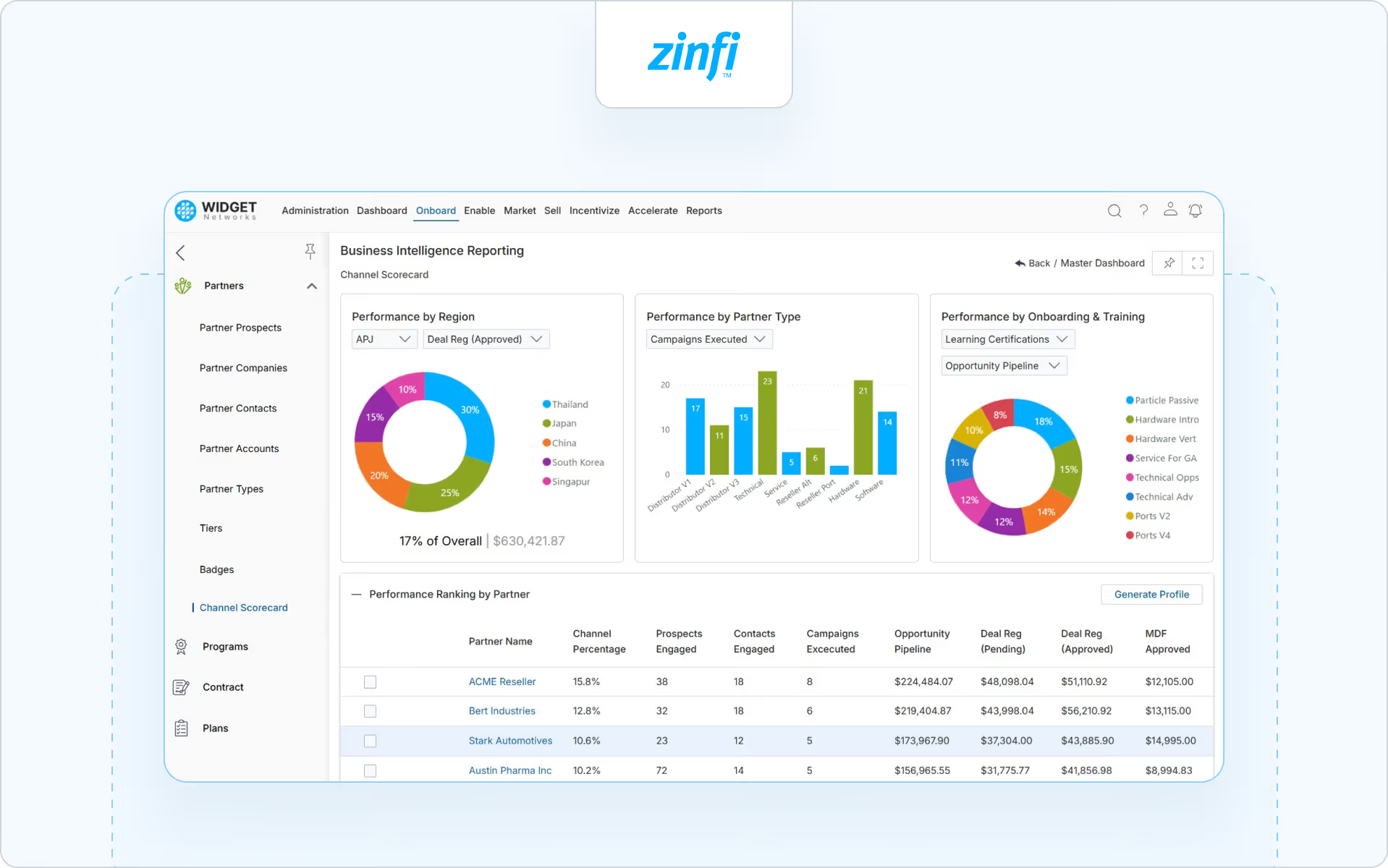
Best for: Programs needing broad PRM coverage — recruitment, onboarding, enablement, incentives — with steady product velocity and AI functionality.
Why it’s an Impartner alternative: ZINFI bundles partner management, partner training, MDF, and automation into one solution so channel managers can manage lifecycles in fewer tools. Often shortlisted by Impartner customers exploring options.
Notable callouts: Emphasis on AI and autonomous workflows to improve engagement and performance while reducing admin.
4) Unifyr (formerly Zift Solutions)
Best for: Teams that want PRM plus through channel marketing automation and training under one roof.
Why it’s an Impartner alternative: The ZiftONE stack rebranded as Unifyr, positioning an all-in-one, AI-enabled platform for partner ecosystem growth. It shines when MDF, enablement, and content syndication sit alongside PRM.
Notable callouts: Automated partner onboarding, certification, and flexible experiences for VARs, MSPs, referral partners, and distributors.
5) Channelscaler (Allbound + Channel Mechanics)
Best for: Teams that need modern PRM UX plus enterprise-grade rebates, pricing, and incentive automation.
Why it’s an Impartner alternative: After the Allbound and Channel Mechanics merger, Channelscaler unified PRM with powerful commercial automation — an attractive combo for programs that need both.
Notable callouts: Focus on scalability, integration, and intelligence that improves partner experience and outcomes.
6) Channeltivity
Best for: Mid-market teams prioritizing fast deployment and point-and-click CRM integration over custom builds.
Why it’s an Impartner alternative: Channeltivity’s partner portal integrates with HubSpot and Salesforce to sync partners, contacts, deal registration, and referrals — giving channel managers immediate visibility in CRM.
Notable callouts: Two-way sync and simple field mapping — helpful when ramping new partners quickly.
7) Magentrix
Best for: Salesforce-centric companies that want a configurable portal with strong CRM mirroring and fewer sync headaches.
Why it’s an Impartner alternative: Magentrix positions itself as a Salesforce PRM alternative to Experience Cloud, focusing on partner portals, collaboration, and opportunity management.
Notable callouts: Integration resources and guides emphasize running partner operations without constant connector firefights.
8) PartnerStack

Best for: B2B programs combining affiliate, referral, and reseller motions with marketplace reach and automated payouts.
Why it’s an Impartner alternative: PartnerStack marries PRM-like workflows with a large marketplace and payouts engine — useful when you need to drive traffic, recruit the right partners, and pay at scale.
Notable callouts: Strong market reach and partner liquidity that can accelerate lead generation and revenue.
9) Kiflo
Best for: SMBs and scale-ups formalizing a first partner program with clean HubSpot connectivity.
Why it’s an Impartner alternative: Kiflo is a lighter-weight PRM software with native HubSpot sync for leads, deals, and contacts — enough to manage partners, share marketing resources, and track outcomes without a heavy lift.
Notable callouts: Two-way sync and field mapping that support quick adoption.
10) WorkSpan
Best for: ISVs and companies that co-sell with AWS, Microsoft, or Google — and want those motions inside Salesforce.
Why it’s an Impartner alternative: WorkSpan digitizes co-sell and marketplace workflows with managed packages for Sales Cloud, integrating with hyperscaler partner systems to share referrals and real time insights.
Notable callouts: Bi-directional sync, KPI dashboards, and private offer support that keep alliance teams aligned.
11) Mindmatrix (Bridge)
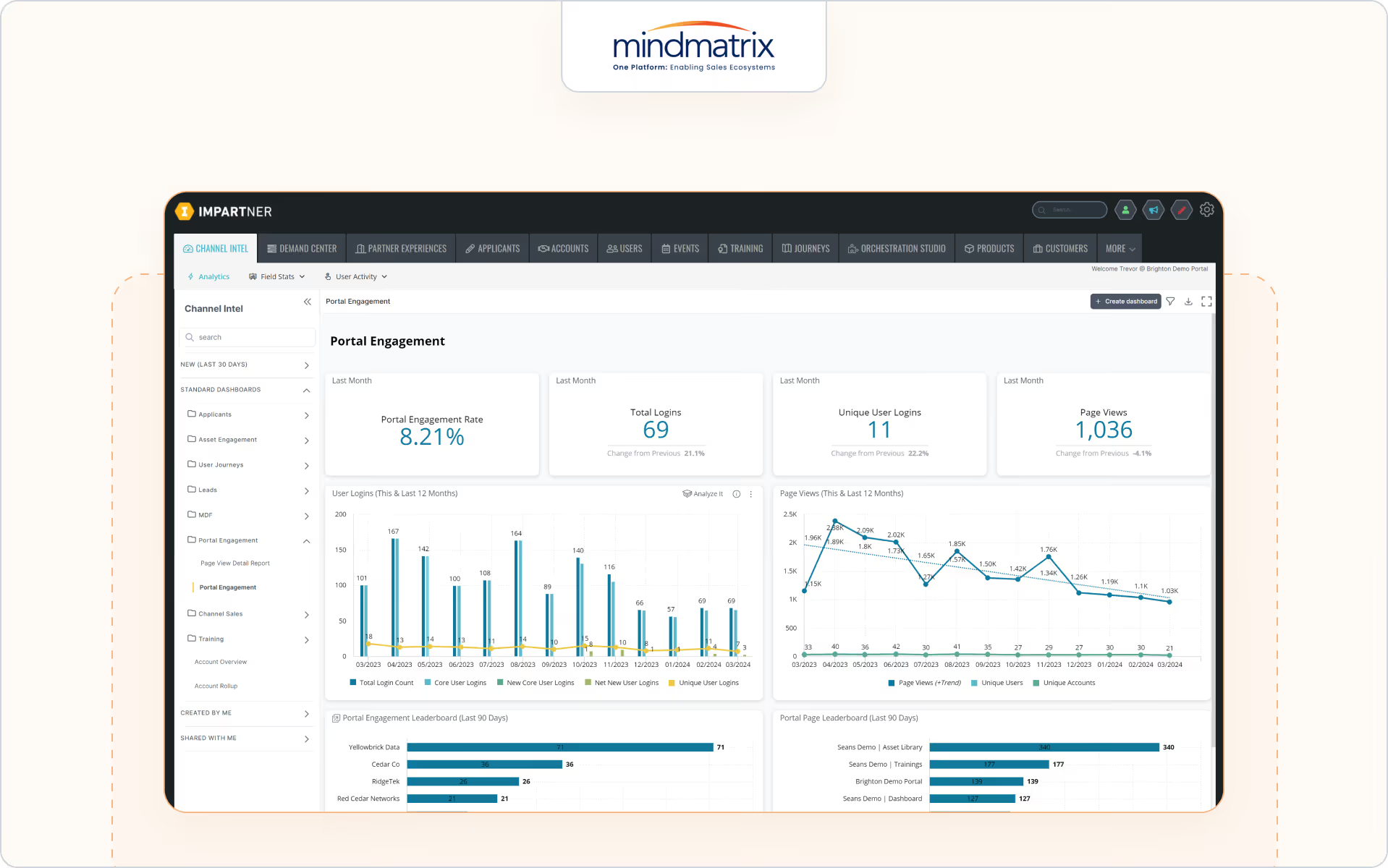
Best for: Programs that need deep partner enablement and partner marketing with integrated PRM and TCMA.
Why it’s an Impartner alternative: Mindmatrix positions an AI-powered PRM that spans engagement, partner onboarding, training, and performance — combining portal experience with campaign tools.
Notable callouts: Bi-directional sync, KPI tracking, and training capabilities to enable partners effectively.
12) StructuredWeb

Best for: Enterprise brands where through channel marketing automation is central to the partner program.
Why it’s an Impartner alternative: StructuredWeb focuses on channel marketing automation, personalization, and last-mile execution to help partners sell more.
Notable callouts: Enterprise-grade TCMA that complements PRM for brand control and local activation.
13) SproutLoud
Best for: Distributed marketing and brand-to-local execution where partners need turnkey, compliant campaigns.
Why it’s an Impartner alternative: SproutLoud simplifies local marketing with catalogs, last-mile fulfillment, and services that help partners launch campaigns and drive traffic.
Notable callouts: Education content and analytics to monitor performance and optimize spend.
14) Everflow
Best for: Performance-driven partnerships where you need granular tracking, fraud controls, and analytics across affiliates, influencers, and B2B referrals.
Why it’s an Impartner alternative: Everflow consolidates partner and affiliate management in one platform with strong reporting — useful for companies that treat affiliates as a core channel.
Notable callouts: First-party tracking and multi-channel attribution to track leads, engagement, and deals.
15) TUNE
Best for: Teams that want a highly configurable partner and affiliate software with branded experiences.
Why it’s an Impartner alternative: TUNE emphasizes customization and flexible commissioning — good when your program model doesn’t fit template tools and you want more control over partner activities and payouts.
Notable callouts: Usability and data visualization for managing partnerships end-to-end.
16) Partnerize
Best for: Global brands scaling affiliate and partnership channels with AI-assisted optimization.
Why it’s an Impartner alternative: Partnerize invests in AI and data intelligence — helping brands identify the right partners, optimize spend, and mitigate fraud.
Notable callouts: An AI-powered roadmap and enterprise focus — relevant if you run a mature performance program.
17) PartnerPortal.io
Best for: HubSpot-centric teams that want a 15-minute partner portal for registration, lead generation, deal registration, and a simple resource center.
Why it’s an Impartner alternative: Instead of a big PRM rollout, PartnerPortal.io is plug-and-play — submit leads, create or link deals, and leverage account mapping for attribution.
Notable callouts: Fast setup and two-way sync for channel partners that need to get moving now.
With PartnerPortal.io, we wrap up the spectrum from enterprise suites to plug-and-play portals — spanning PRM depth, TCMA muscle, co-sell orchestration, and affiliate performance. If one of these fits your motion, great. If not, it’s worth checking whether your needs actually match what Impartner already does best.
When to stick with Impartner
Stay with Impartner if you’re deeply invested in MDF, TCMA, and global governance — especially if your partner program needs robust incentives and brand control plus advanced services and support. Impartner’s breadth in incentives and marketing operations remains a differentiator for many Impartner customers.
Switch when your priorities are CRM-first workflows, lightweight admin, or specialized motions — such as hyperscaler co selling (WorkSpan), HubSpot-native operations (Introw, PartnerPortal.io), or affiliate-heavy growth (impact.com, Everflow, TUNE, Partnerize).
Why Introw is your choice in 2026
If you want partner operations that feel native to your CRM, Introw keeps partners, AEs, and RevOps working in the same place — no extra portals or swivel-chairing. You can create and manage leads and opportunities, use custom objects where it makes sense, and rely on real time data for tracking deals, attribution, and forecasts. Partners can collaborate via email or Slack, and updates land back in the CRM automatically. Enablement stays practical too — lightweight content, simple guidance, and clear checkpoints so partners know what to do next and you can monitor progress without chasing spreadsheets.
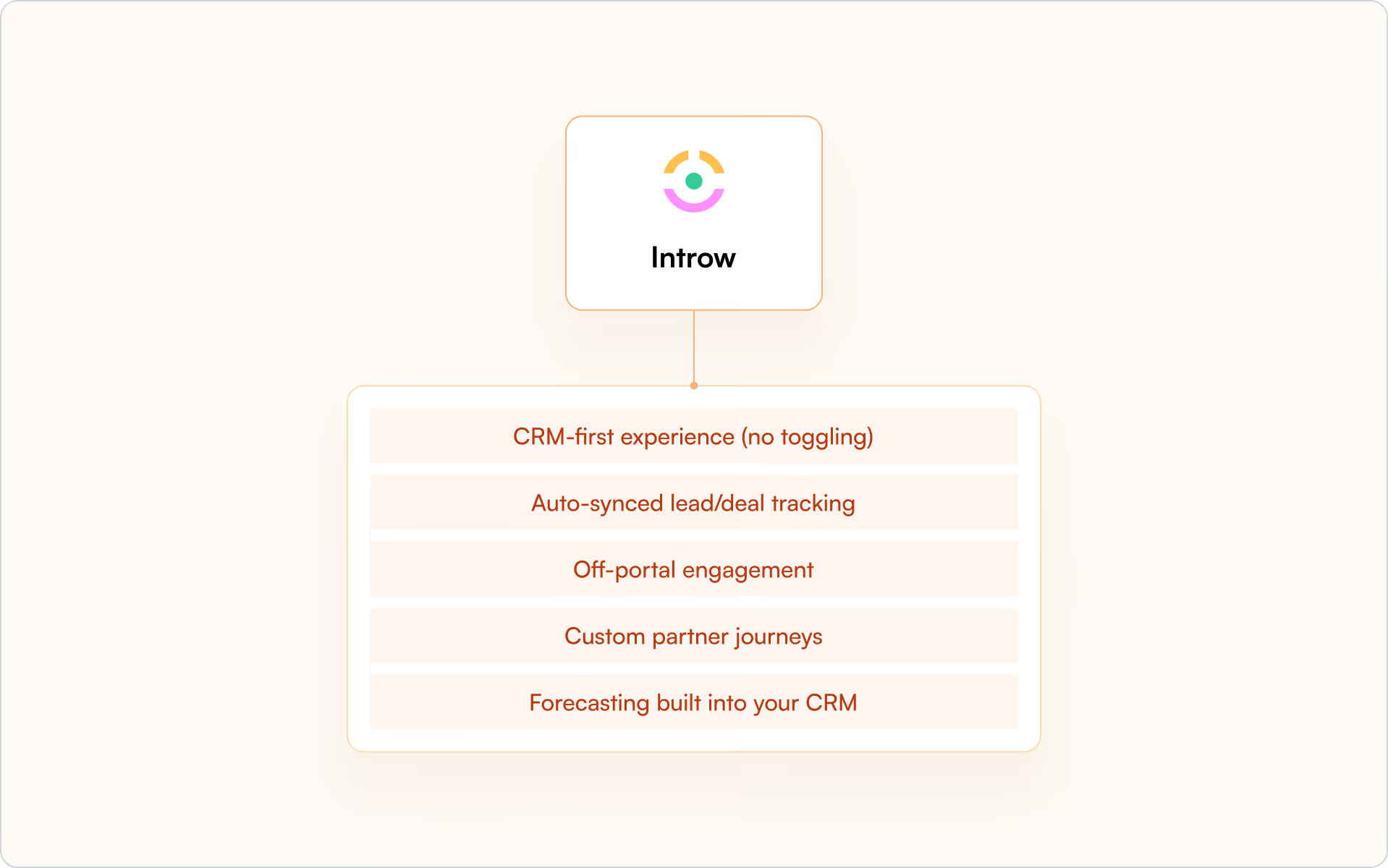
The payoff is straightforward: cleaner customer data, faster handoffs, and a steadier pipeline without the overhead of a custom Experience Cloud build. If that’s the kind of partner experience you’re after, book a short demo to see Introw in your stack and talk through your motions.