

.svg)


.svg)
.svg)







Blog

SPIFF Programs: What They Are, How to Design Them, and Examples That Drive Partner Sales
A well-designed SPIFF program can turn a slow quarter, product launch, or stalled partner pipeline into a surge of sales activity. Used well, SPIFFs can change behavior fast. Used poorly, they can create expensive distractions. If you’ve heard the term before but never really knew what it meant, you’re not alone.
What is a SPIFF program?
A SPIFF program is a short-term sales incentive used to reward a specific action. SPIFF stands for sales performance incentive fund, though you may also see it written as “spiff” or “spiv.”
The SPIFF program's meaning is simple: you offer an extra reward when someone does the thing you want more of.
.png)
That could mean a direct cash bonus for closing deals above a set value, selling a new product, registering qualified leads, or reaching specific sales targets during a promotion period.
Unlike standard sales commissions, a sales SPIFF is temporary and focused. Commission usually runs in the background as part of your long-term compensation plans. A SPIFF is used when you want immediate motivation around one goal.
A well-structured SPIFF program usually has five traits:
- Short-term: It runs for a month, a quarter, or a campaign window.
- Targeted: It focuses on one product, region, deal size, or behavior.
- Simple: The program rules are easy to understand.
- Stackable: It can run alongside regular commission.
- Trackable: Every qualifying sale is tied to clear eligibility criteria.
.png)
SPIFFs can motivate sales teams, individual salesperson performance, and external channel partners. This guide focuses on partner SPIFFs because they’re harder to manage. Your channel partners don’t live in your CRM, and they can’t always see what they’ve earned.
That’s why a strong channel partner incentive program needs more than a good reward. It also requires clear tracking, fast communication, and a simple way for partners to see progress.
If your goal is to improve partner sales, a SPIFF can help. But only when the reward, rules, and payout process are easy to trust.
Why companies run SPIFF programs
The best SPIFF programs don’t just offer extra money. They encourage specific sales behaviors when they matter most.
Here’s why they work.
.png)
#1 Urgency creates action
Most sales commissions become part of the background. Sales reps and channel partners expect them, so they rarely change behavior on their own.
A short-term incentive creates a reason to act now.
For example, a channel SPIFF program might offer:
- $500 for every new logo deal closed this quarter
- A bonus for selling a newly launched product
- Extra rewards for deals above a specific value
The deadline matters as much as the reward. When partners know the opportunity disappears after a promotion period, they’re more likely to prioritize that deal over competing opportunities.
This is why SPIFFs are often used during product launches, pipeline pushes, and other strategic initiatives where timing matters. Teams running incentives alongside their existing HubSpot integration can track participation and revenue generated without creating separate workflows.
#2 Clarity drives participation
A successful SPIFF program should be easy to explain.
If partners need a spreadsheet and three meetings to understand the reward, participation drops. If the rules fit in one sentence, participation rises.
For example:
“Close a new logo deal above $10,000 this quarter and earn $500.”
That’s clear. Partners know the sales goals, the reward, and the eligibility criteria immediately.
The most effective SPIFF program ideas focus on simplicity. Partners should spend time selling, not interpreting program rules.
#3 Visibility keeps partners engaged
A sales SPIFF only works when people can see it.
Many sales SPIFF programs fail because the incentive is announced once and then forgotten. The reward lives in an email or PDF while partners focus on daily sales activity.
Visibility creates immediate motivation.
For example, when incentives appear directly inside a partner portal, partners can see pending and confirmed SPIFF rewards alongside active deals. Seeing the reward attached to a live opportunity keeps the incentive top of mind.
This is especially important for channel partners who may be managing opportunities across multiple sales channels at the same time.
#4 Low friction means more claims
Even strong cash SPIFFs lose impact when the payout process is complicated.
If partners have to chase approvals, fill out forms, or wait months for reward distribution, participation drops. Friction creates doubt, and doubt reduces engagement.
The best incentive program experiences make claiming rewards almost automatic.
With tools such as deal and lead registration, partner activity can be tracked from the original opportunity through payout. Add automation, notifications, and approval workflows, and salespeople spend less time on admin and more time closing deals.
When earning a reward feels easy, more partners participate. When rewards are visible, simple, and easy to claim, SPIFFs consistently boost sales and increase sales activity.
How to design a SPIFF program that actually changes behavior
A successful SPIFF program starts with a clear goal. The reward matters, but the behavior matters more.
.png)
Step 1: Define the behavior you want to change
Start with the outcome, not the incentive.
Ask yourself:
- Do you want more deals registered?
- Do you want to shorten the sales cycle?
- Do you want bigger deals?
- Do you want more certified partners?
- Do you want to increase sales in a specific market?
Pick one.
The best sales incentive programs focus on a single objective. If you try to change too many sales behaviors at once, partners won’t know what matters most.
Step 2: Set clear, simple rules
Partners should understand the SPIFF in seconds.
Every SPIFF program should answer four questions:
- What triggers the bonus?
- How much is the reward?
- Who is eligible?
- When does it expire?
For example:
“Register and close a new logo deal above $10,000 before September 30 and earn a $500 bonus.”
Simple rules lead to more participation. Complex rules lead to salespeople guessing.
Step 3: Make the incentive meaningful
A bigger reward isn’t always a better reward.
The goal is to offer meaningful rewards that justify the extra effort. For many SaaS programs, cash bonuses between $250 and $1,000 are enough to change behavior. Enterprise-focused SPIFF campaigns may require larger payouts.
You can also experiment with:
- Cash SPIFFs
- Non-cash rewards
- Non-cash SPIFFs
- Tech gadgets
- Prepaid debit cards
The best reward is the one that motivates channel partners to take action.
Step 4: Use CRM-based conditions
Manual tracking breaks quickly.
The most effective SPIFF programs use CRM data as the source of truth.
For example:
- Deal stage = Closed Won
- Deal value > $10,000
- Close date falls within Q3
When all conditions are met, the reward is triggered automatically.
In Introw, SPIFFs are configured using CRM filters, so qualifying deals are identified automatically based on your existing CRM data.
Here's an example of Introw’s commission plan builder showing CRM-based SPIFF conditions and a live preview of qualifying deals:
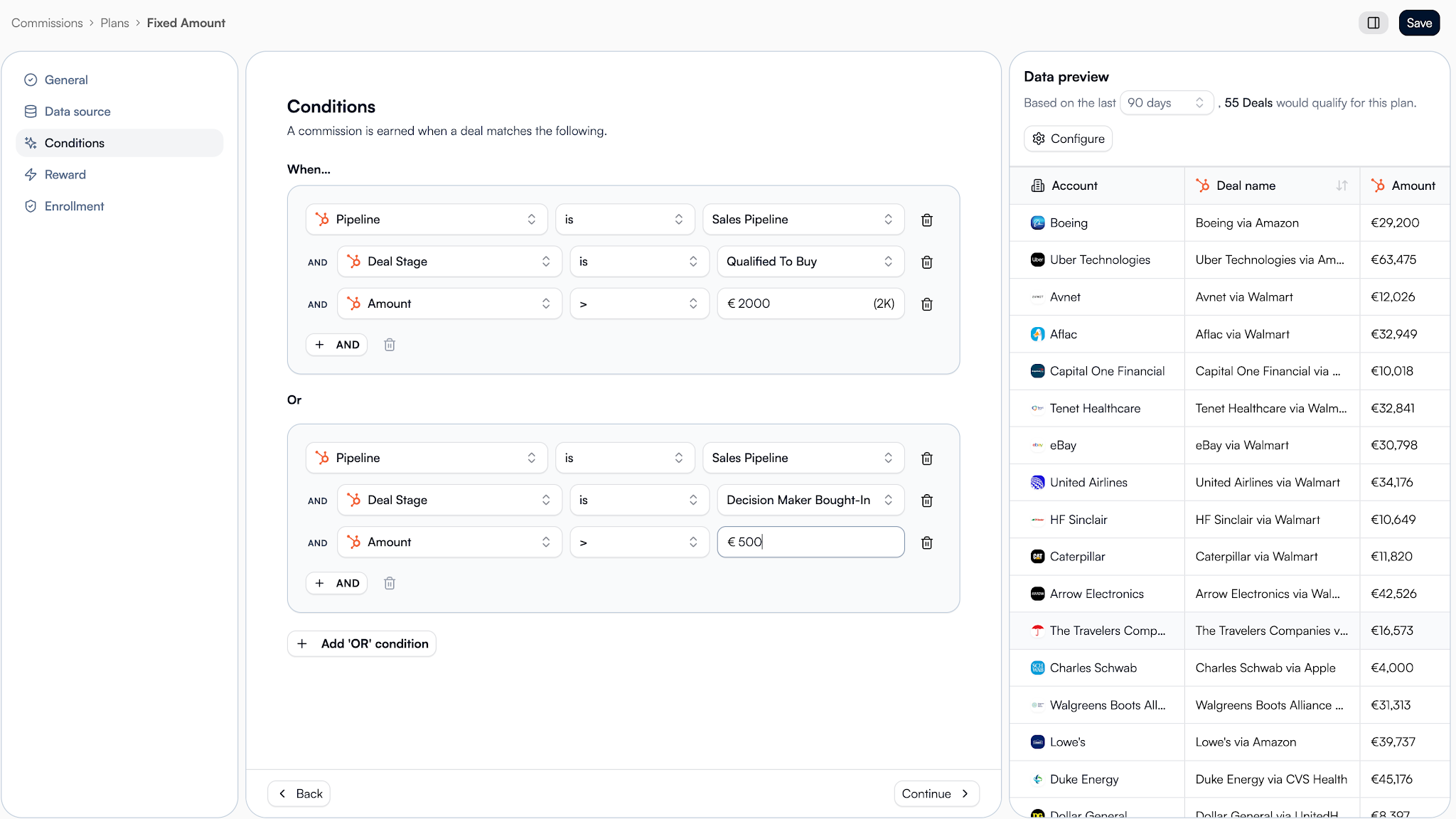
Good SPIFF program management starts with reliable data.
Step 5: Make the reward visible
Partners shouldn’t have to remember a SPIFF.
They should see it where they already work.
For example, Introw displays expected earnings directly on deal cards and inside the partner experience. Partners can see whether rewards are pending or confirmed without digging through old emails.
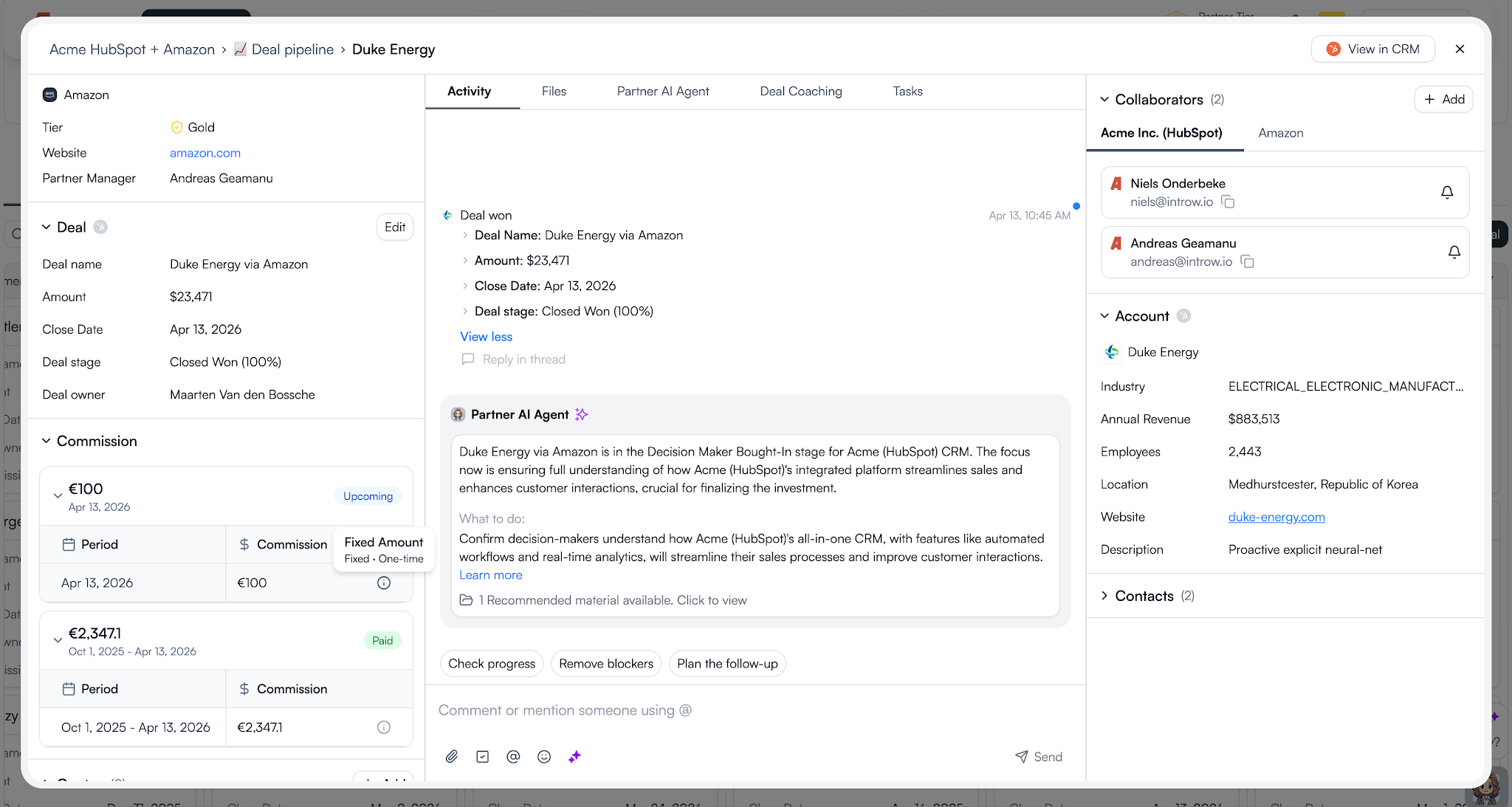
Visibility keeps sales teams driven and helps motivate channel partners throughout the entire campaign.
Step 6: Automate the payout process
A reward loses power when the payout process becomes a project.
A simple flow looks like this:
- The deal closes.
- The SPIFF calculates automatically.
- Eligible rewards are added to a statement.
- The partner uploads an invoice.
- Finance approves the payment.
- The reward is marked as paid.
Introw’s AI Agent can also help surface information and reduce admin work, making it easier to manage larger incentive programs without creating extra overhead.
The easier the process, the more likely partners are to participate.
Here's what this all looks like in action:
Step 7: Review and improve
Every SPIFF should teach you something.
After the campaign ends, review:
- How many partners earned the reward?
- How much sales revenue was generated?
- Which partner segments responded best?
- Did sales activity increase?
- Did you achieve the original sales goals?
Use those insights to improve future iterations.
The best partner programs don’t rely on one successful SPIFF. They run targeted incentives throughout the year as part of a broader incentive strategy.
A few well-designed SPIFFs will usually outperform one giant annual campaign.
The best way to see these principles in action is through real SPIFF program examples.
7 SPIFF program examples you can steal
Not every SPIFF needs to be complicated. Here are seven proven SPIFF program examples you can adapt for your partner program.
1. The activation accelerator
Use this SPIFF when you want new partners to take action quickly instead of waiting months to engage.
Rule: Earn $750 on your first closed-won deal as a new partner.
Trigger: First deal where deal stage = Closed Won.
Bonus: $750 flat fee.
Best for: New partners in their first 90 days.
Why it works: Early sales success builds confidence. Partners who close their first deal quickly are more likely to stay active and become a team motivated by results.
2. The Q3 pipeline push
This is one of the simplest sales SPIFF programs for accelerating pipeline movement before a deadline.
Rule: Earn $500 for every deal above $25,000 closed this quarter.
Trigger: Deal amount > $25K AND deal stage = Closed Won.
Bonus: $500 flat fee.
Best for: Active reseller partners.
Why it works: Short-term incentives and cash SPIFFs create urgency. Partners focus on closing deals before the deadline instead of letting opportunities sit in the pipeline.
3. The EMEA expansion bonus
Geographic incentives work well when you’re trying to grow partner activity in a specific market.
Rule: Earn an extra 5% on every DACH deal closed this quarter.
Trigger: Deal country = Germany, Austria, or Switzerland AND deal stage = Closed Won.
Bonus: 5% of deal value.
Best for: Reseller and referral partners expanding into new markets.
Why it works: Supports broader sales strategies without changing existing sales compensation plans. The bonus stacks on top of normal sales commissions.
4. The product launch SPIFF
When product launches need momentum, a targeted SPIFF can help direct attention where you want it.
Rule: Earn $300 for every deal that includes the new product.
Trigger: Deal contains the new product SKU AND deal stage = Closed Won.
Bonus: $300 flat fee.
Best for: New product launches.
Why it works: Partners sell what they’re rewarded to sell. This type of sales incentive helps boost sales of new offerings and improves product adoption.
5. The speed-to-close SPIFF
If deals are moving slowly through the pipeline, this type of SPIFF encourages faster action.
Rule: Earn $400 for any deal closed within 45 days of registration.
Trigger: Deal registration date to close date < 45 days.
Bonus: $400 flat fee.
Best for: Programs with a slow sales cycle.
Why it works: It encourages faster sales activity and helps prevent deals from becoming stale. The goal is to stop partners from letting opportunities delay closing deals.
6. The certification reward
Not every incentive program needs to be tied directly to revenue.
Rule: Earn $200 for completing an advanced certification.
Trigger: Certification completed with a passing score.
Bonus: $200 flat fee.
Best for: Individual salesperson development.
Why it works: Better-trained sales professionals often deliver stronger sales performance. It can also boost morale, improve job satisfaction, and increase long-term sales performance.
7. The stacked deal bonus
This example shows how SPIFFs and recurring commissions can work together.
Rule: Earn your standard commission plus a $1,000 bonus on deals above $100,000.
Trigger: Deal amount > $100K AND deal stage = Closed Won.
Bonus: $1,000 flat fee plus existing commission.
Best for: Gold and Platinum partners.
Why it works: SPIFFs don’t replace long-term compensation plans. They complement them. In Introw, partners can be enrolled in multiple plans at the same time, including recurring commissions, tiered SPIFFs, and one-time bonuses. Both rewards are calculated independently and rolled into the same statement.
Notice the pattern
Every example focuses on one behavior, one reward, and one clear trigger. That’s usually all you need to create a successful sales performance incentive fund that partners actually remember and act on.
So, what are things you should watch out for to make things go smoothly?
Common SPIFF mistakes to avoid
Even a good SPIFF program can fail if the execution is poor. Here are the most common mistakes to avoid.
.png)
Making the rules too complicated
If sales reps, channel partners, or an individual salesperson need a guide to understand the reward, participation drops.
Keep the program rules simple. A well structured SPIFF program should be easy to explain in one sentence.
Trying to reward too many behaviors
Some sales SPIFF programs try to influence multiple sales behaviors at once.
For example:
- Sell a new product
- Increase deal size
- Enter a new market
- Complete training
Pick one goal per campaign. The most effective SPIFF programs focus on a single outcome.
Offering rewards that don’t motivate action
A $25 reward on a six-month deal won’t motivate salespeople.
The reward should match the effort required. Whether you use cash SPIFFs, non cash rewards, prepaid debit cards, annual bonuses, or instant rewards, the incentive needs to feel worthwhile.
Making rewards hard to track
Partners should never wonder whether they’ve earned a reward.
Poor visibility hurts a program’s effectiveness and can damage team morale. Clear tracking helps motivate channel partners and supports healthy competition.
Ignoring payouts and compliance
Rewarding participants is only half the process.
You also need clear reward distribution, payment records, and tax compliance processes. This becomes even more important when managing channel partners across different regions.
Forgetting to measure results
After every SPIFF campaign, ask:
- Did sales targets improve?
- Was more sales activity generated?
- Did revenue increase?
- Did the SPIFF help move old inventory?
- Was the behavior change worth the cost?
The answers will help improve future SPIFF campaigns and strengthen your overall sales performance management approach.
Here is how partner teams run SPIFFs with Introw
Designing a SPIFF is only half the job. You also need a reliable way to track earnings, manage payouts, and keep channel partners informed.
Here’s what that looks like in Introw.
.png)
1. Create a SPIFF plan from CRM conditions
SPIFFs are created as commission plans using CRM data.
Set your date range, define the qualifying conditions, and choose the reward amount. Introw supports flat-fee and percentage-based rewards, and you can preview matching deals before the plan goes live.
2. Assign the plan to partners
Assign the SPIFF to individual partners or entire partner groups.
Partners can participate in multiple plans at the same time, including recurring commissions, certification rewards, and short-term incentive programs.
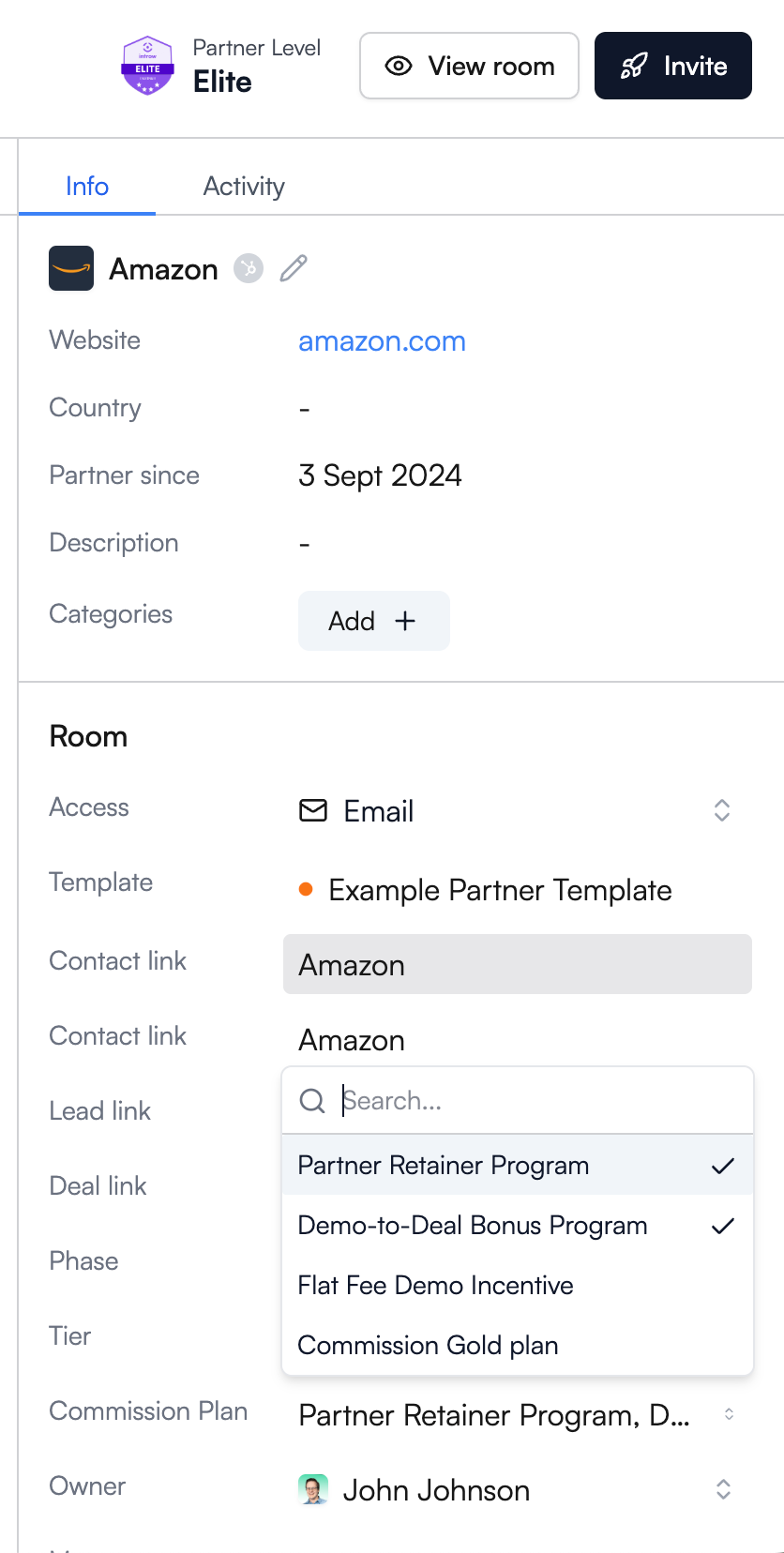
3. Partners see earnings in real time
Once the plan is active, partners can see expected earnings directly inside Introw.
Pending and confirmed rewards appear alongside deal information, helping partners stay focused on the opportunities that matter most.
4. Generate statements and collect invoices
When it’s time to pay, generate a statement with a few clicks.
Introw bundles eligible SPIFF rewards, sales commissions, and other payouts into a single statement. Partners can then upload invoices through the portal or simply reply to the notification email.
5. Approve payments and track everything
Every action is logged.
Partner managers and finance teams can review invoices, approve payments, and trace every reward back to the original CRM record. This creates a clear audit trail and simplifies reward distribution.
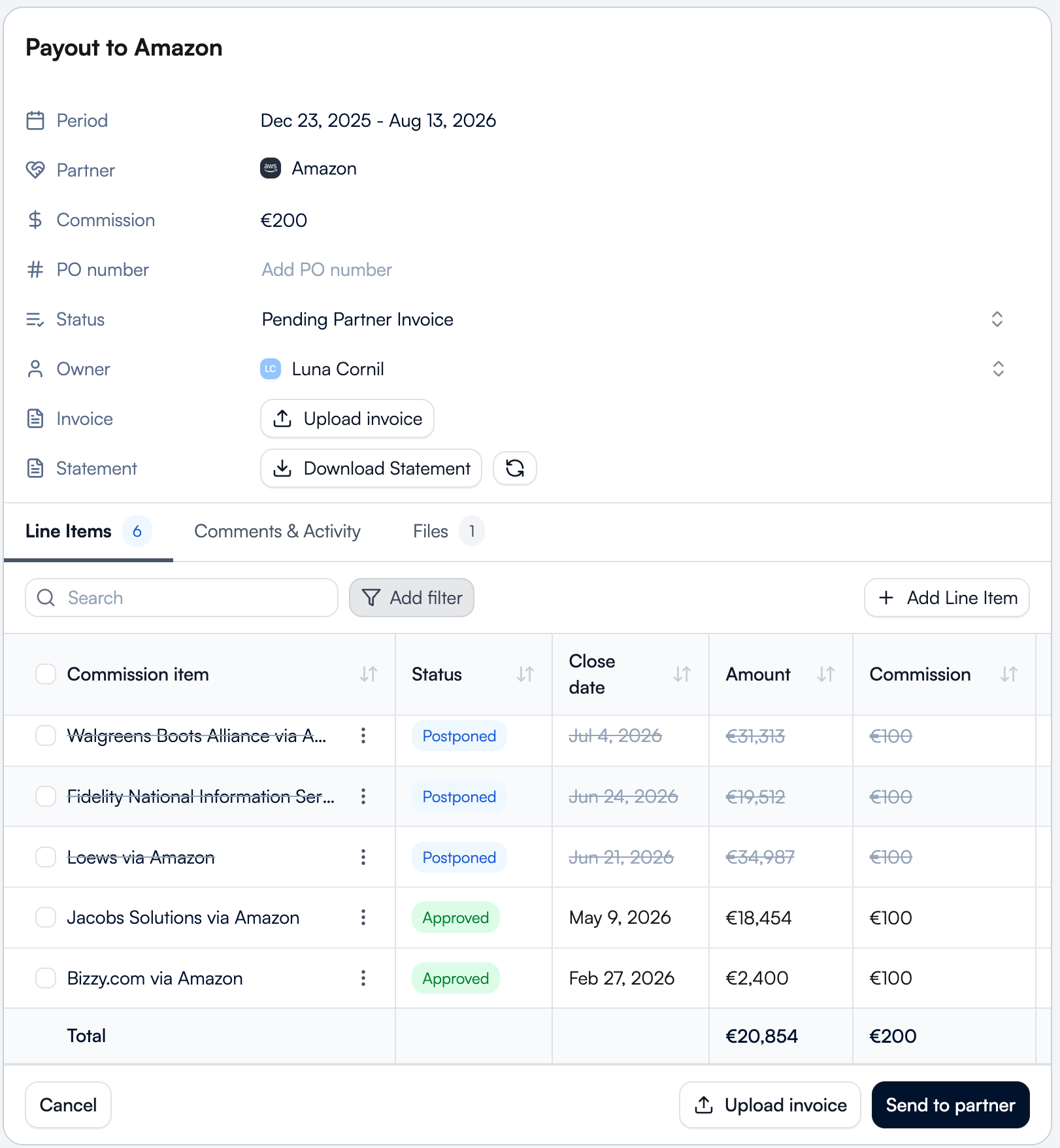
The commission overview ties it all together
The commission overview gives you one place to track SPIFF rewards, upcoming payments, and payout history.
Instead of managing spreadsheets, email chains, and separate systems, partner teams get a single source of truth for commissions, incentives, and partner earnings.
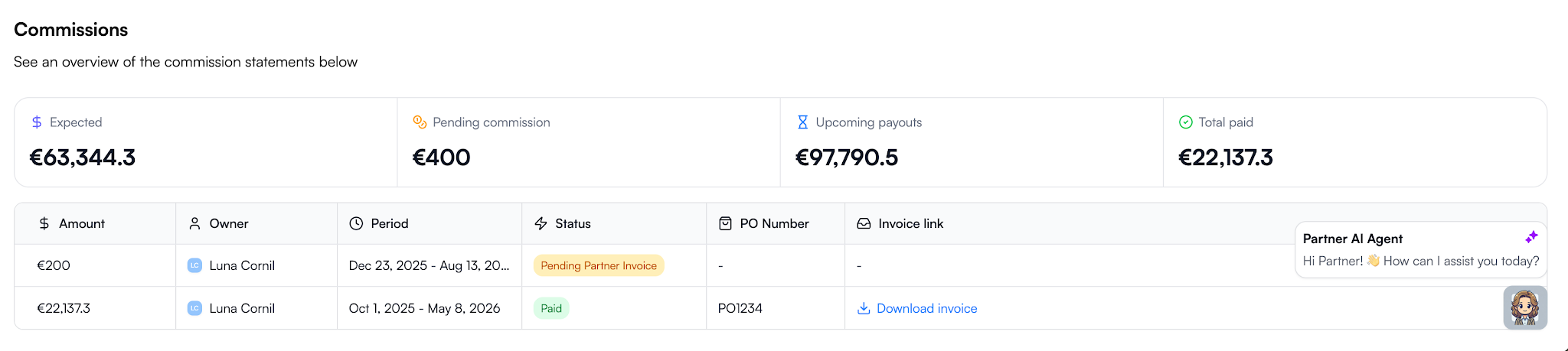
The result is a SPIFF program that’s visible to partners, tied directly to CRM data, and easy for finance teams to manage. Instead of tracking rewards across spreadsheets, email threads, and disconnected systems, everything lives in one workflow from deal registration to payout.
Ready to stop managing SPIFFs in spreadsheets? Request a demo and see how Introw automates partner incentives, commission tracking, invoicing, approvals, and payouts in one place.
15 MDF Best Practices for High-Impact Partner Programs
Why most MDF programs underperform
Most MDF programs don’t fail because the strategy is wrong. They fail because the operations around them are unclear, slow, or invisible to partners. Aligning early on expectations, ownership, and even the definition of MDF helps teams avoid the most common execution gaps.
The budget exists, but partners often don’t use it. In fact, roughly 60% of market development funds go unclaimed each year, not because partners aren’t interested, but because the process makes participation difficult.
.png)
Across many partner ecosystems, the same issues show up repeatedly:
- Channel partners don’t know funds are available
- The approval process takes too long
- Requests get lost in email or spreadsheets
- Marketing activities run without measurable outcomes
- Finance teams can’t track how marketing dollars were used
- Partner marketing teams can’t connect MDF investments to pipeline
Without structure, market development funds rarely support partner engagement or revenue growth. When MDF programs are tied to clear execution plans and measurable partner marketing campaigns, they become a predictable lever for demand generation instead of unused budget.
15 MDF best practices for SaaS partner programs
If you want market development funds to drive pipeline instead of sitting unused, you need a repeatable system. The following market development funds best practices are the framework strong SaaS teams use to make MDF programs predictable, measurable, and aligned with revenue.
.png)
1. Design your fund structure before you launch
Start with the question most teams skip: how should we allocate MDF in the first place?
Decide early whether MDF allocation is:
- Fixed per partner tier
- Performance-based
- Motion-based across reseller, referral, or integration channel partners
Also define:
- Eligible marketing activities
- Fiscal period (quarterly vs. annual)
- Whether unused MDF funds expire or roll over
Without this structure, approvals become inconsistent, and partners lose confidence in the program.
This is the foundation of strong MDF program management and best practices.
2. Make budget visibility self-service
Ask yourself this: can partners see their available budget without emailing you?
If not, adoption drops immediately.
Partners should always see:
- Total MDF allocation
- Pending requests
- Approved spend
- Remaining marketing budget
Real-time visibility improves partner engagement and increases participation in MDF campaigns faster than almost any other change you can make.
3. Build a standardized request form, not email
Inbox-driven requests slow everything down.
Instead, create a structured marketing development funds template partners complete before submitting requests. At minimum, capture:
- Campaign type
- Target audience
- Expected pipeline or qualified leads
- Timeline
- Budget requested
- Success metrics
When requests attach directly to CRM records, your MDF process becomes measurable from day one. Platforms designed for managing marketing development funds handle this automatically.
4. Set approval SLAs and default statuses
Partners don’t stop submitting requests because budgets are small. They stop because responses are slow.
Set a clear approval process, such as:
Submitted → Under review → Approved or declined
Then define an internal SLA, for example, five business days.
Predictability increases participation and improves demand generation activities across your partner ecosystem. It is one of the simplest MDF program best practices to implement.
5. Require a campaign brief, not just a budget ask
If a partner asks for marketing budget without a plan, pause.
Strong MDF programs require a short campaign brief that explains:
- What they want to run
- Who they want to reach
- What results they expect
- How the activity supports your strategic objectives
This improves strategic alignment and makes it easier to compare performance across MDF campaigns later.
6. Enable collaboration, not just approval
Approval is not execution.
After funding is approved, partners still need shared visibility into assets, timelines, and next steps. Otherwise, marketing initiatives disappear into email threads.
A structured collaboration environment improves partner marketing outcomes and keeps joint marketing initiatives visible across teams. It also strengthens ongoing partner engagement during campaign execution.
7. Link campaigns to deals and leads
Here’s the question leadership eventually asks: what did this spend actually generate?
If MDF campaigns are not connected to deals or sales leads, you cannot answer it.
Linking MDF-funded activities directly to pipeline turns market development funds into a measurable growth lever. It also helps channel managers understand which partners consistently generate qualified leads.
This is where many MDF programs break, and where the biggest gains usually happen. Make sure to use modern PRM that links all these activities directly in you CRM.
8. Track ROI automatically, not manually
If ROI lives in spreadsheets, you’re always reacting too late.
Modern MDF programs are being tracked directly in your CRM where you can connect spend directly to pipeline contribution so you can see which partners, campaigns, and marketing efforts drive revenue growth in real time.
That visibility helps you shift marketing investment toward activities that expand market reach and improve sales performance.
9. Gate future funds on proof of performance
A simple rule improves accountability quickly: show results before requesting more budget.
Ask partners to demonstrate:
- Campaign reach
- Lead generation
- Pipeline contribution
before approving additional MDF funds.
This ensures MDF investments support partners who execute and helps drive partner success across co-op programs and co-op funds.
10. Review and iterate quarterly
Treat MDF like a planning lever, not a reimbursement process.
Each quarter, review:
- Which partners used their allocation
- Which MDF campaigns generated pipeline
- Which marketing activities underperformed
These reviews strengthen your channel partner marketing strategy and make future MDF allocation easier to justify.
11. Segment MDF by partner motion, not just partner tier
Many teams allocate development funds by partner tier alone. That’s rarely enough.
Referral partners, resellers, and integration partners contribute differently to market development. Segmenting MDF allocation by motion improves market presence and ensures shared marketing resources support the right expected outcomes.
This is one of the most overlooked market development fund best practices.
12. Pre-approve high-performing campaign templates
Instead of reviewing every request from scratch, give partners a shortlist of proven campaign options.
Examples include:
- Co-branded campaigns
- Digital ads
- Local events
- Vertical webinars
Pre-approved templates reduce approval time and increase the likelihood of generating qualified leads.
They also help partners understand how to obtain marketing development funds faster because expectations are clear.
13. Tie MDF allocation to pipeline coverage targets
Not every region needs the same level of funding.
If pipeline coverage is weak in a segment or geography, allocate MDF funds there first. If another area already performs well, shift marketing investment elsewhere.
This ensures MDF allocation supports strategic priorities instead of spreading budget evenly across the partner program.
14. Combine MDF with incentive programs to change partner behavior
Funding alone doesn’t change behavior. Incentives do.
Pair MDF campaigns with structured channel partner incentive programs to encourage participation in demand generation campaigns and improve execution quality across channel partners.
This combination helps generate leads faster and strengthens overall partner performance.
15. Reserve budget for strategic initiatives, not reactive requests
Leave part of your development funds unallocated at the start of the quarter.
Use that reserve to support:
- New product launches
- Expansion into new regions
- Demand generation for priority segments
- Initiatives that increase brand visibility
This ensures MDF investments stay aligned with long-term strategic priorities instead of being consumed by opportunistic requests.
MDF request form template and checklist
A strong MDF request form does two things at once.
It makes approvals faster for your team, and it makes it easier for partners to submit campaigns that actually generate pipeline.
Without a structured request format, MDF campaigns become hard to evaluate, hard to compare, and almost impossible to attribute later.
A standardized marketing development funds template fixes that by ensuring every request captures the information needed to support demand generation, track sales performance metrics, and align spend with strategic objectives.
Use the template below as a default structure inside your partner program.
.png)
MDF request form checklist
Use this checklist to confirm your MDF process captures everything required for attribution and execution:
.png)
In a CRM-connected workflow, this structure also gives both you and your partners real-time visibility into MDF campaigns from request through execution and attribution, which is what makes modern MDF programs scalable.
Where Introw comes in
If you follow the framework above, your MDF program becomes structured. What most teams still struggle with is proving what that structure actually produces.
Introw closes that gap by connecting MDF requests directly to the partners, campaigns, and deals they are meant to influence inside your CRM. Instead of tracking approvals separately from pipeline, everything lives in one workflow.
That changes how MDF programs operate day to day:
- Partners submit structured requests without email back-and-forth
- Every request attaches automatically to the right partner and campaign
- Approvals follow a consistent approval process instead of ad-hoc routing
- Both you and your channel partners see available MDF funds in real time
- Marketing campaigns link directly to qualified leads and influenced deals
- ROI updates automatically as pipeline moves
This is what makes market development funds (MDF) measurable.
When a deal is generated or closed, you can see whether MDF supported it. When planning next quarter’s MDF allocation, you can see which partners generated pipeline and which marketing initiatives did not.
It also changes adoption. Because partners can see their allocation, submit requests quickly, and stay aligned on campaign execution, MDF funds get used instead of sitting unused across the partner ecosystem.
For a partner marketing manager managing Market Development Funds, that means fewer spreadsheets, clearer attribution, and better conversations with leadership about where marketing investment should go next.
If you want to see how structured MDF programs work when requests, approvals, campaigns, and pipeline all stay connected in one place, request a demo today.
Latest articles
How to Structure Partners Commission Without Creating Headaches
Commission is the fuel that keeps channel partners engaged, but it can also be the fire that burns time and trust if the plan is unclear. The goal is not to create the most clever plan. The goal is to create the plan that partners understand instantly, finance can audit easily, and RevOps can scale without heroic effort. What follows is a practical blueprint to get there.
Why commissions break (and how to avoid the classic pitfalls)
If you have ever rebuilt a commission plan after a quarter of disputes, you know the pattern. Ambiguous rules. Manual exports. “My spreadsheet says…” debates. Partners lose confidence, partner engagement dips, and your team wastes time adjudicating edge cases. The fix is fewer, clearer rules and a commission plan that your partner ecosystem can see, understand, and verify in real time.
The aim is a commission structure that rewards partners based on outcomes you can measure, pays reliably, and scales as channel partners grow. That starts with picking the right model for each motion, then wiring payouts to the same CRM properties that drive your partner program dashboards. With a CRM-first PRM like Introw, plans, calculations, and partner-visible payouts run off live data. That cuts disputes and accelerates commission payments.
The three commission models that cover most partner programs
Different motions need different incentives. Keep it to the three that match how partners sell your company’s offerings.
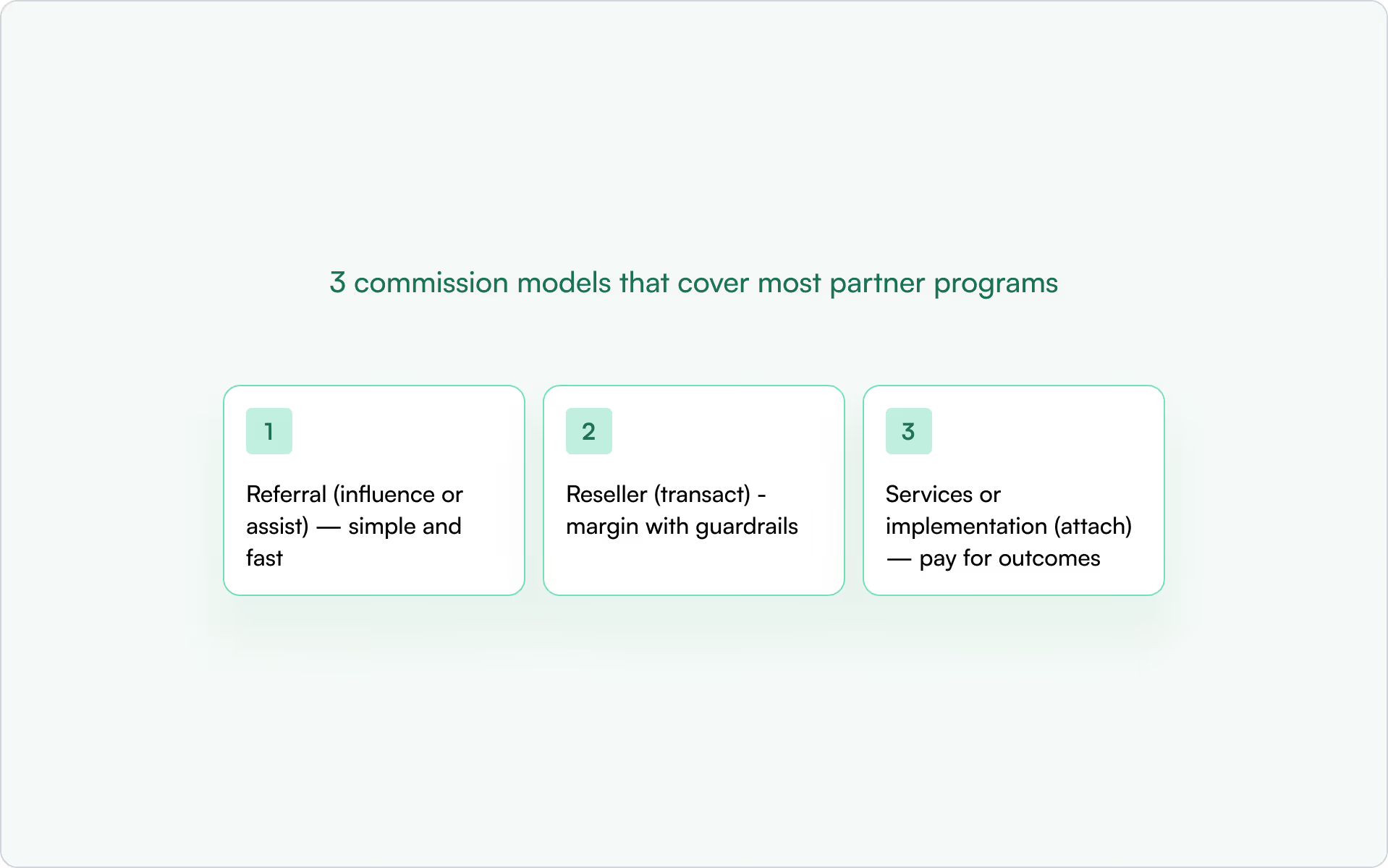
1) Referral (influence or assist) — simple and fast
When to use: the partner introduces qualified opportunities and your team closes.
Commission plan: percentage based commissions on first-year ARR, commonly 10 to 20 percent, paid on collected revenue. Exclude services and one-off fees if margins are tight. For low ACV, offer a flat fee to keep admin light.
Why it works: easy to explain and verify. In Introw, define the plan, attach it to partner-sourced deals, and show expected commission inside the shared pipeline so partners stay engaged.
2) Reseller (transact) — margin with guardrails
When to use: the partner transacts, invoices, or bundles your product.
Commission plan: a tiered commission structure tied to sales volume and product mix. Offer higher rates on high margin products. Add accelerators for hitting quarterly sales targets, and set caps to protect unit economics.
Why it works: rewards effort and risk, and aligns with how resellers forecast revenue. When rules reference CRM fields you already track, calculations are accurate and auditable.
3) Services or implementation (attach) — pay for outcomes
When to use: the partner delivers onboarding, integration, or managed services around your product.
Commission plan: milestone-based payouts, for example a percent at go live and another percent after CSAT hits a threshold. For expansions, add a small recurring kicker to reward partner performance that improves retention.
Why it works: focuses behavior on value delivery, not just signatures. It also keeps commission programs aligned with customer success.
5 Design principles that keep partnerships and finance happy
A strong commission plan balances motivation, operational efficiency, and trust. Use these principles as the spine of your strategy.
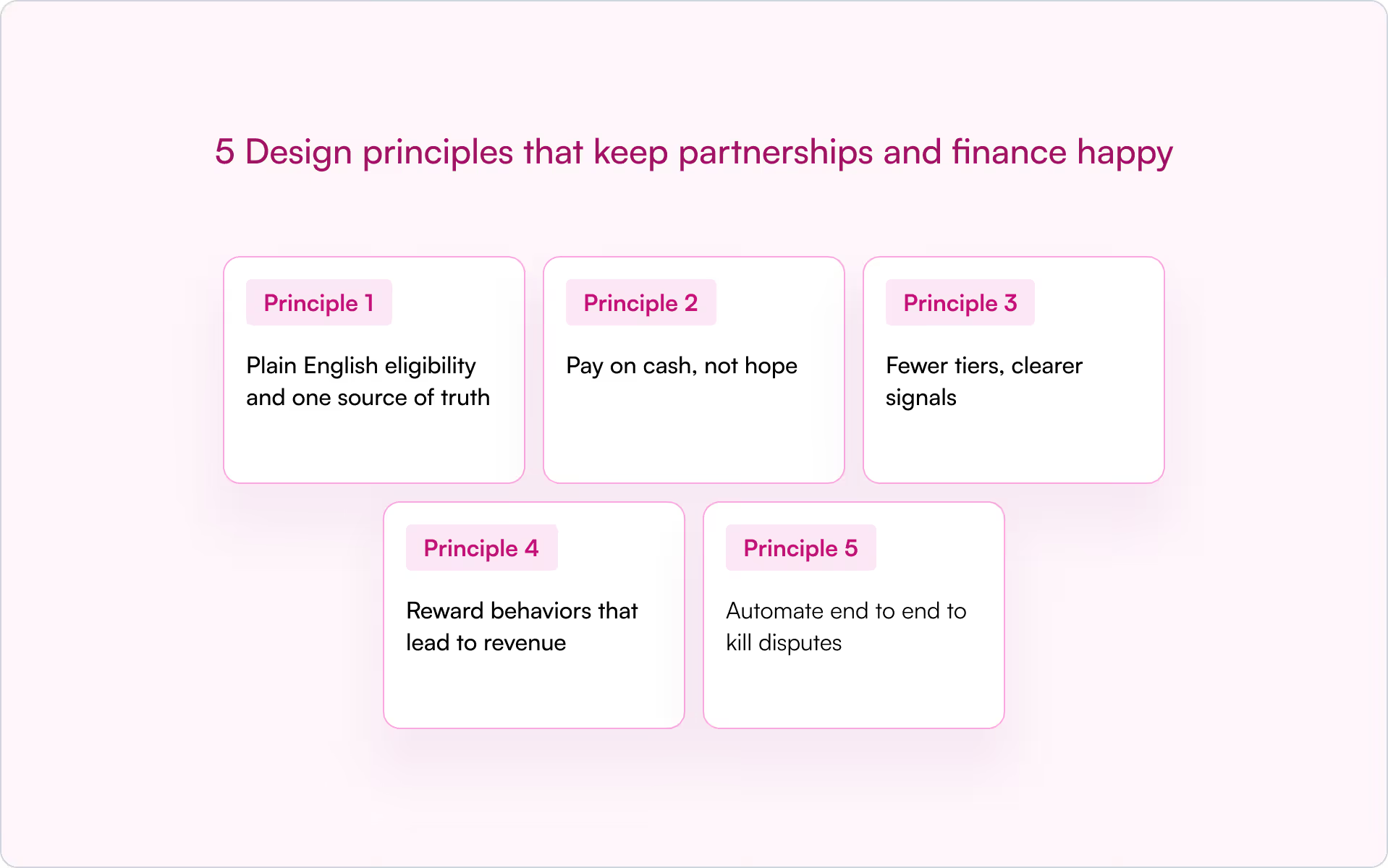
Principle 1: Plain English eligibility and one source of truth
Publish who gets paid, for what, and when, in a single page inside your partner portal. Define a referred customer, accepted registration, qualified status, and the exact event that triggers commission payments. Calculate from CRM fields only. With Introw, expected commissions are visible on the deal card, so partners have real time dashboards without exports.
Principle 2: Pay on cash, not hope
Cash collection milestones prevent overpayment and clawbacks. Pay the first tranche after the initial invoice is paid. Pay the next tranche on renewals or usage thresholds. Introw supports fixed amounts, deal percentages, and recurring commissions, and shows the same values in partner views to foster trust.
Principle 3: Fewer tiers, clearer signals
If you use partner tier levels, let tiers amplify, not replace, your core plan. For example, Registered 10 percent, Select 15 percent, Elite 20 percent. Tie tier changes to performance based incentives such as a rolling four quarter sourced revenue plus CSAT, not subjective judgments. Manage tier data in your PRM so commission rates are applied consistently and calculated accurately.
Principle 4: Reward behaviors that lead to revenue
Not everything needs cash. Use small percentage bumps or one time flat fee bonuses for actions that reliably lead to wins, such as the first qualified meeting, completion of enablement, or co marketing that generates opportunities. Save larger percentages for booked and collected revenue to protect commission payouts and margin.
Principle 5: Automate end to end to kill disputes
Manual commission management is where errors creep in. Automate property mapping, calculations, partner visible statements, and approvals. Introw turns the workflow from partner invoices to finance into one path, with visibility for partners and RevOps.
A simple, scalable commission framework you can launch in 30 days
You do not need a giant spreadsheet or a six month project. Use this four step plan.
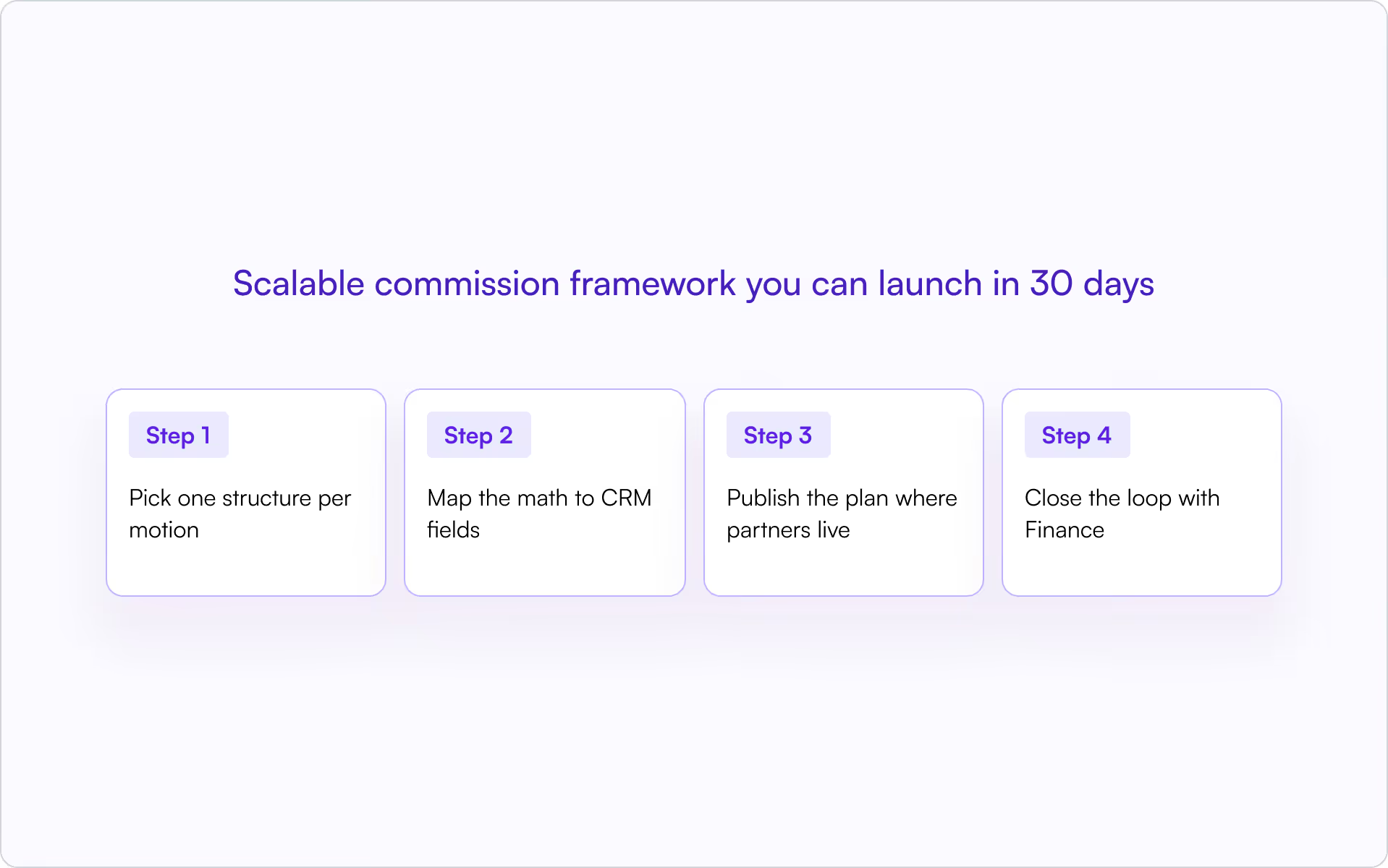
Step 1: Pick one structure per motion
- Referral: 15 percent of first year ARR on collected cash
- Resell: margin bands, for example 15, 20, 25 percent, based on quarterly volume
- Services: milestones, for example 40 percent at go live and 60 percent after CSAT reaches a set value
Keep exceptions rare and time boxed.
Step 2: Map the math to CRM fields
Define the properties that drive the calculation: ACV, term, SKU, partner type, deal source, collected revenue to date. In Introw, attach these to a commission plan. The module calculates per deal and shows partners the expected commission in the same shared pipeline they use for collaboration.
Step 3: Publish the plan where partners live
Put the full commission plan and FAQ in your portal. Include screenshots of the partner visible commission widget so there is no mystery. If you enable the Introw AI Agent, it can answer partner questions about their tier, commission plan, or eligibility at any time, which reduces back and forth.
Step 4: Close the loop with Finance
Align payout cadence, set a dispute window, and ship a standard commission statement export for Finance. Introw streamlines statements so your operational efficiency stays high and commission payments are predictable.
How Introw’s commission module works
If you want partners to trust your plan, the experience of creating, calculating, and paying commissions has to feel obvious. In the demo, Introw shows exactly how that looks in practice, end to end, without spreadsheets.
You start by defining a commission plan on top of your CRM data. Pick the motion and trigger (for example, “Closed Won” in your sales pipeline, or earlier milestones like “Demo Completed”). Choose the payout type: a fixed amount per event, a percentage of sale (calculated from deal amount, MRR, or total contract value), or recurring schedules that taper over years. Save the plan and attach it to partners so every eligible deal calculates automatically.
When it is time to pay, you generate a commission statement like a credit-card statement. Introw pulls in all deals that met the plan criteria for the period, shows the calculated commission per deal, and lets you add details such as a PO number and finance contacts. One click creates a PDF statement you can send to the partner’s finance team and your own. Status flows are built in: Pending Partner Invoice, Pending Approval, Approved, and Paid. Once paid, those deals will not appear in the next statement, so you avoid double counting.
Partners see the same truth you do. Inside their room, a commission dashboard breaks down Expected commissions on open deals, Scheduled amounts you have acknowledged, Pending items waiting on their invoice, Approved amounts ready to invoice, and Paid history by period. Partners can upload invoices directly against a statement and track progress without asking your team for updates.
The net effect is clarity. Plans run off CRM fields, statements are auditable, and both sides see the math on every deal. That is the kind of experience that turns commissions from a monthly debate into a predictable, trusted workflow.
Want a commission engine partners actually trust?
If you are ready to ditch spreadsheets and make commissions a growth lever, see how Introw’s commission module configures plans, displays earnings to partners, and automates payouts from your CRM. Request a demo and ship a commission plan your partners and Finance will love.
Partnership Strategy: 10 Steps for Building Stronger Collaborations in 2026
Effective partnerships are a crucial component of sustainable growth in today’s dynamic business environment. In 2026, the teams that win aren’t just signing deals — they’re building a clear partnership strategy that aligns business objectives, streamlines collaboration with external partners, and turns joint marketing efforts into measurable revenue growth. This guide lays out a practical partnership strategy framework, from defining partnership objectives to negotiating a strategic partnership agreement, so two or more organizations can create a mutually beneficial relationship that lasts.
What Is a Partnership Strategy?
A partnership strategy is the structured plan for building strategic partnerships that create mutual success across the entire lifecycle: discovering partnership opportunities, evaluating prospective partners, forming a partnership agreement, operating the relationship, and measuring results. It’s different from ad hoc partnership strategies because it sets partnership goals, defines who does what, and anchors everything in shared data. In practical terms, it answers: what is partnership strategy for our business model; which partner ecosystem fits our market; what roles and responsibilities do key stakeholders own; how will we measure success with key performance indicators; and how do we adapt as market insights and new customers change the plan.
Why Partnership Strategy Still Matters in 2026
SaaS world rewards companies that move fast with other businesses, not just alone. Strategic alliances open new markets, extend your customer base through complementary skills, and accelerate access to new technologies you couldn’t build yourself. Technology partnerships deepen product value; supply chain partnerships stabilize delivery; financial partnerships unlock co-investment in growth. But partnerships only drive business success when they’re managed like a core go-to-market, not side projects. That means a clear strategy, adaptive management to emerging trends, and cross-functional collaboration across senior leadership, sales, marketing, product, finance, and legal. The punchline: a successful partnership strategy turns collaborative efforts into predictable outcomes — revenue, brand visibility, and innovation — while reducing potential risks like channel overlap, misaligned incentives, or stalled integrations.
10 Steps for a Successful Partnership Strategy in 2026
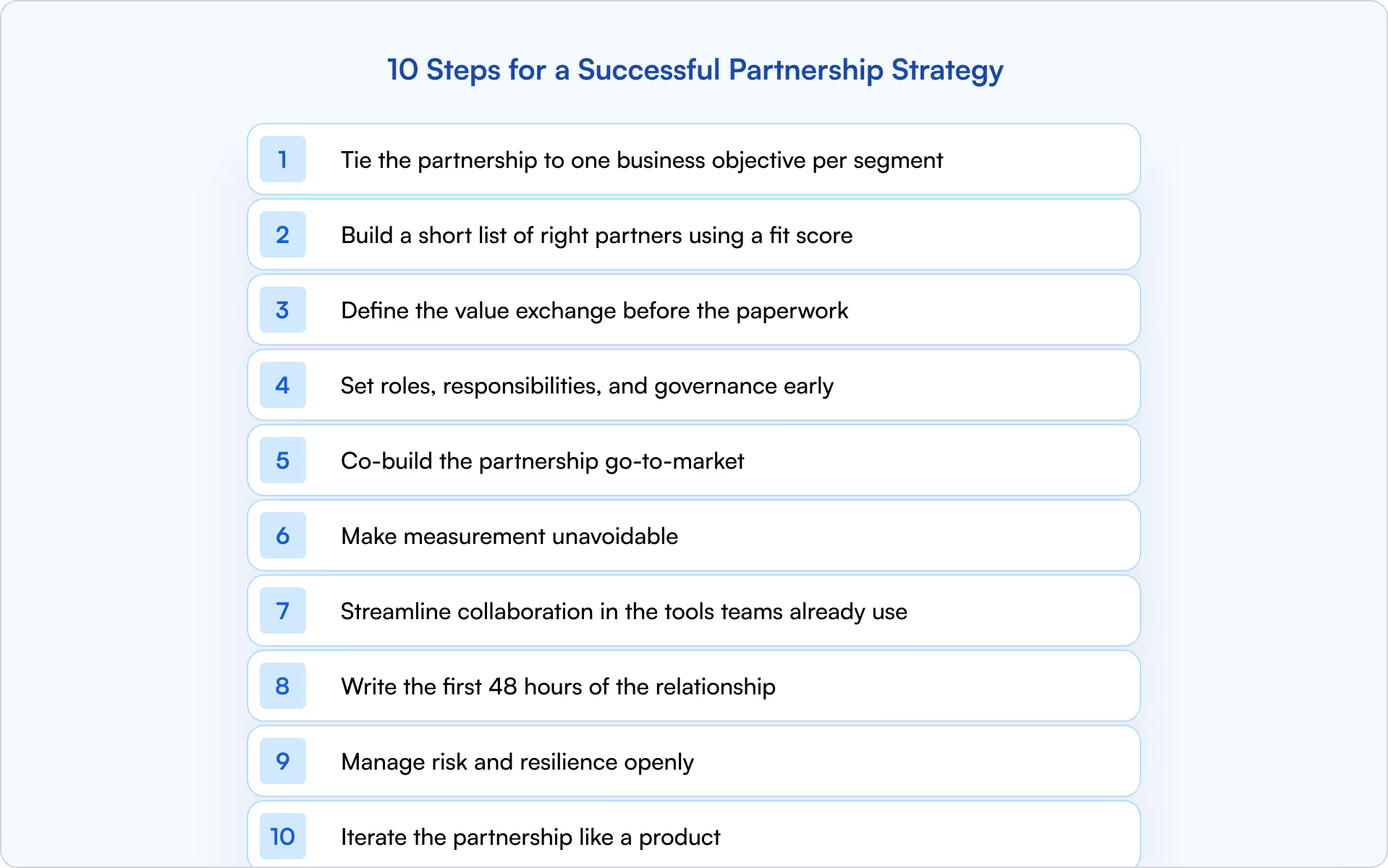
1) Tie the partnership to one business objective per segment
Start with a clear strategy: name the strategic objectives your partnership should serve — new markets, product acceleration, supply chain resilience, or pipeline growth. For each segment (technology, channel, services), choose one primary outcome and the few metrics that prove progress. This avoids vague “collaboration” and creates focus for stakeholders involved. Document partnership objectives, decision owners, and review cadence so everyone understands why this strategic partnership exists and how it advances the organization’s success.
2) Build a short list of right partners using a fit score
Evaluate potential partners against a simple scorecard: strategic alignment to business needs, complementary capabilities, access to respective customers, brand strength, and operating readiness. Include cultural markers like responsiveness and executive sponsorship. Look beyond obvious names; prospective partners in adjacent categories (for example, a data vendor plus a cloud solutions integrator) can unlock competitive advantage through complementary skills. Keep a “no for now” list so business development doesn’t restart from zero next quarter.
3) Define the value exchange before the paperwork
A successful partnership begins with a clear value exchange: what each partner brings (product, market reach, content, sales tools), what each expects (pipeline, co-marketing, integration work), and what each commits to in the first 90 days. Draft the value map first; then translate it into a strategic partnership agreement. This avoids legal-heavy starts with light substance. Outline joint offers, routes to market, pricing, and how you’ll handle shared leads to prevent downstream friction.
4) Set roles, responsibilities, and governance early
Great relationships fail without clear ownership. Name an executive sponsor, a partner manager on both sides, and a cross-functional squad (sales, marketing, product, legal, finance) accountable for day-to-day execution. Create a lightweight governance rhythm: monthly operating review, quarterly strategy checkpoint, and a shared risk log. Agree on escalation paths and response-time expectations so issues don’t linger. When two companies move quickly, clarity beats charisma.
5) Co-build the partnership go-to-market
Partnership development moves faster when there’s a real offer and plan. Package a joint solution with messaging, target accounts, and sales strategies that show how the combined value solves a specific problem. Align joint marketing efforts: a webinar, a customer story, and a field enablement session. Decide who funds what, who owns lists, and how leads are routed. Keep timelines short so momentum turns into pipeline within the first 60–90 days.
6) Make measurement unavoidable
Agree on a small set of key performance indicators: sourced pipeline, influenced revenue, cycle time, win rate, integration adoption, and net revenue retention for joint customers. Track them weekly in your CRM; review monthly together. Add leading indicators such as partner-sourced meetings and asset usage so you can adjust early. Tie incentives to these numbers so teams have shared reasons to act. Boring reporting leads to exciting outcomes.
7) Streamline collaboration in the tools teams already use
Partnerships stall when they require new logins or side spreadsheets. Operate in the systems your sellers and partner teams already use. Keep the partner ecosystem visible in the CRM, use email and Slack to move deals forward, and sync those messages back to the opportunity so history isn’t trapped in inboxes. This is where Introw helps: no-login registration, reply-to-update collaboration, and clean sync to Salesforce or HubSpot keep everyone on the same page without extra effort.
8) Write the first 48 hours of the relationship
Partnership strategy development often forgets day zero. Script the onboarding: kickoff agenda, shared drive links, point-of-contact list, access to training materials, and the first three co-selling actions. Provide sales tools (one-pagers, decks, discovery guides), a short integration brief, and a sample outreach sequence. The faster both teams can run a real motion, the sooner the relationship proves value to senior leadership.
9) Manage risk and resilience openly
Strong partnerships acknowledge potential risks up front: overlapping products, long certification cycles, data-sharing rules, or supply chain constraints. Capture these in a shared risk register with owners and dates. If corporate sustainability priorities or compliance requirements affect the partnership, spell them out early. Clarity on constraints builds trust and prevents surprises that derail otherwise successful strategic partnerships.
10) Iterate the partnership like a product
Market dynamics shift. Treat the partnership like a living product: quarterly backlog, small experiments, and clear retire/expand decisions. Add new technologies or joint features when the data supports it; retire motions that don’t convert. Invite customer success to share post-sale insights so you’re not only winning deals but delivering value to the customer base. Adaptive management turns a good start into long term success.
A Simple Partnership Strategy Framework You Can Reuse
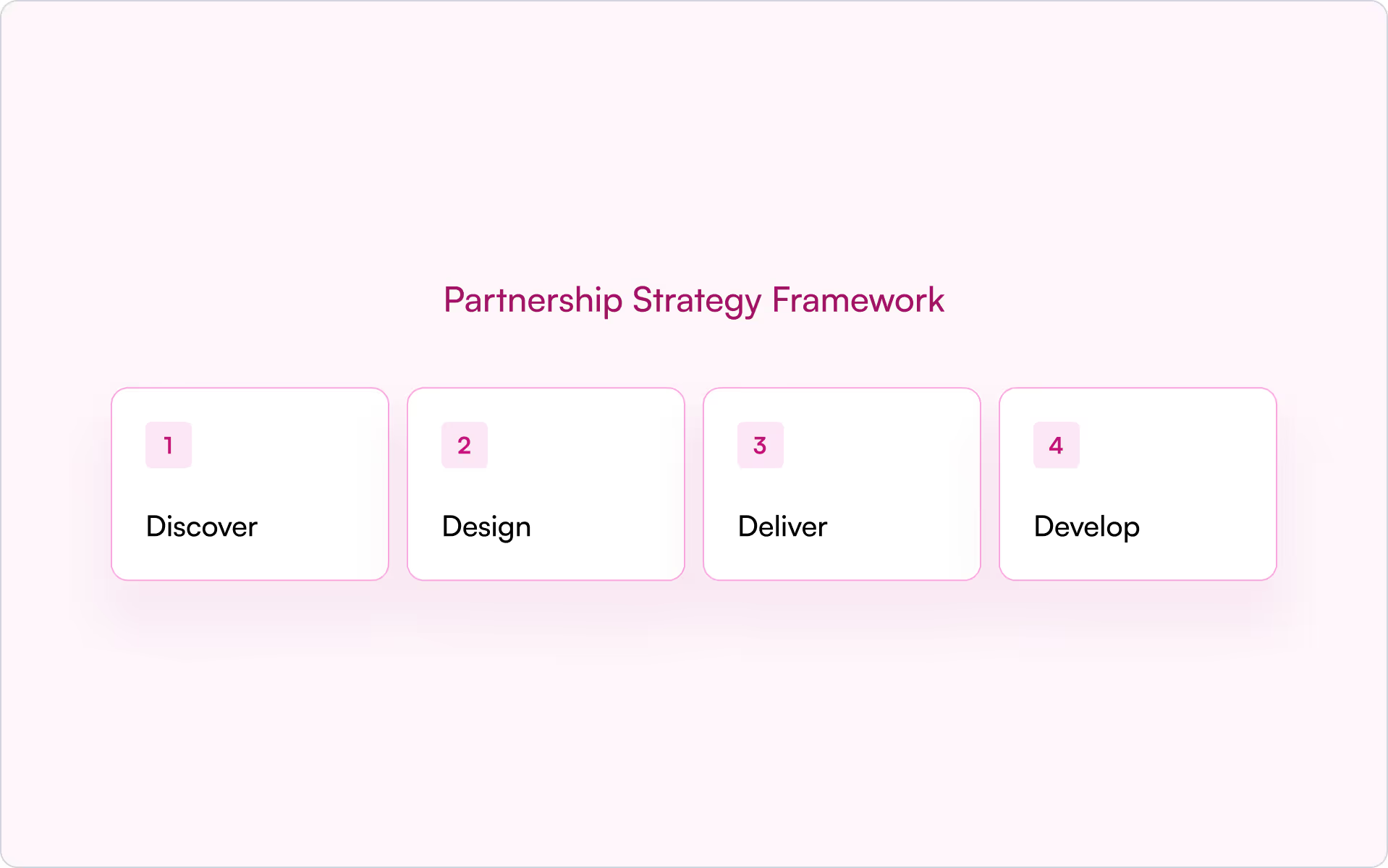
- Discover: map partnership opportunities, evaluate potential partners, and confirm strategic alignment.
- Design: define value exchange, roles and responsibilities, and operating rhythm; draft the partnership agreement.
- Deliver: launch a joint motion with campaigns, enablement, and pipeline targets; measure with shared KPIs.
- Develop: expand what works, fix what lags, and evolve the scope with innovative ideas and market insights.
How Introw Supports Partnership-Driven Success
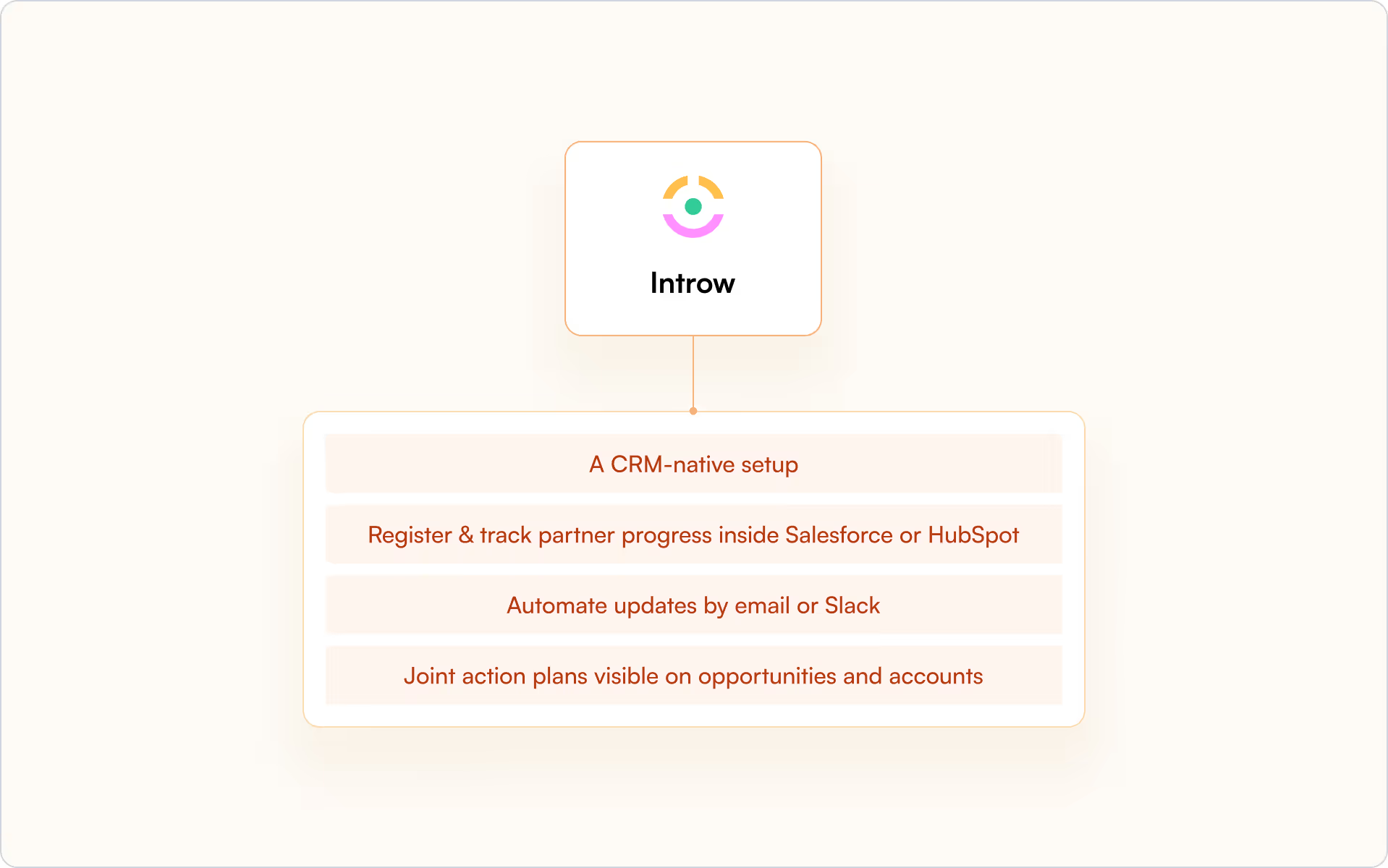
Introw operationalizes partnership management strategies by keeping collaboration CRM-first. Teams register and track partner progress inside Salesforce or HubSpot, automate updates by email or Slack, and keep joint action plans visible on opportunities and accounts. For partner managers, this reduces swivel-chair work and keeps stakeholders aligned. For RevOps, it maintains clean data and trustworthy reporting. For CROs, it links partnership activities to forecast accuracy and revenue growth — the metrics that matter when you scale building partnerships across categories and regions.
Conclusion
A successful partnership strategy blends clarity and cadence: clear objectives, a disciplined evaluation of the right partners, a concrete plan to reach new markets, and an operating model that runs in the tools your teams already trust. When you do that — and measure what matters — strategic partnerships stop being slogans and start becoming a growth engine. If you want the mechanics to feel easier, consider a CRM-first platform like Introw to streamline collaboration, surface KPIs, and help two companies move as one team.
How To Win With Channel Partnership Programs in 2026
In the early days of SaaS channel partnership programs, companies relied heavily on static partner portals and endless email threads.
And although this approach was admittedly clunky and time-consuming, it worked okay while these programs were in their infancy and encompassed only one or two, easily-trackable partners.
But in 2026, the approach to partner programs has shifted dramatically.
Casual, ad hoc partnerships have been replaced by watertight, multi-channel ecosystems inhabited by a wide range of strategic partners.
At the heart of these sophisticated programs? Collaboration, data sharing, co-selling — and a tech stack that can keep up.
After all, manual tasks, disconnected tools, and outdated portals create friction in the partner journey, while platforms with limited automation capabilities put you at an automatic disadvantage.
So what should you be looking for in a modern SaaS partner program tool?
Automation, real-time visibility, and CRM-first platforms that seamlessly integrate into daily workflows.
Several key trends are reshaping the channel landscape:
- AI-powered partner discovery and enablement are accelerating matchmaking and performance tracking.
- Remote selling is making virtual collaboration tools essential.
- Self-service onboarding and content access are empowering partners to move at their own pace.
- “Always-on” enablement means support, training, and updates need to be embedded throughout the partner journey — not just during onboarding.
The future of channel partnership programs is not only more connected — it’s also more impactful, scalable, and aligned with how SaaS businesses grow today.
What Is a Channel Partnership?
Let’s start with an up-to-date channel partner definition.
In SaaS, a channel partnership is a strategic collaboration in which third-party organizations help market, sell, support, or integrate your product, thereby extending your reach beyond direct sales.
Unlike direct sales teams, which engage customers directly, channel partners act as multipliers, introducing your solution to new audiences, markets, or industries.
So, what is a channel partner?
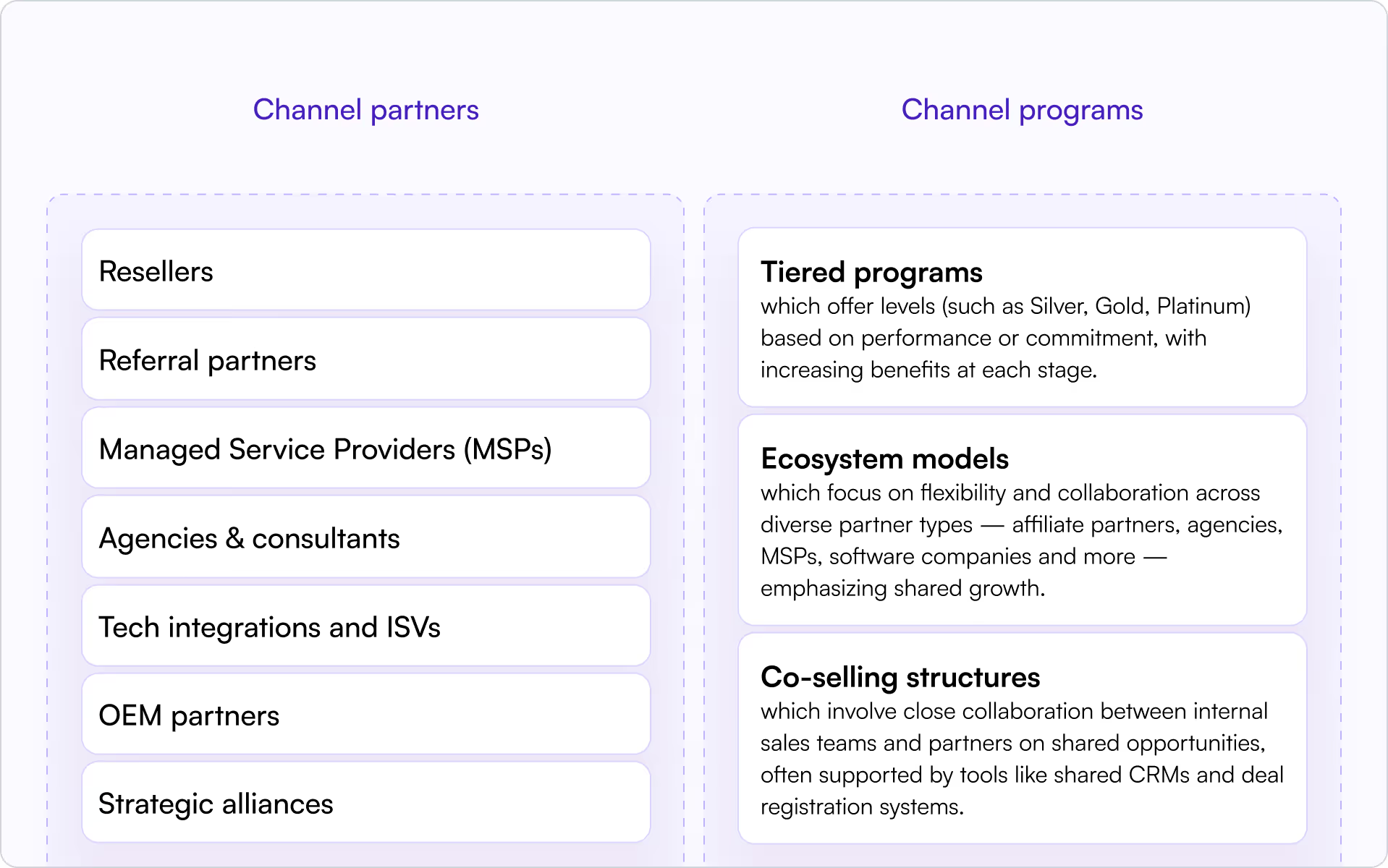
There are many different types of channel partners, including:
- Resellers who purchase and sell your software under their own margins
- Referral partners who pass along leads in exchange for commission
- Managed Service Providers (MSPs) who include your SaaS in bundled services
- Agencies and consultants that implement or recommend your platform
- Tech integrations and ISVs that enhance your product’s capabilities
- OEM partners who embed your software into their offering
- Strategic alliances that co-market or co-sell complementary solutions
Channel partnership programs vary significantly, depending on the SaaS company’s size, product, needs, and goals.
Some of the most common structures are:
- Tiered programs, which offer levels (such as Silver, Gold, Platinum) based on performance or commitment, with increasing benefits at each stage.
- Ecosystem models, which focus on flexibility and collaboration across diverse partner types — affiliate partners, agencies, MSPs, software companies and more — emphasizing shared growth.
- Co-selling structures, which involve close collaboration between internal sales teams and partners on shared opportunities, often supported by tools like shared CRMs and deal registration systems.
In 2026, SaaS channel programs are increasingly built around flexible, ecosystem-driven structures rather than rigid, tier-based structures.
However, many programs blend the above approaches to support partner autonomy while driving alignment, scalability, and faster routes to market across different partner motions.
Why Channel Partnerships Are More Strategic Than Ever
Channel partnerships are now a core growth strategy for SaaS companies' business models — not just a sales supplement.
When approached strategically, they offer high-margin revenue, specialized expertise, expanded market reach into new market segments, and enable scalable growth without expanding headcount.
Partnerships also help mitigate risk by diversifying go-to-market motions.
The SaaS partner power law is relevant here: typically, 20% of partners drive 80% of the value, making a strategic focus essential.
From a CRO or RevOps perspective, strong channel programs support clearer attribution, more accurate forecasting, and greater operational efficiency.
But without a strategic approach, companies face channel conflict, missed pipeline opportunities, and partner churn — ultimately weakening revenue performance and market competitiveness.
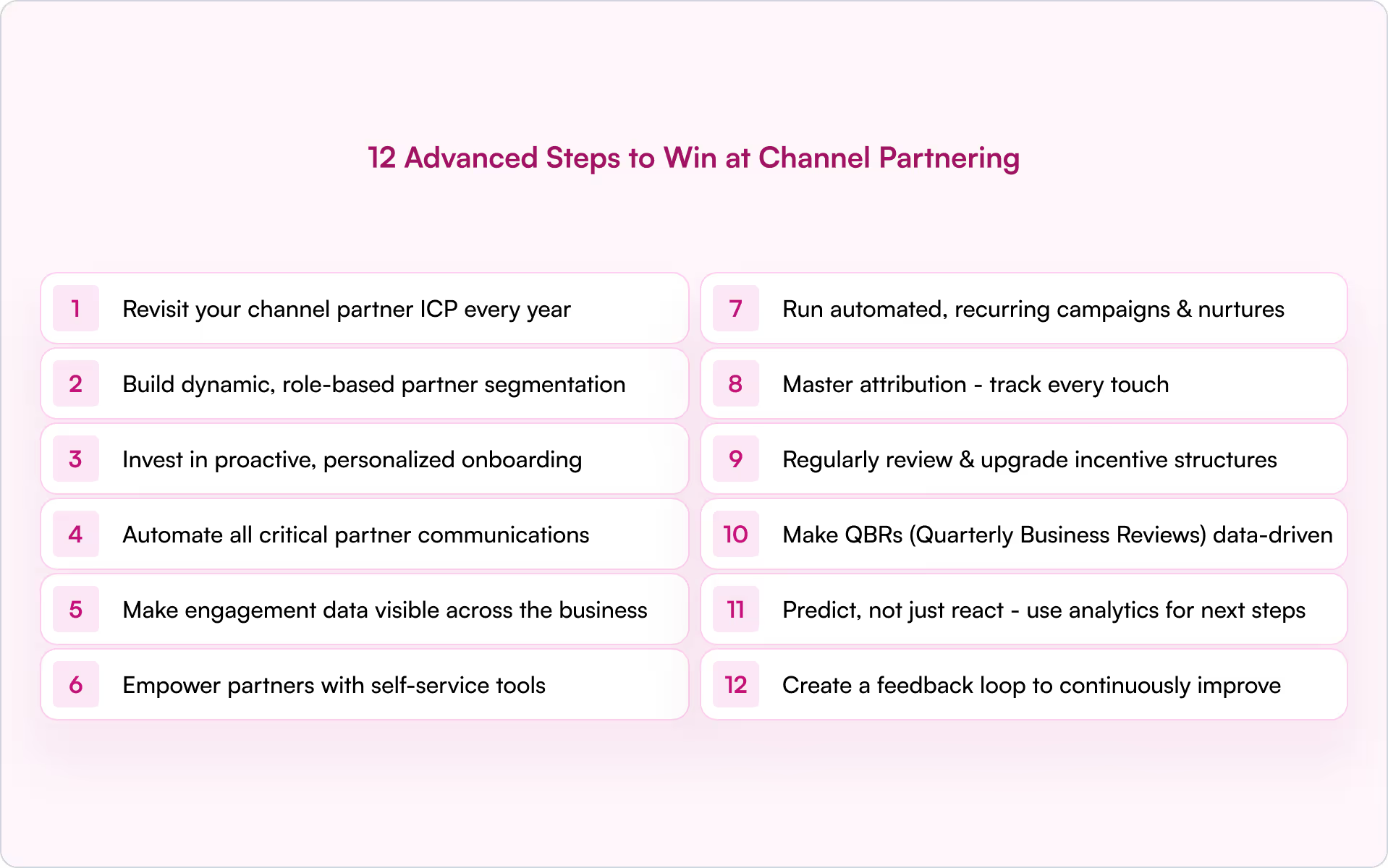
12 Advanced Steps to Win at Channel Partnering in 2026
Ready to reap the benefits of an impactful channel partnership strategy?
Follow these 12 steps to take your SaaS partnerships to the next level.
Step 1: Revisit Your Channel Partner ICP Every Year
To build a high-performing channel, it’s crucial to regularly revisit your Ideal Channel Partner (ICP).
After all, the SaaS industry evolves at lightning speed, so your ICP this year could look very different from the last.
Start your review by analyzing which partners are actively contributing pipeline and revenue.
Note which verticals these top-performing partners operate in and consider their technology stacks, sales motions, and customer types.
Then, use CRM data, engagement tracking, and partner feedback to refine your ICP criteria.
This ensures you focus on partners who align with your product, go-to-market strategy, and growth stage.
Step 2: Build Dynamic, Role-Based Partner Segmentation
Developing effective customer segments allows you to deliver the right experience to the right partners at scale.
Segment by:
- Tier
- Partner type (for example, reseller, ISV, agency)
- Geography
- Engagement/activity level
- Strategic value
It’s also helpful to include roles within your partner companies — for example, sales, marketing, technical — so you can tailor communications and incentives to individual contributors.
This approach enables targeted enablement, personalized support, and performance-based rewards.
For example, high-engagement referral partners might receive co-marketing funds, while new ISVs get onboarding support.
Categorising customers into market segments doesn’t have to be complicated: you can structure it using a simple table like the example below.
Step 3: Invest in Proactive, Personalized Onboarding
In 2026, personalization is no longer merely a nice-to-have; it’s a must.
And it’s super important during the onboarding process, which is most likely your partner’s first real contact with your SaaS brand.
Indeed, a strong, personalized onboarding experience sets the tone for a productive and long-term partnership.
Tailor onboarding experiences based on partner type, tier, and role.
For example, a reseller might need sales training and pricing tools, while a technology partnership benefits more from API documentation and integration support.
Blend live interactions (such as kickoff calls, QBRs, and workshops) with self-serve resources, including videos, guides, and a searchable knowledge base.
Here’s a handy channel partnership best practice for proactive, personalized onboarding.
Auto-trigger onboarding flows when a partner registers a deal or completes signup — ensuring immediate engagement and faster time-to-value.
Step 4: Automate All Critical Partner Communications
Timely, relevant communication is key to keeping partners engaged — but manual outreach doesn’t scale.
Thanks to the rise of automation, in 2026, a small workforce is no longer a barrier to scaling.
Simply automate critical partner updates like:
- Deal status
- Spiff launches
- Deadlines
- Training rollouts
To achieve this, you can use triggers tied to specific partner actions or milestones.
Automating these updates ensures that none of your partners miss essential info while also freeing up your team’s time to focus on more valuable tasks.
It’s important to use a multi-channel approach — for instance, using Slack, email, in-app messages, and CRM alerts — alongside your PRM to meet partners where they already work.
With modern PRMs such as Introw, channel managers can send branded updates directly from their CRM without switching platforms or logging into a portal.
Step 5: Make Engagement Data Visible Across the Business
Transparency is pivotal to channel success.
Sharing partner engagement data (such as email opens, content downloads, meeting attendance, and portal activity) helps align sales, RevOps, and leadership around which partners are driving momentum.
Live dashboards are a game-changer when it comes to transparency and visibility.
Use them to clearly visualize partner engagement data, supporting QBRs, pipeline reviews, and forecasting.
With Introw, partner engagement data flows directly into Salesforce or HubSpot, so teams don’t need to leave their CRM to see which partners are active, which need attention, and where opportunities are growing.
Step 6: Empower Partners With Self-Service Tools
Self-service doesn’t just save time — it builds trust and drives faster, more scalable channel growth.
Empower your partners with self-service tools that make it easy to register deals, access channel partner sales content, complete training, and launch campaigns without login barriers or confusing portals, thereby eliminating friction.
Take it a step further by supporting custom assets and co-branded marketing, allowing partners to tailor their messaging to their target audience.
For example, with Introw, partners can submit co-marketing requests through branded, embedded forms, which automatically trigger internal workflows and approvals.
Step 7: Run Automated, Recurring Campaigns and Nurtures
When it comes to keeping partners engaged, consistency is key.
And, thanks to automation tools, it’s never been easier to stay consistent.
Set up automated, recurring campaigns that deliver timely content, training, and pipeline nudges to ensure consistent engagement.
This might look like:
- Monthly enablement newsletters
- QBR reminders
- Seasonal promotions
- Product update highlights
- Pipeline review reminders
Segment your content and tone of voice based on partner maturity.
For example, new partners may need onboarding touchpoints, while established ones benefit from co-selling tips or market-specific playbooks.
You can also use pre-built templates to re-engage top or at-risk partners with personalized outreach that reignites interest and activity.
Step 8: Master Attribution - Track Every Touch
We’ve always known the importance of accurate attribution in proving the value of a channel partnership program.
Yet historically, getting attribution right has been a time-consuming headache.
But, once you move beyond spreadsheets, accurate attribution is within reach.
Auto-sync all partner activities — for instance, deal registrations, campaign clicks, and content downloads — directly into your CRM.
This allows you to tie revenue back to specific partners, motions, marketing materials, and assets with complete visibility.
By automating attrition, you’ll gain invaluable (and accurate) answers to crucial questions, including:
- Which partners are influencing pipeline
- What content drives conversions
- Where to invest next
In addition to making attrition easier and more accurate, automation tools also enhance visibility, making data-driven decision-making easier across your business.
For example, a CRO could view a real-time forecast of partner-sourced deals within Salesforce or HubSpot, enabling them to report on performance, plan resources, and align teams.
In this way, clean, automated attribution turns insight into strategy.
Step 9: Regularly Review & Upgrade Incentive Structures
Your incentive program should evolve as your partner ecosystem grows.
Attaching incentives to the volume or value of partner bookings is obvious.
But to level up your incentive structure, move beyond one-dimensional rewards tied only to bookings and start rewarding engagement too.
For instance, you could offer bonuses for:
- Training completion
- Content usage
- Co-selling participation
- Marketing activity
Rewarding engagement encourages consistent, long-term behavior rather than chasing one-off wins.
It’s also important to regularly test and iterate incentives to determine what motivates different types of channel partnerships — MSPs, for example, may be motivated by very different rewards than ISVs — and adjust accordingly.
Bring your tier system into 2026 with dynamic tiering.
Within a dynamic tiering structure, quarterly reviews promote or demote partners based on performance and activity, not just deal volume, helping to ensure consistent engagement.
Step 10: Make QBRs (Quarterly Business Reviews) Data-Driven
It’s time to ditch QBR PowerPoints in favor of live dashboards, engagement metrics, and pipeline data.
This creates a more transparent, actionable conversation focused on what’s working, what’s blocked, and how to win together.
Start with a clear, mutual action plan that aligns goals across teams, then dive into valuable insights, such as deal velocity, content engagement, and training progress.
It’s also worth tailoring your prep by role.
For example, CROs should receive high-level growth strategies and revenue forecasts, while partner managers are more likely to want detailed activity breakdowns and enablement metrics.
Step 11: Predict, Not Just React - Use Analytics for Next Steps
The best partner programs don’t just measure — they anticipate.
Leverage engagement trends, pipeline activity, and content usage to identify at-risk partners early and spot emerging top performers.
With analytics and AI, channel managers can receive “next best action” recommendations, which suggest where they should focus their time for maximum impact — whether it’s reactivating a dormant partner or accelerating a high-potential one.
For example, Introw’s live dashboards automatically flag dormant partners showing signs of churn — such as declining logins or no recent deal activity — so you can step in before it’s too late.
Step 12: Create a Feedback Loop to Continuously Improve
Every strong channel partner program is built on two-way communication.
The key to success here is to make it as easy as possible for partners to share their input on their needs and challenges as well as feedback on enablement, product, support, and marketing efforts.
Establish regular feedback channels such as:
- Monthly surveys
- Partner advisory boards
- Open office hours
Most importantly, you must act on the feedback by incorporating it into program updates, campaign planning, and even roadmaps for products or services.
This shows partners that their voices matter.
5 Common Pitfalls & Outdated Practices to Avoid in 2026
So, we’ve discussed how to boost your channel partnership program in 2026, but what shouldn’t you be doing?
Here are five major pitfalls to avoid:
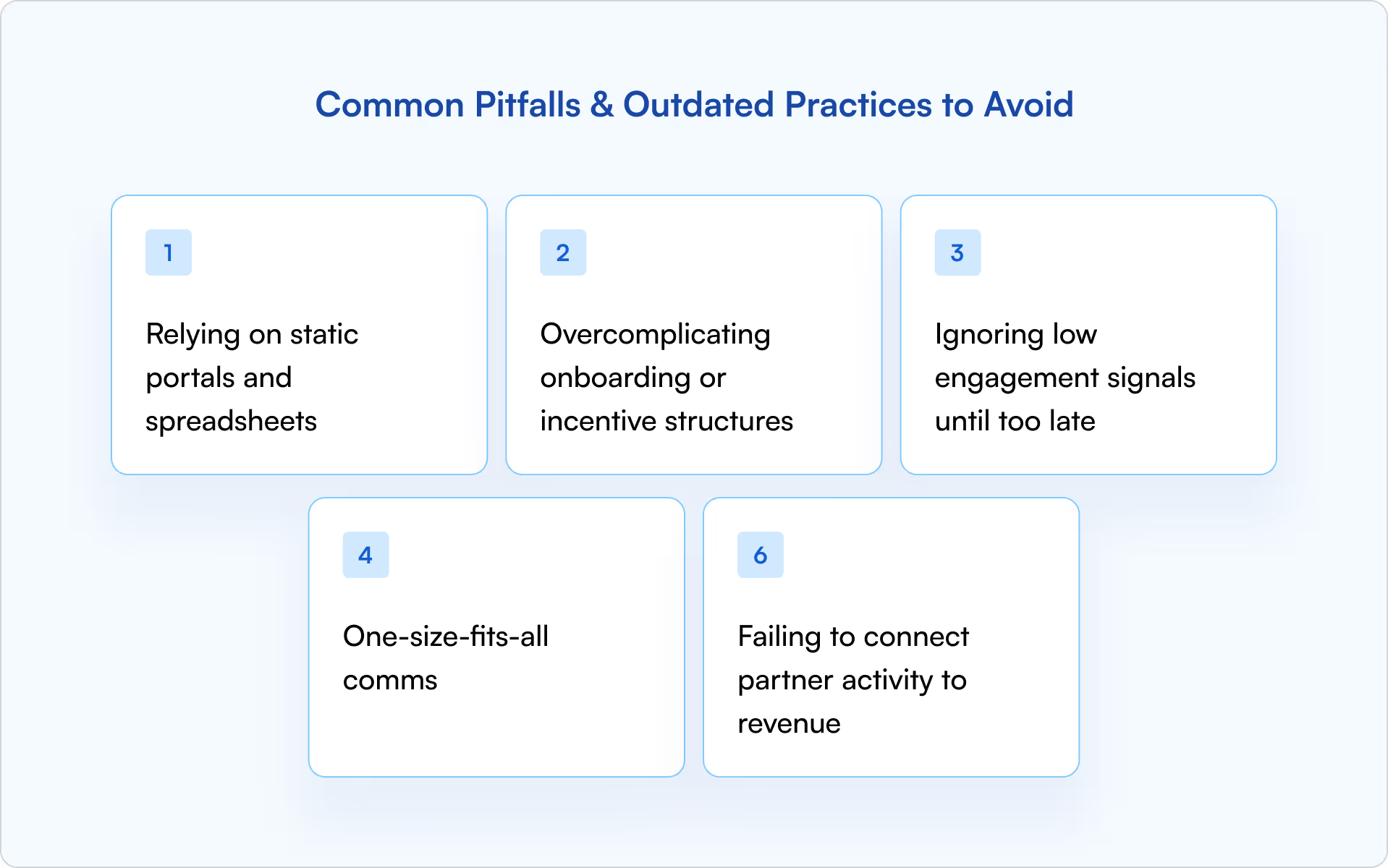
- Relying on static portals and spreadsheets — Manual tools are slow, siloed, and prone to error. They create friction for partners and limit your ability to scale or track real-time performance.
- Overcomplicating onboarding or incentive structures — If partners can’t quickly understand how to get started or what’s in it for them, they disengage with sales efforts.
- Ignoring low engagement signals until too late — A drop in logins or deal registrations often signals a deeper issue. Without proactive monitoring, you risk silent churn and lost revenue.
- One-size-fits-all comms — Generic emails or mass updates miss the mark and will cause partners to tune out.
- Failing to connect partner activity to revenue — Without clear attribution, it’s hard to prove value or optimize performance. Revenue-connected metrics help secure internal support and guide smarter investments.
Channel Tech Stack — Tools That Separate Winners From Laggards
In 2026, your channel tech stack is a key differentiator.
Leading SaaS companies are moving beyond legacy PRMs and static partner portals, adopting CRM-first, frictionless platforms that drive real engagement and measurable results.
Traditional PRMs often require logins, manual updates, and siloed data — making it hard for partners to stay active and for teams to track success.
So what’s new in the world of PRMs?
In 2026, you should be looking for a platform that offers off-portal updates, self-service enablement, automated campaigns, real-time attribution dashboards, and AI-powered nudges that guide partner and channel manager actions alike.
Furthermore, these systems should integrate directly into your CRM (like Salesforce or HubSpot), enabling seamless workflows, deal tracking, and self-service enablement without leaving familiar tools.
Modern PRM Checklist:
✅ CRM-first PRM (Salesforce/HubSpot native)
✅ No-login deal reg, content access, and tools to support co-marketing activities
✅ Automated partner campaigns
✅ Live dashboards for attribution and engagement
✅ AI insights: next-best-action, churn risk, high-potential partners
Upgrading your tech isn’t just about convenience — it’s about enabling scale, accountability, and partner success in a fast-changing SaaS landscape.
Why Introw?
So when choosing a modern PRM, why should you opt for Introw?
Built directly into your CRM (like Salesforce or HubSpot), Introw keeps your CRM as the single source of truth while automating multi-channel engagement, including emails, Slack alerts, updates, and more.
What’s more, it delivers an off-portal experience for partners, helping to eliminate friction and enable mutual growth.
Indeed, partners can submit leads, collaborate on deals, and receive updates through email or Slack, with everything synced back to your CRM.
And thanks to real-time engagement tracking for every role, managers, RevOps teams, and CROs gain instant visibility into metrics like partner-sourced leads, deal progression, support tickets, and engagement across the partner ecosystem.
👉Want to see Introw in action? Request a demo here.
Conclusion - The New Playbook for Channel Partnering
Winning SaaS teams in 2026 are embracing a new standard:
- Automating partner workflows
- Personalizing every interaction
- Measuring impact across the funnel
Channel partnership programs are no longer merely a sales lever — they’re becoming a core strategic revenue stream that drives scalable, efficient growth.
To stay competitive, now is the time to audit your current partner motion, identify gaps, and explore how Introw can help you build and power a next-generation, CRM-first channel program. ➡️ Request a demo here today.
HubSpot Partner Management: 7 Best Practices For 2026
Partner-led growth depends on empowering partners to work alongside direct sales to drive customer acquisition and revenue — and tight integration between your CRM and partner workflows is essential to get this right.
This seamless integration creates a unified view of leads and opportunities, allowing both internal teams and partners to collaborate seamlessly and avoid duplicating their efforts.
Furthermore, integrated systems enable accurate deal registration, attribution, and tracking, which is critical for partner incentives and performance insights.
With synced workflows, partners can register deals directly, co-sell with your team, and stay aligned through shared timelines and updates.
Additionally, CRM integration enables automated notifications, streamlined onboarding, and enhanced forecasting (by including partner pipeline in revenue projections).
The key benefits of tightly integrating your CRM and partner workflows?
Less friction, shorter sales cycles, and better partner trust.
Ultimately, it allows you to scale your partner ecosystem efficiently while maintaining transparency, accountability, and data-driven decision-making — all of which are vital to a successful partner-led growth strategy.
This is why companies are increasingly shifting from standalone PRM portals to CRM-first experiences like Introw — which integrates with popular CRMs, including HubSpot — to streamline their partner collaboration.
This approach meets partners where they work and aligns them more closely with internal sales processes.
Ready to scale your partner management this year?
⬇️ In this guide, we'll cover why HubSpot is a highly effective platform for partner management and take you through seven must-have best practices for scaling in 2026.
Can You Manage Partners in HubSpot? (Spoiler: Yes — with the Right Setup)
HubSpot doesn't have native PRM, but it offers several features that can be useful for SaaS partner management projects.
For example, the platform supports custom objects, labels, and workflows.
All of these elements are super useful for companies running small partner management projects.
The problem arises when you want to scale.
Indeed, most partner programs will quickly outgrow manual tagging and disconnected forms.
Once you get serious about your partner program, you need a PRM that is tailor-made for managing and scaling these schemes.
At the same time, you don't want to silo your partner management efforts from your CRM — this would create data disconnects, limiting visibility into partner-driven deals and slowing collaboration.
The solution?
Invest in tightly CRM-integrated PRM tools like Introw.
This way, you fill the PRM gap natively inside HubSpot and give your partnerships the best possible chance of flourishing.
Why HubSpot Is a Strong Foundation for Partner Management
Many SaaS teams already rely on HubSpot as their central source of truth for customers, deals, and marketing.
But increasingly, partner managers are realizing HubSpot can also be a superb command center for their partner programs — as long as they configure the platform in the right way.
Here's why HubSpot makes sense as a foundation for partner management in 2026:
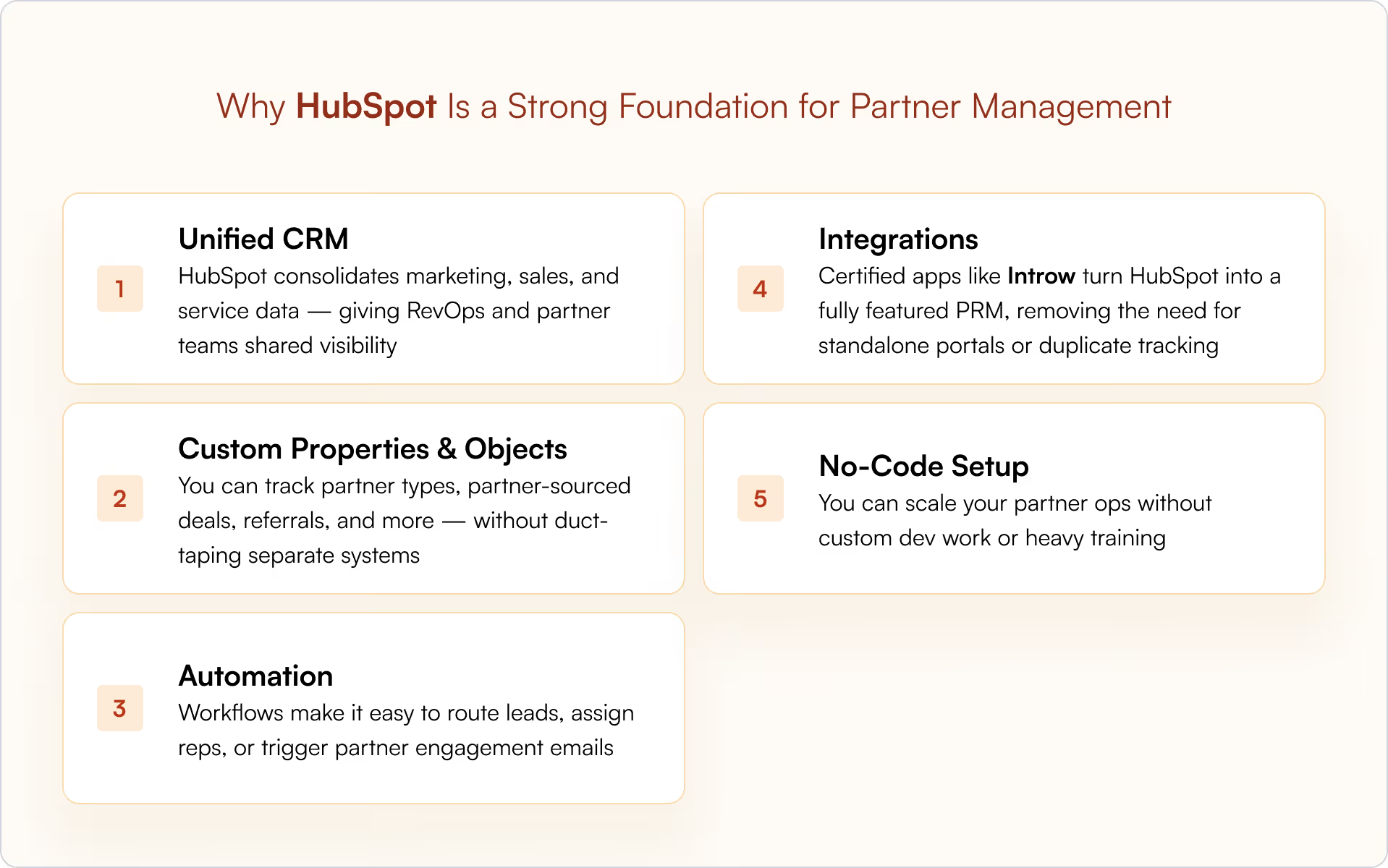
- Unified CRM: HubSpot consolidates marketing, sales, and service data — giving RevOps and partner teams shared visibility
- Custom Properties & Objects: You can track partner types, partner-sourced deals, referrals, and more — without duct-taping separate systems
- Automation: Workflows make it easy to route leads, assign reps, or trigger partner engagement emails
- Integrations: Certified apps like Introw turn HubSpot into a fully featured PRM, removing the need for standalone portals or duplicate tracking
- No-Code Setup: You can scale your partner ops without custom dev work or heavy training
In short, if HubSpot is already your CRM, there's no reason to manage your partner program outside of it.
Instead, plug in a PRM like Introw, and you'll gain a partner-ready ecosystem inside your CRM — one that works for RevOps, Sales, and Partner Managers alike.
7 Must-Have HubSpot Partner Management Practices for 2026
Ready to scale your partner program with Hubspot?
Here are seven vital HubSpot partner management practices you should be following for success in 2026.
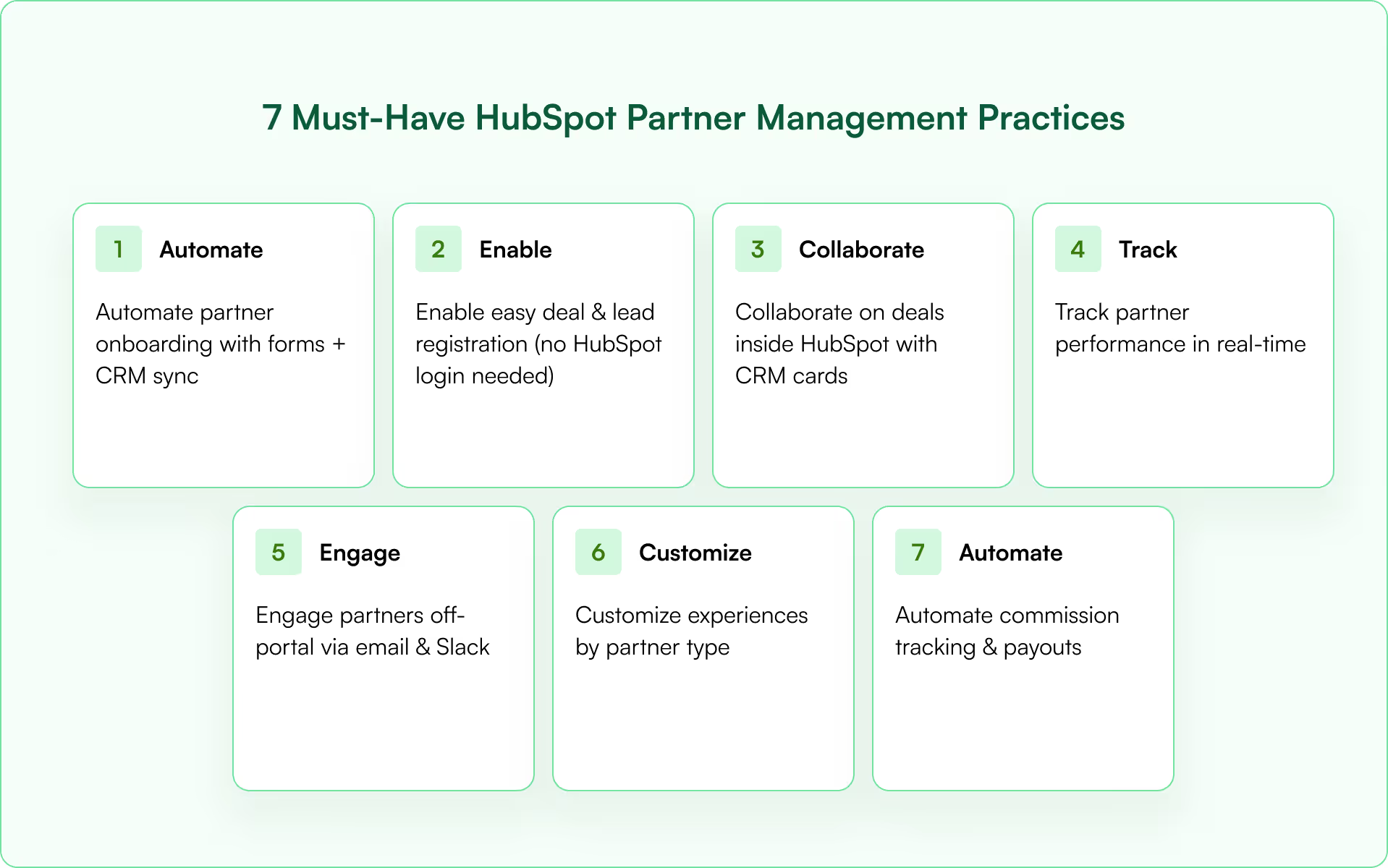
1. Automate Partner Onboarding with Forms + CRM Sync
This one will save you a lot of time!
Did you know you can use Introw to push form data (e.g. "Become a Partner") directly into HubSpot?
First, connect Introw to HubSpot to enable seamless data synchronization.
This integration allows form submissions, such as partner applications, to be pushed directly into HubSpot.
You can then use HubSpot's automation tools to trigger actions upon form submission.
For instance, automatically create a contact or company record, assign tasks, or send follow-up emails.
2. Enable Easy Deal & Lead Registration (No HubSpot Login Needed)
Introw allows for off-portal collaboration, which makes life much easier for your partners.
Indeed, your partners don't even need to log in to HubSpot in order to submit deals or register leads.
Instead, they can submit deals via a form, Slack or email.
The details are then auto-mapped to HubSpot, which acts as your single source of truth.
3. Collaborate on Deals Inside HubSpot with CRM Cards
Using CRM cards from Introw, teams can collaborate on partner-sourced deals directly inside HubSpot.
These embedded cards show deal details, partner info, and updates in real-time — without switching tools.
This means your partner's comments are automatically turned into CRM notes
Real-time sync keeps the deal's status, details, and updates aligned with your HubSpot pipeline, enabling smooth, in-CRM collaboration.
This streamlines communication, boosts visibility and keeps sales and partner teams aligned throughout the deal cycle.
4. Track Partner Performance in Real-Time
The success of your partner strategy hinges on data analysis.
Tracking partner performance in real-time is crucial to help you identify top performers, spot bottlenecks, and optimize your partner strategy as deals progress.
Indeed, without a sophisticated tracking and data analysis system, you're just guessing at what works and hoping you're right.
But with the right tools in your arsenal, you unlock faster decision-making, more accurate forecasting, and effective incentives — driving accountability, growth, and stronger partner relationships across your ecosystem.
Fortunately, Introw and HubSpot work together to make real-time data analysis easy.
Introw generates dashboards based on HubSpot data.
Set up dashboards based on metrics that speak to your goals — for example, revenue, activity, pipeline, or deal data.
5. Engage Partners Off-Portal via Email & Slack
One of Introw's most partner-friendly features is that it allows you to engage your partners off-portal via email and Slack.
This means partners don't need to log into their portal to communicate or collaborate with you.
Instead, they receive real-time notifications, can comment on deals, and stay in the loop — all off-portal — making collaboration faster, easier, and more integrated into their daily workflows.
6. Customize Experiences by Partner Type
In 2026, personalization is crucial when it comes to engaging your partners.
Deliver an irrelevant or jarring experience, and partners could lose trust in your offering and become more reluctant to recommend you.
Introw supports dynamic views and objects in HubSpot, which allows you to customize partner experiences by type.
For example, you can tailor onboarding flows, forms, content, and deal stages for different partner types, like partner submitted referrals, a successful reseller channel, or MSPs.
Simply segment partners within HubSpot and Introw, then deliver relevant experiences and workflows that match their role, ensuring higher engagement and more effective collaboration across partner types.
7. Automate Commission Tracking & Payouts
Connect Introw with your HubSpot CRM to automate commission tracking and payouts.
As deals close, Introw tracks which partner influenced each one, calculates commissions based on preset rules and logs the data.
You can then use CRM triggers to automate payout workflows or give partners visibility over their commissions.
This ensures accuracy, transparency, and timely rewards.
Why Introw Is the Best HubSpot PRM Integration for 2026
Introw stands out in 2026 as the ultimate PRM integration for HubSpot, delivering unmatched efficiency, partner experiences, and growth capabilities.
Here's why it's the best partner relationship management tool integration with HubSpot:
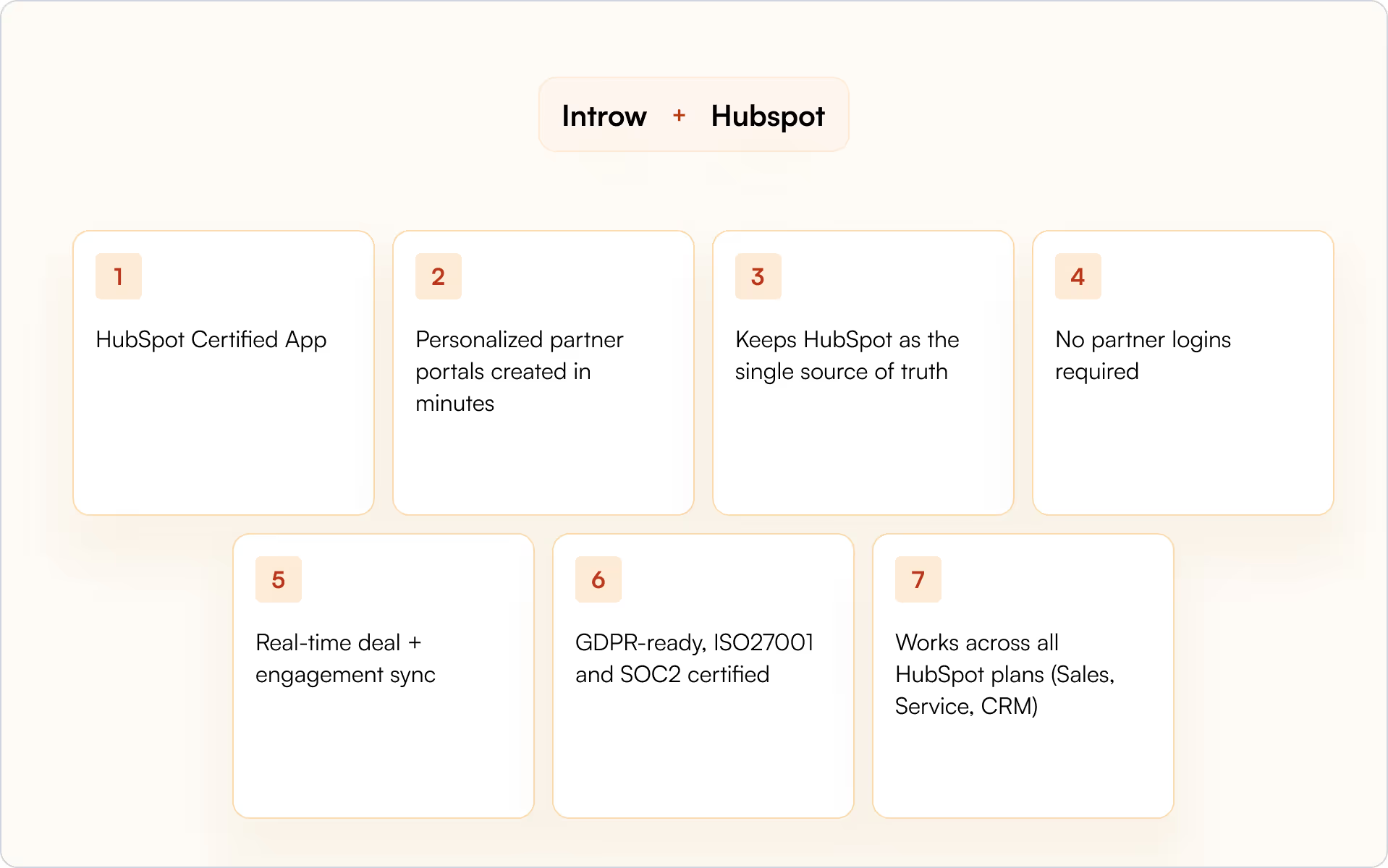
- HubSpot Certified App: Introw is trusted and verified by HubSpot, ensuring a smooth, secure integration.
- Personalized partner portals created in minutes: Launch clean, branded portals for each partner quickly — no technical setup required.
- Keeps HubSpot as the single source of truth: All partner data, leads, and deal activity sync directly into HubSpot, eliminating the need to manage a separate PRM system.
- No partner logins required: Partners can view, register, and collaborate on deals via shared links — no friction, forgotten passwords, or onboarding headaches.
- Real-time deal + engagement sync: Instantly reflects partner-submitted leads and activity in HubSpot, giving your sales team live visibility.
- GDPR-ready, ISO27001 and SOC2 certified: Designed with enterprise-level security and global compliance in mind.
- Works across all HubSpot plans (Sales, Service, CRM): Fully compatible with the entire HubSpot suite, so you can support partner workflows wherever your teams operate.
🚀 Launch Your HubSpot Partner Portal in Minutes — Book a Demo!
Conclusion
If HubSpot is already your CRM, why not make it your partner system too?
With Introw, you can scale partner programs without silos, clunky portals, or extra logins.
Save RevOps time, align with Sales, and drive more revenue from your ecosystem.
✅ Ready to simplify partner management in HubSpot? Get a personalized demo
Top 10 Partnership Trackers: Driving Co-Sell Revenue in 2026
Partnerships can be a lucrative revenue stream — when your business has the right tools for the job.
Indeed, many SaaS companies miss out on potential partner-driven revenue because they lack precise partnership tracking.
It's no secret that, in 2026, the traditional spreadsheet tracking is dead.
Manual updates, delayed insights, and fragmented data no longer cut it.
Instead, today's partner programs demand real-time visibility from overlap to close, ensuring every deal is tracked, attributed, and optimized for growth.
Modern solutions replace outdated spreadsheets with automated, CRM-integrated partnership tracking software, ensuring that partner-sourced revenue is captured seamlessly.
A precision-driven, real-time partnership tracker gives SaaS companies the edge by aligning sales teams, automating reporting, and enabling data-driven decisions.
With clear visibility into partner-influenced deals, businesses can maximize partner ROI, improve collaboration, and scale revenue faster.
In today's competitive landscape, partnership tracking isn't optional — it's essential for unlocking sustainable, repeatable growth.
What to Look for in a Partnership Tracking Platform
So, you know you need a modern partnership tracking platform.
But which features should you be looking out for?
Here are seven features that every strong partnership tracking platform should have in 2026:
- A CRM-native integration: Salesforce or HubSpot
- Lead/deal registration and auto-attribution
- Partner engagement metrics — for example: Slack or email syncs, partner activities log
- Forecasting partner-sourced and partner-influenced pipeline
- Ecosystem data integrations (Crossbeam)
- Real-time alerts and co-sell enablement
- Custom workflows by partner type (referral, reseller, tech, MSP)
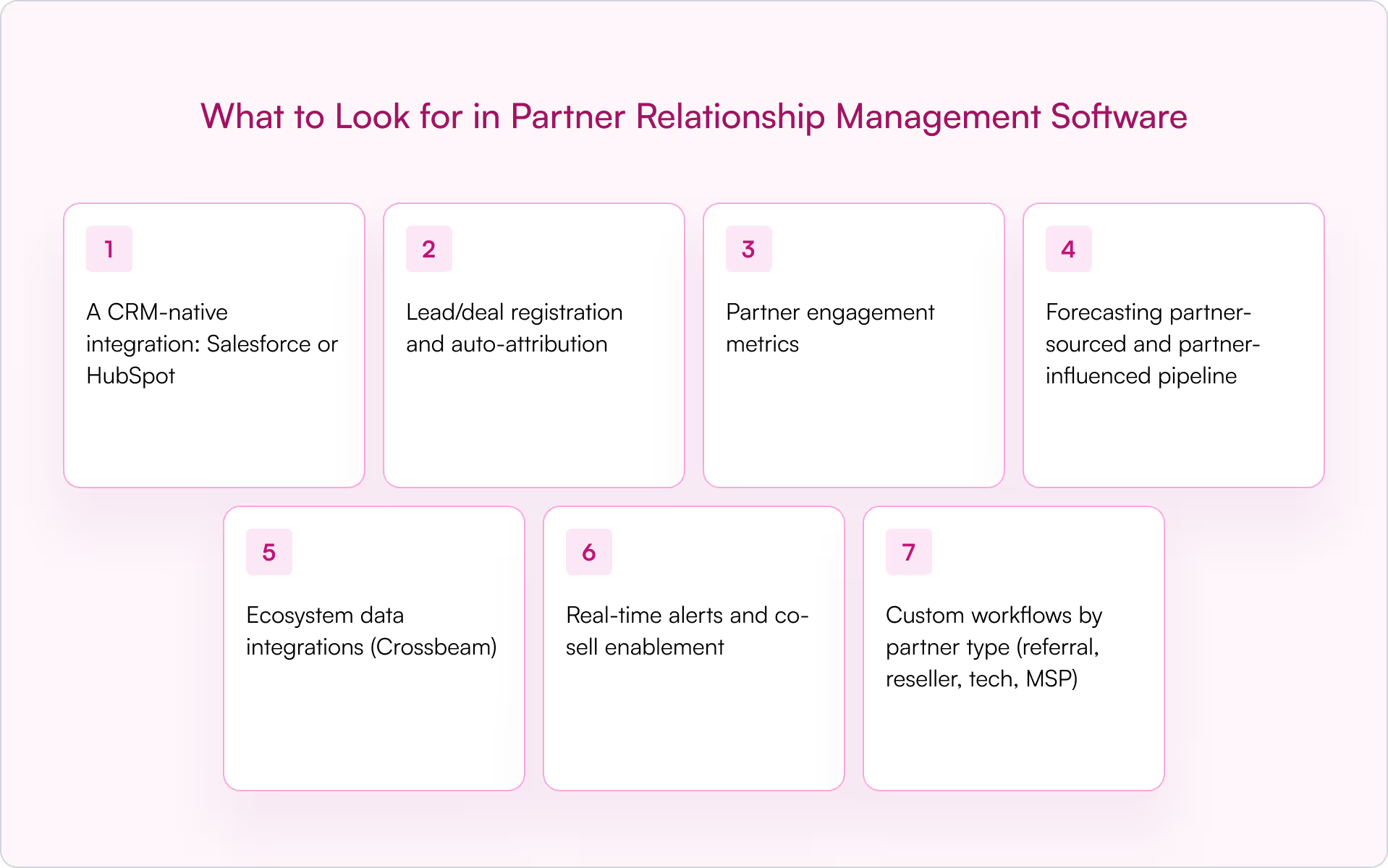
10 Best Partnership Trackers to Use in 2026
Ready to revolutionize your partnerships by investing in a new partnerships tracker?
Here are ten top tools to consider.
#1 Introw (with Crossbeam Integration)
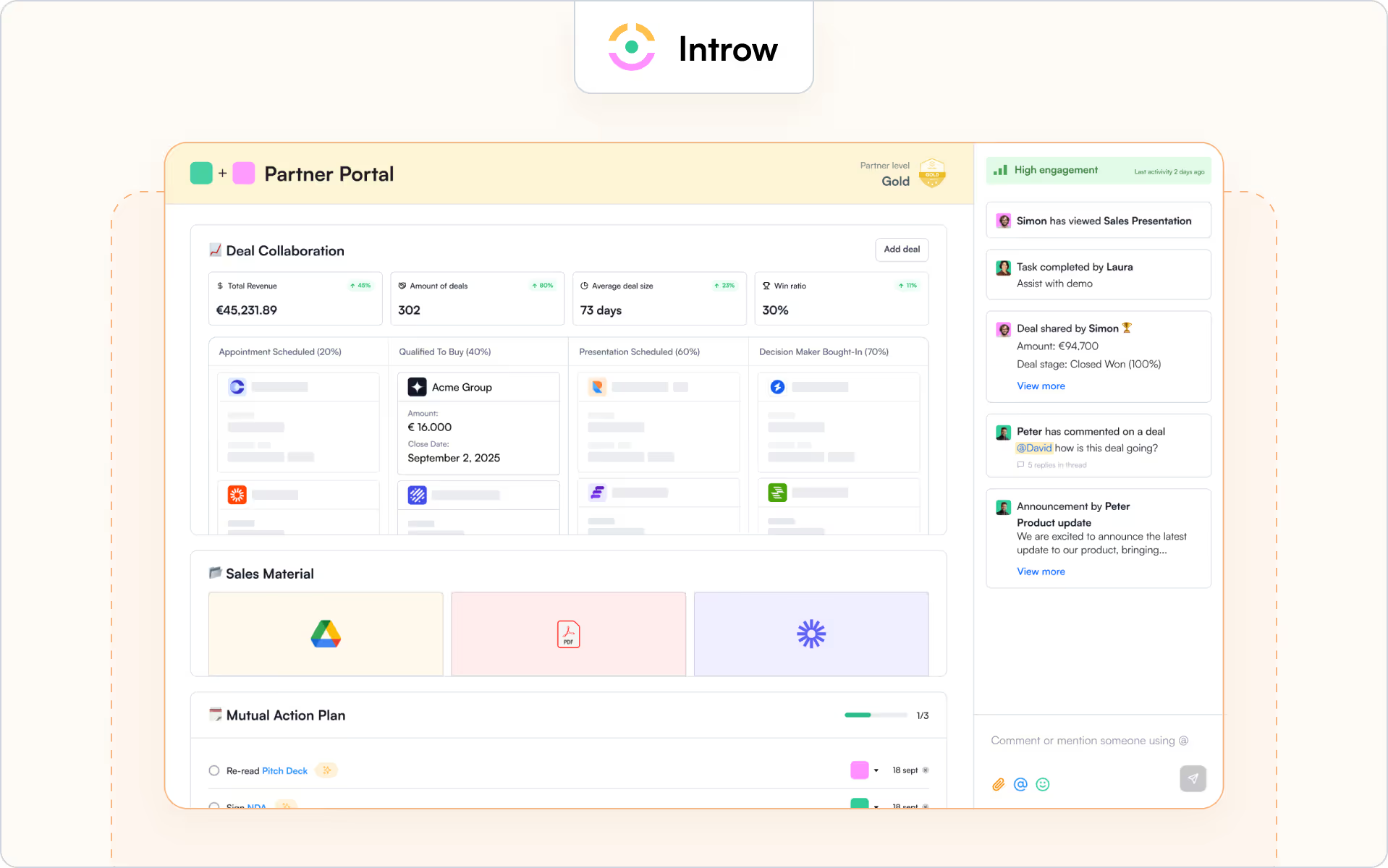
Introw is the most powerful PRM for modern SaaS companies — and its native integration with Crossbeam supercharges the entire partner revenue workflow.
Here's Why It's #1:
- Starts where your team lives: Salesforce or HubSpot
- Tracks every partner deal, lead, and engagement touch in real time
- Uses Crossbeam's account mapping data to identify overlapping customers and prospects across your ecosystem
- Tracks every engagement your partners have with content/sales presentations
- Tracks commissions in real-time
- All activity is tracked and visible to Partner Managers, RevOps, and CROs
Quick Feature Rundown:
- CRM-native lead & deal registration
- Real-time alerts via Slack and email
- Deal attribution and forecasting built into your pipeline
- Partner segmentation, enablement, and engagement tracking
- Modular workflows (referral, reseller, MSP, tech)
- Set-up in minutes — not months
Find out more:
🔗 Introw + Crossbeam Integration Overview
#2 PartnerStack

Referral and affiliate program software PartnerStack comes with some handy partner performance tracking features designed to help businesses recruit, track, and optimize partnerships effectively.
Quick Feature Rundown:
- Lead Monitoring
- CRM Integration
- Automated Attribution
- Performance Reporting
- Commission Automation
- UTM Tracking Support
- Fraud Protection
Pros: Commission automation, partner marketplace
Cons: Not ideal for co-sell motions or deep CRM integration
#3 Impartner
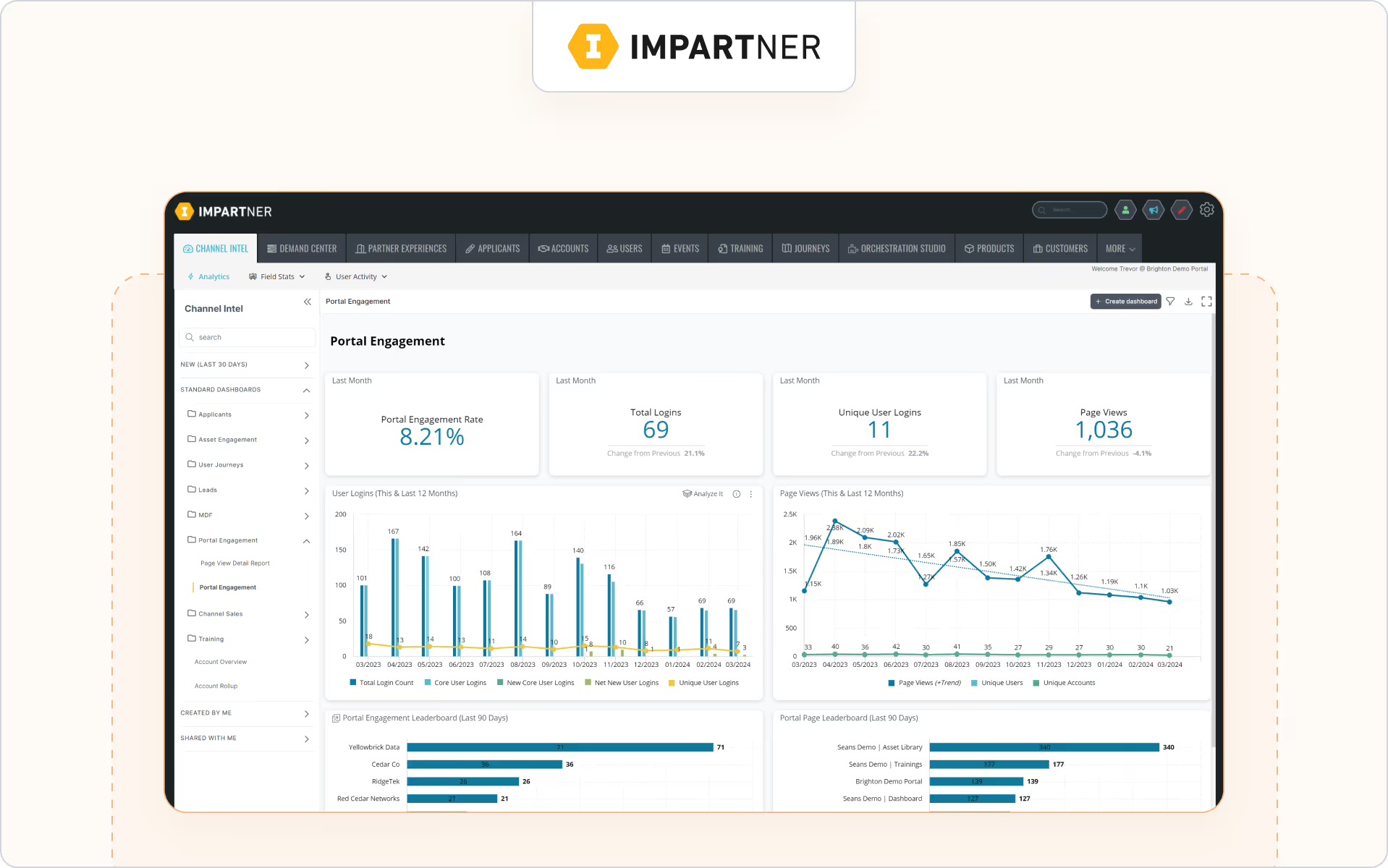
Impartner is a leading Partner Relationship Management platform designed to optimize and automate the entire partner lifecycle, enhancing collaboration and driving revenue growth.
Quick Feature Rundown:
- Partner dashboards
- Individual Partner Portals
- Portal workflows
- Role-based permissions
- Opportunity management
- Action tracking
- Lead management
- Partner performance reporting
- Partner engagement tools
- CRM integration
Pros: Comprehensive tracking, robust backend
Cons: Heavier set-up, limited CRM-native tracking
#4 Allbound (now Channelscaler)

Channelscaler (previously Allbound) helps leaders scale by winning partner mindshare, ensuring high levels of partner engagement and placing ease of doing business at the heart of your go-to-market channel strategy.
Quick Feature Rundown:
- Lead Management
- Opportunity Management
- Action Tracking
- Partner Performance Reporting
- CRM Integration
- Program Compliance Manager
- Business Planning Tools
- Journey Builder
- Analytics Studio
Pros: Great partner management, easy to use, good customer support
Cons: Limited customization
#5 ZINFI
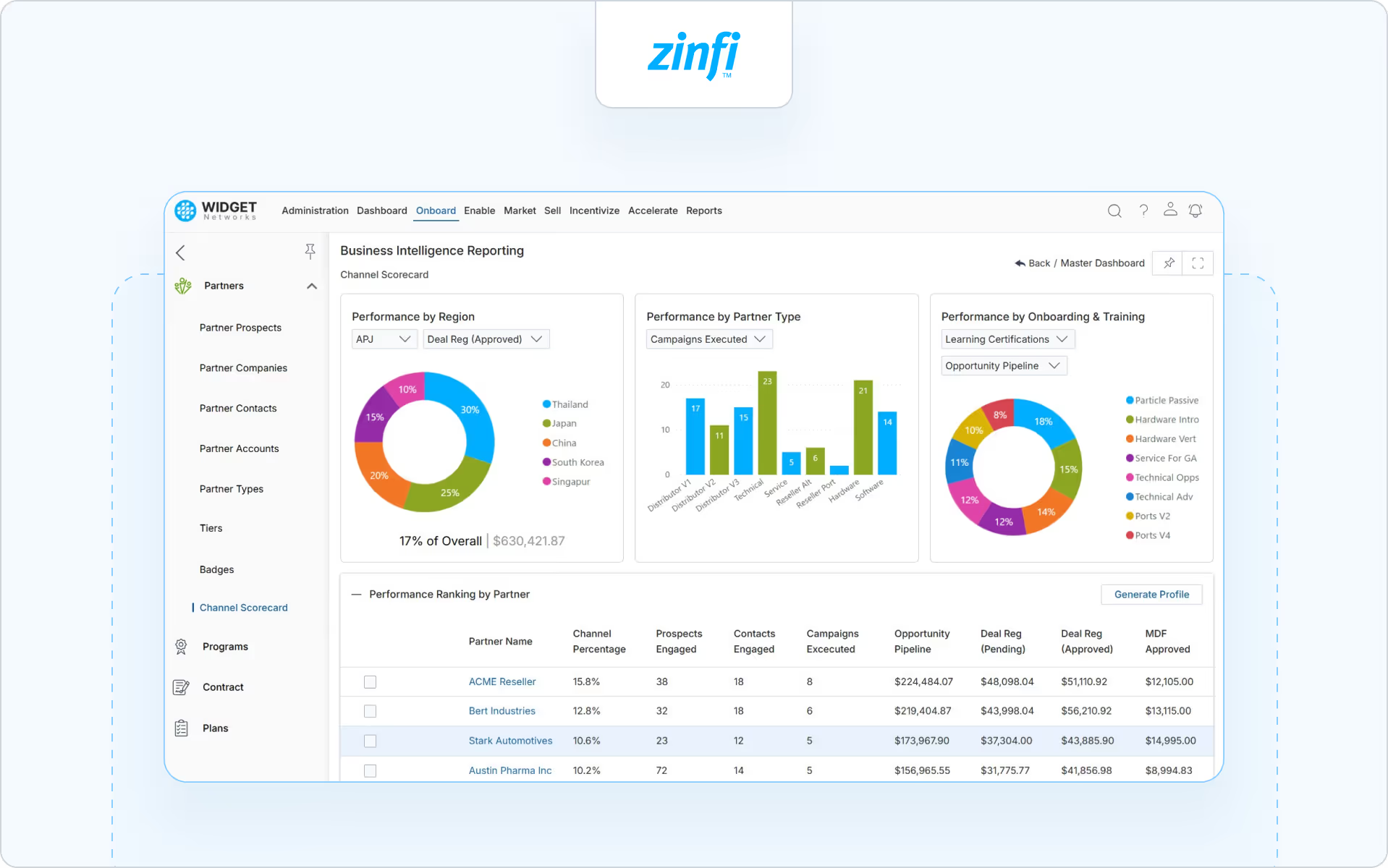
ZINFI is a comprehensive Partner Relationship Management platform that streamlines partner engagement and performance tracking.
This platform puts a heavy focus on automation, empowering you to save time and money when managing your partnerships.
Quick Feature Rundown:
- Lead management
- Opportunity management
- Performance analytics
- Incentive management
- Partner portal
- Partner onboarding
- Partner training
- Deal registration
- Automated partner onboarding, training, marketing, selling, and performance tracking
Pros: Easy to use, strong partner management, good customer support
Cons: Some features are limited
#6 Kiflo
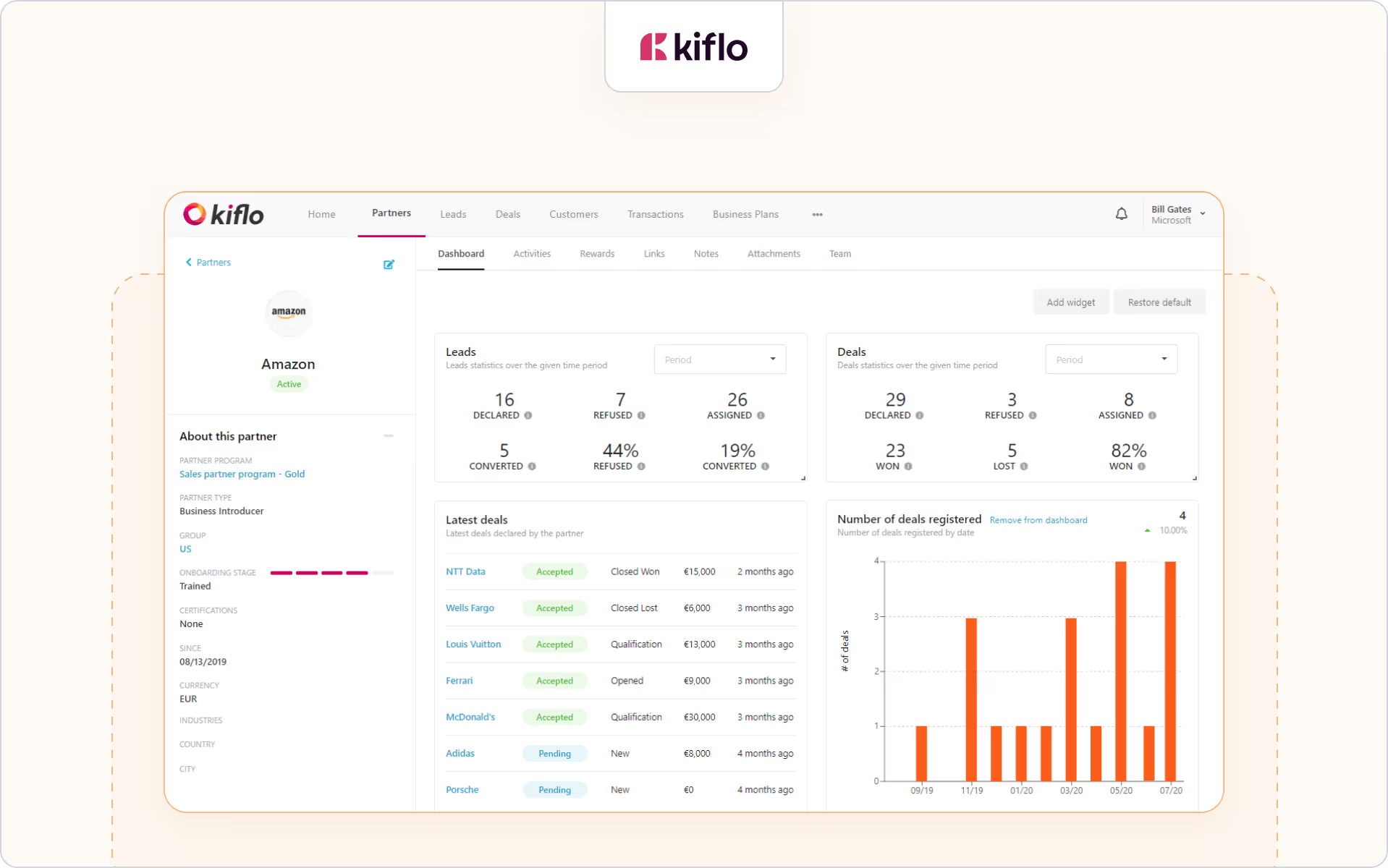
Partner Relationship Management platform Kiflo is designed to streamline partner engagement, growth, and success.
It offers customizable and automated tools that show users a visual representation of their partnerships.
Furthermore, Kiflo caters specifically to small to medium-sized businesses, providing a personalized approach to partner management.
Quick Feature Rundown:
- Lead and Deal Registration
- Real-Time Deal Tracking
- Dynamic Performance Dashboards
- Automated Partner Onboarding
- Customizable Certifications
- Content Management and Sharing
- Automated Reward and Incentive Management
- Comprehensive Analytics
- CRM Integration
Pros: Good customer support, strong partner management features
Cons: Integrations have limitations
#7 WorkSpan
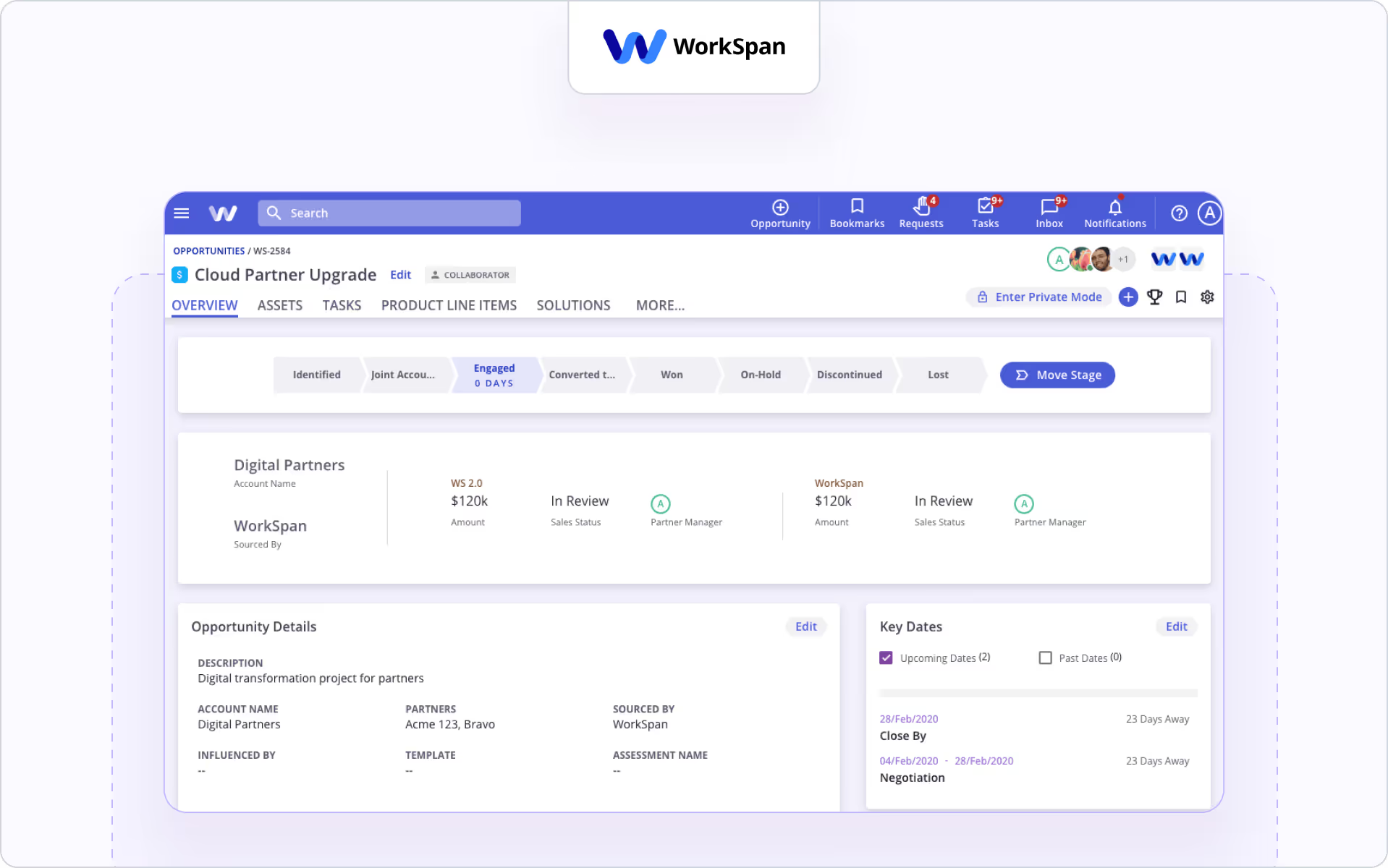
WorkSpan is a Partner Relationship Management platform designed to enhance collaboration and drive revenue growth through strategic partnerships.
It provides a comprehensive ecosystem for co-selling, co-innovating, co-marketing, and co-investing, enabling organizations to optimize their partnership strategies effectively.
Quick Feature Rundown:
- Co-sell opportunity management
- Performance measurement
- Best-practice partnership planning templates
- Comprehensive reporting and analytics
- Real-time data sharing and collaboration
- AI-driven insights and recommendations
- Secure ecosystem access control
- Automated referral creation and sharing
- Customizable dashboards and metrics
- Integration with existing CRM systems
Pros: Strong partner management and collaboration tools
Cons: Steep learning curve
#8 LeadsBridge

LeadsBridge is a comprehensive integration platform designed to streamline lead generation and management processes by connecting various marketing and CRM tools.
Its unique value proposition lies in offering over 380 integrations.
These integrations include custom solutions tailored to specific business needs, ensuring seamless data synchronization and enhanced marketing efficiency.
Quick Feature Rundown:
- Lead sync
- Audience targeting
- Online-to-offline tracking
- Custom integration
- Real-time data syncing
- Lookalike audiences
- Platform-to-platform integration
- Lead nurturing
- eCommerce synchronization
Pros: Helpful customer support, thorough automation, seamless integrations
Cons: Initial set-up can be complex
#9 ZiftONE

Zift Solutions is a comprehensive Partner Relationship Management platform that streamlines channel management, enhances partner engagement, and drives revenue growth.
This software integrates marketing, sales, and learning processes into a single platform, offering personalized experiences for businesses and their partners.
Quick Feature Rundown:
- Partner explorer
- Tier Programs
- User achievements
- Partner groups
- Customizable partner portals
- Real-time analytics and reporting
- Seamless CRM integration
- Automated lead distribution
- Partner onboarding tools
Pros: Easy to use and good customer support
Cons: Limited customization
#10 Channeltivity
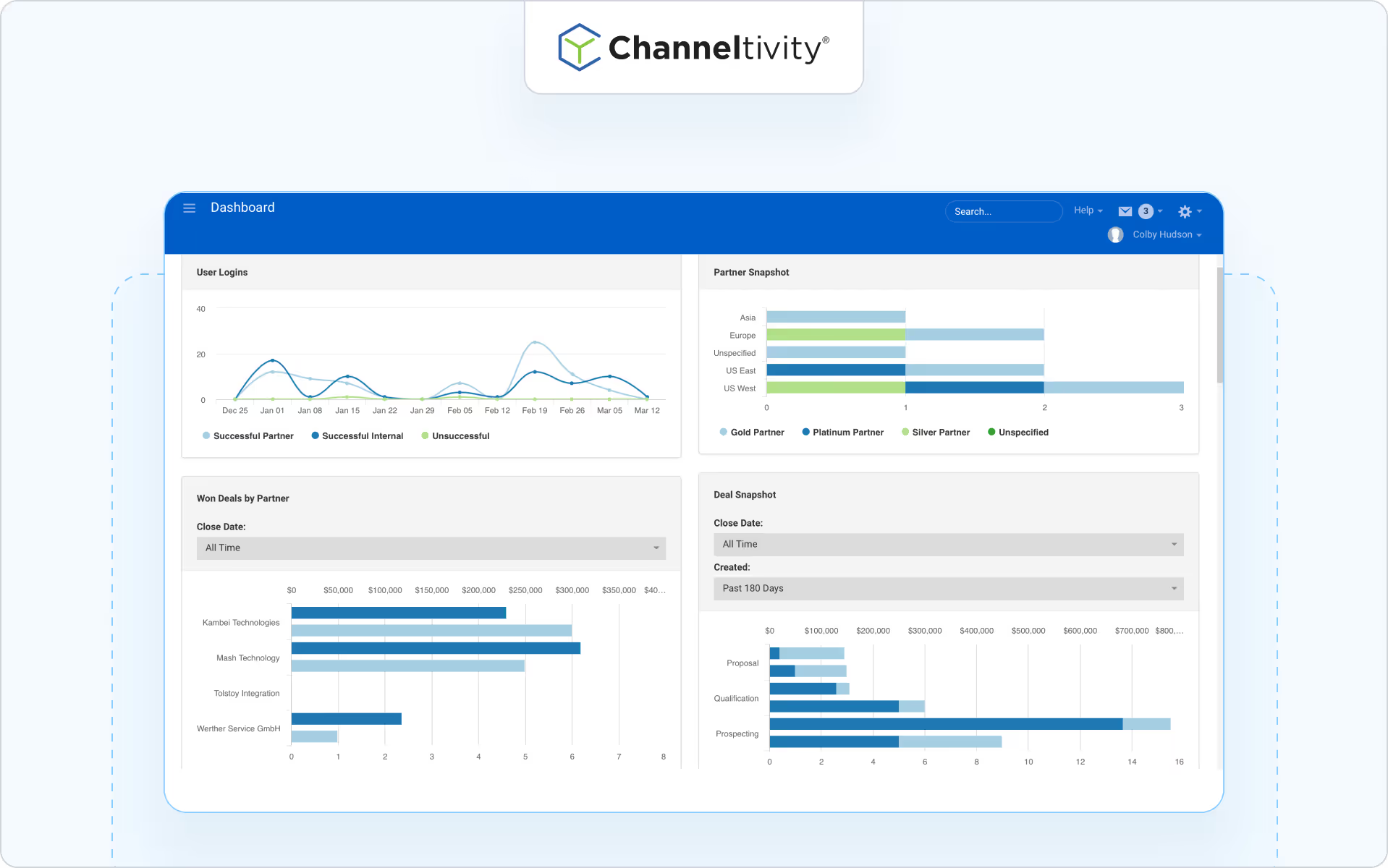
Channeltivity is a Partner Relationship Management platform designed to streamline channel management, enhance partner engagement, and drive revenue growth.
The software offers a comprehensive suite of tools — including deal registration, lead distribution, and partnership performance tracking — tailored to optimize channel operations for technology companies.
Meanwhile, its analytics and reporting suite, empowers leaders to make data-driven decisions and improve resource allocation.
Quick Feature Rundown:
- Deal registration
- Lead distribution
- Referrals and commissions
- Distributor management
- Partner dashboards
- Analytics and reporting
- Notifications and reminders
- Partner portal
- Training and certification
- Business planning
Pros: Streamlined partner engagement and deal tracking and responsive support to ensure customer satisfaction
Cons: Customization limitations
Why Introw + Crossbeam is the Best Partnership Tracking Stack in 2026
If you're ready to integrate account mapping into your PRM, consider Introw with Crossbeam.
So, how do the two platforms work together?
Introw leverages Crossbeam's overlap data to identify opportunities and instantly share them with your partners.
Essentially, Crossbeam finds the opportunity, and Introw then turns it into revenue.
This process is super simple too — one-click integration connects the partner overlap data to the actual pipeline.
What's more, Introw (with Crossbeam) syncs seamlessly into Salesforce or HubSpot, empowering you to manage your partner tracking process from inside your CRM.
The Introw-Crossbeam integration also enables co-sell motions with visibility, engagement, and forecasting.
And Introw is built for scale!
There are no portals, no spreadsheets, and no data silos here.
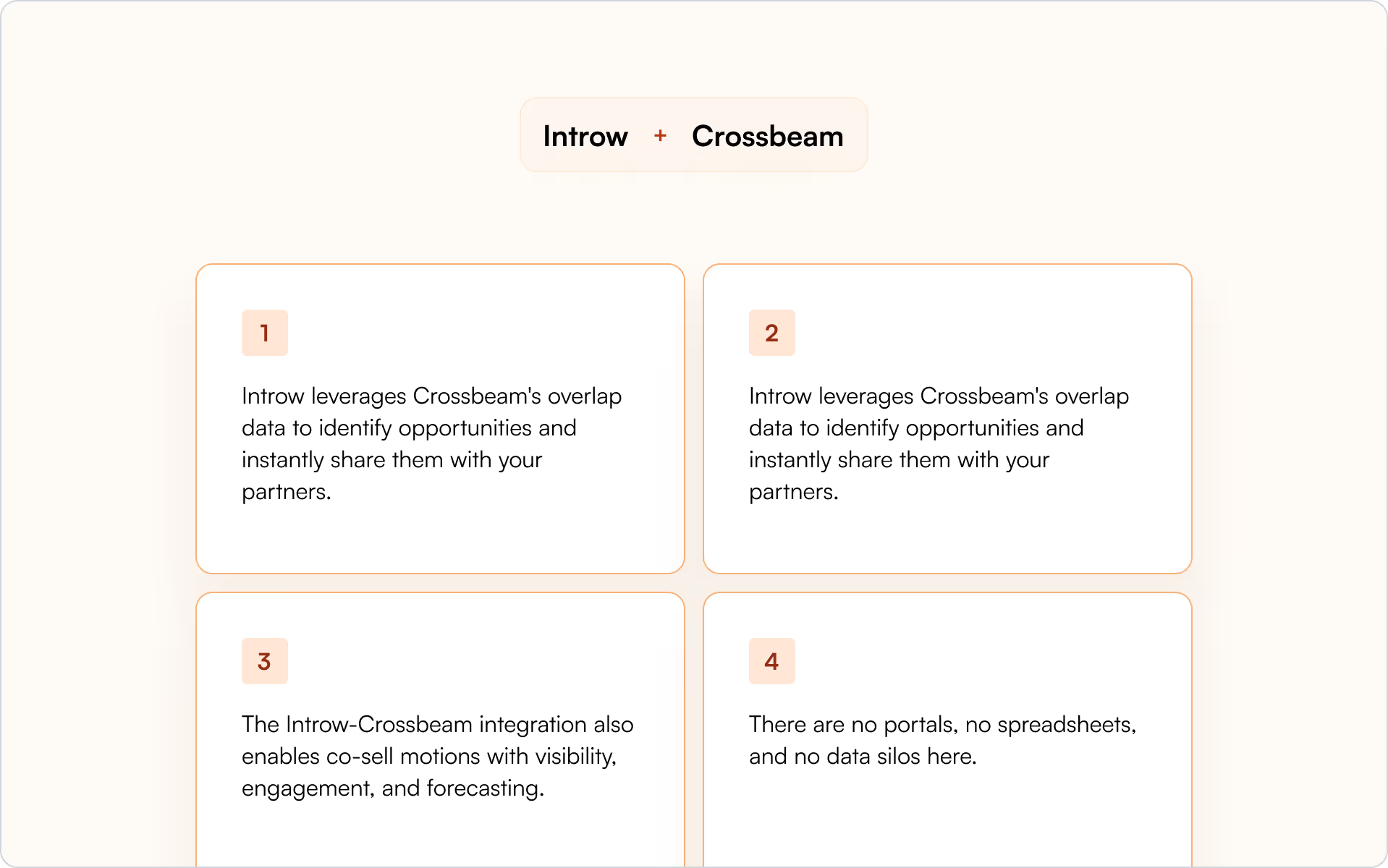
Conclusion
Today's partner programs live and die by what they can track.
Introw + Crossbeam is the only solution that handles account mapping, lead registration, engagement tracking, and forecasting — all in one flow
So, say goodbye to portal logins and spreadsheet chaos.
✅ Ready to track every opportunity and turn partnerships into pipeline? Book your personalized Introw demo
Partner Lifecycle Management: 8 Key Steps to Optimize Your Processes
Partner lifecycle management is how you turn potential partners into high performing partners — and keep them productive through every stage of the relationship. In 2026, the standouts treat the partner lifecycle as an operating system, not a campaign: a structured approach to recruiting partners, accelerating the onboarding process, establishing clear communication channels, monitoring partner performance, and renewing or exiting with professionalism. Done well, the partner management lifecycle delivers mutual benefits: expanding market reach, steadier pipeline, and long-term success for both sides. This guide lays out a practical playbook you can put to work across various stages of the partnership lifecycle, with notes on where a CRM-first partner relationship management stack (like Introw) simplifies the work.
What Is Partner Lifecycle Management?
Partner lifecycle management (PLM) is the structured management of the entire partner journey — from first contact through onboarding, activation, growth, renewal, or exit. Think of it as lifecycle management for two or more organizations working toward shared outcomes. In practice, PLM coordinates people, processes, and tools so partners receive the necessary resources at the right time: marketing materials when prospecting, sales tools at first opportunity, technical assistance at validation, and ongoing support after the first deal. The lifecycle of partner management commonly spans five stages: attract and qualify; onboard and enable; activate and co-sell; grow and retain; renew or exit. Whether you run a channel partner lifecycle management process, manage a services-led ecosystem, or blend in an affiliate program, the scaffolding stays the same — the emphasis and pacing change by motion and segment. A mature PLM function ties each stage to clear strategy, roles, and measurable outcomes so both companies see progress, not just activity.
Why Partner Lifecycle Management Still Matters in 2026
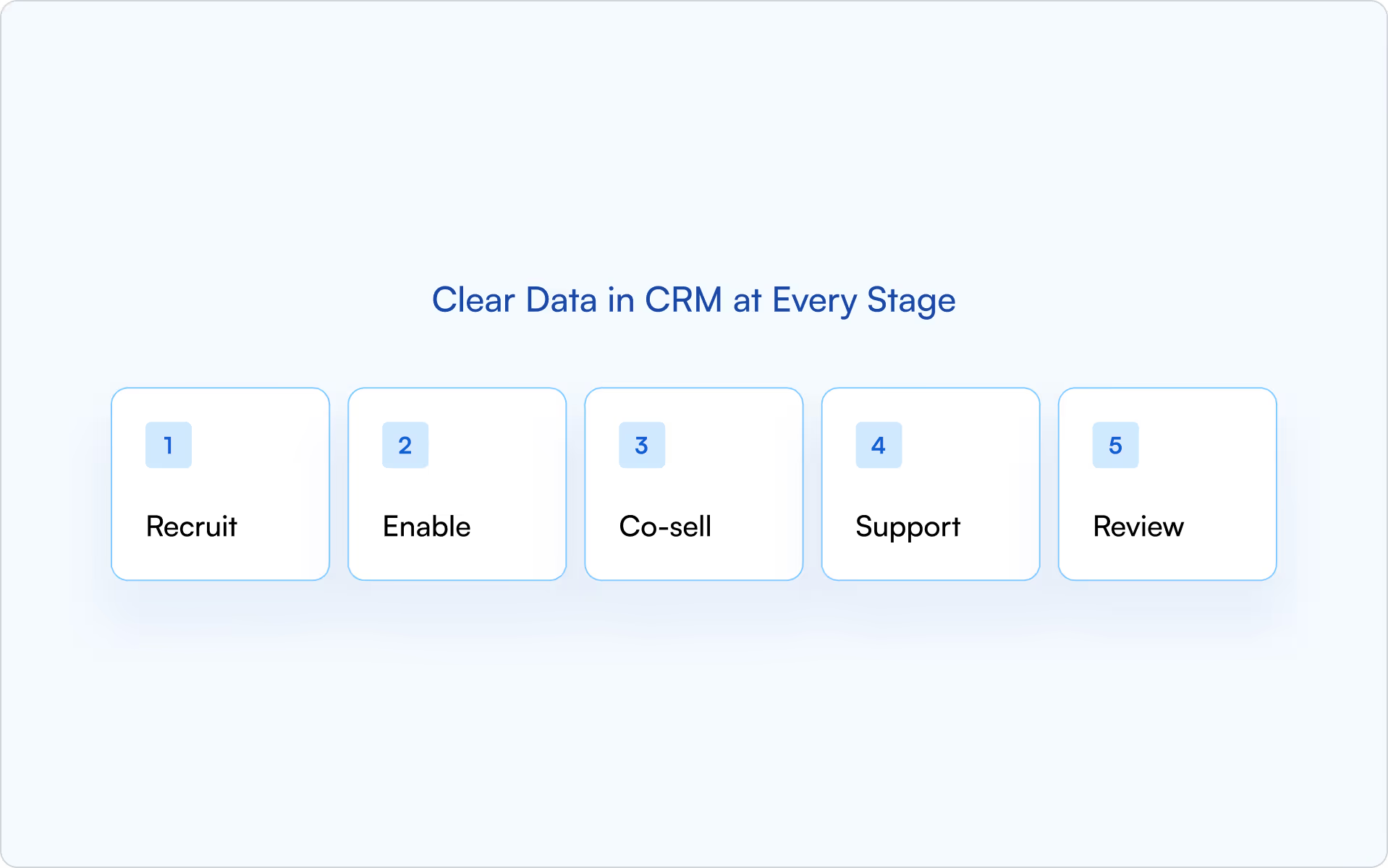
Partner ecosystems are broader and more specialized than ever: technology alliances, system integrators, services firms, and affiliate programs often collaborate on the same accounts. Buyers expect vendors and partners to move as one team, bringing complementary capabilities and credible local services. That expectation puts pressure on lifecycle management. If your stages are fuzzy or your data is scattered, you’ll feel it fast — slow onboarding, missed handoffs, and deals that stall because two companies aren’t on the same page. Effective partner lifecycle management fixes this by giving every stakeholder a clear map of the journey: how you’ll recruit, enable, co-sell, support, and review. It also anchors the relationship to business growth: shared goals, joint offers, and a cadence of regular reviews that turn activity into outcomes. When the lifecycle is visible inside your CRM, you can track performance, identify areas to coach, and allocate resources to the partners and plays that actually convert. The result is a healthier partner portfolio, stronger relationships, and a predictable route to revenue across new markets and existing accounts.
An 8-Step Framework for Effective Partner Lifecycle Management
Use this structured approach to align shared goals, streamline collaboration, and turn your partner portfolio into sustainable business growth across the full partner journey. Each step builds on the last and can be audited during quarterly reviews.
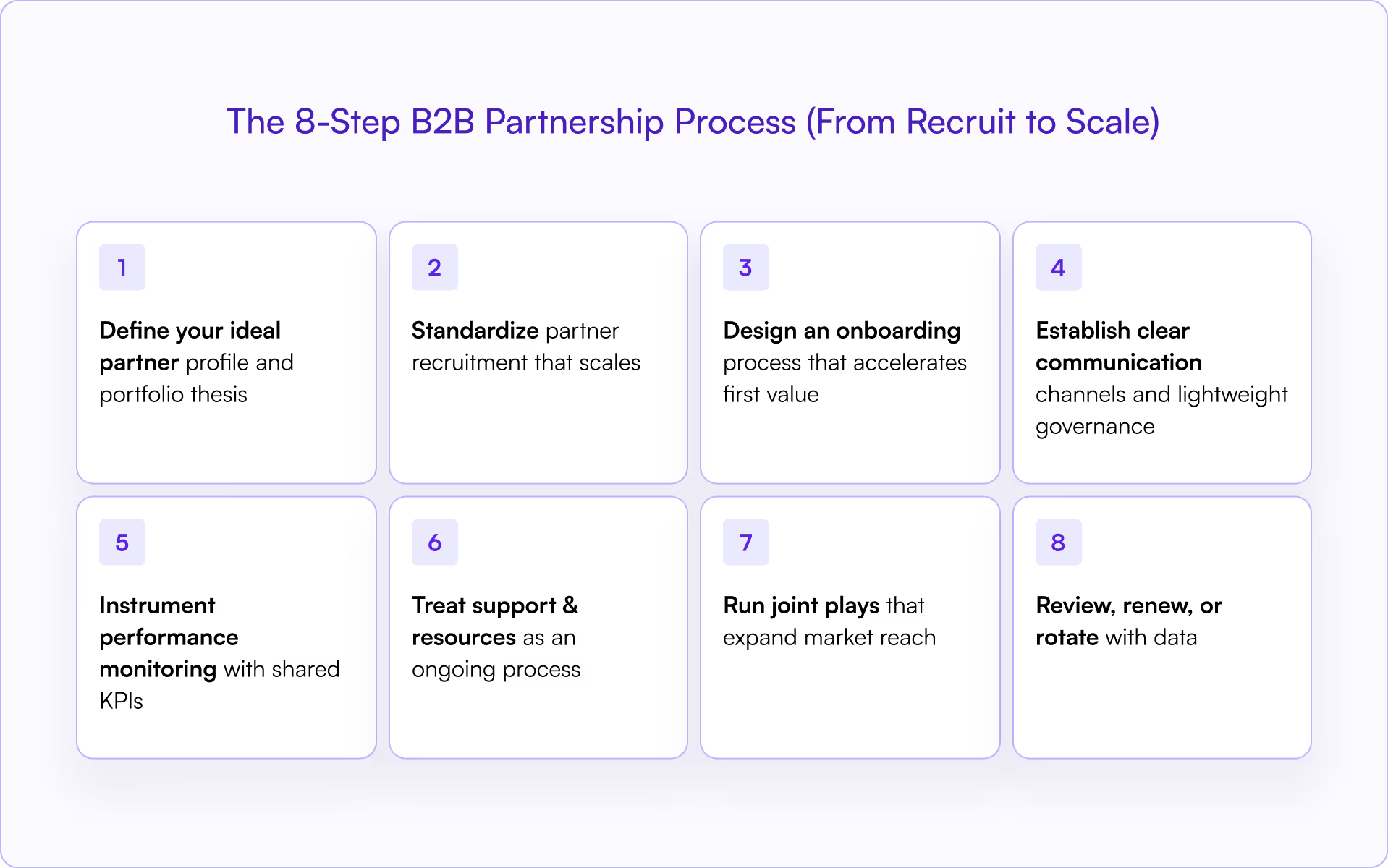
1) Define Your Ideal Partner Profile and Portfolio Thesis
Strong programs begin by naming the right partners up front. Build an ideal partner profile around business needs (industries, regions, customer base), complementary capabilities (integrations, services, routes to market), and the partner journey you can reliably support. Score prospective partners for strategic alignment, overlap with your respective customers, readiness to co-sell, and senior leadership sponsorship. Then write a simple portfolio thesis: how many partners per segment, which services matter, and where you’ll place early bets. This avoids the “many partners, little progress” trap and keeps resources focused where partnership strategies will pay off. Capture partnership goals, mutual benefits, and first-quarter actions in a one-pager for each target — it speeds quickly from interest to action and helps you maintain professionalism as conversations scale.
2) Standardize Partner Recruitment That Scales
Recruiting partners is a process, not a roadshow. Publish a short, public path for potential partners: a landing page, a qualification checklist, and clear owners for each stage. Mix outreach across your ecosystem — technology partnerships, system integrators, services firms, and (if it fits) a tightly scoped affiliate program. Make it easy to reach potential partners with transparent timeframes and who attends the first stage call. Share agendas and follow-ups with resources so candidates can evaluate fit without friction. Keep a “no-for-now” list and revisit quarterly; the market shifts, and new technologies or emerging trends can change strategic alignment. A repeatable recruitment motion preserves momentum, keeps the experience consistent across regions, and helps you identify the lifecycle of partner management signals that predict success early.
3) Design an Onboarding Process That Accelerates First Value
The handoff from recruiting to enabling is where many programs stall. Build a 30–60 day onboarding process with role-based, comprehensive training (seller, SE, marketer), current marketing materials, and a compact solution certification. Provide a starter kit: one-page positioning, a discovery guide, a 5-slide demo, and two co-brandable assets. Give partners the necessary resources to run their first motion without waiting on your team. Define roles and responsibilities, share a point-of-contact list, and set expectations for deal registration and response times. Close with a brief readiness check — who they’ll target, which sales tools they’ll use, and what success in the first quarter looks like. Well-run onboarding shortens time-to-first-deal, improves partner engagement, and sets the tone for a mutually beneficial relationship grounded in shared execution.
4) Establish Clear Communication Channels and Lightweight Governance
Clarity beats volume. Agree on clear communication channels (email/Slack) and a simple governance rhythm: weekly pipeline syncs during activation, monthly operating reviews, and a quarterly strategy checkpoint. Document owners on both sides — a partner manager, sales lead, marketing lead — and write how to escalate blockers. Keep meetings short and focused on progress, not status. Encourage both organizations to share insights from the field so you can adjust messaging and plays quickly. Lightweight governance helps many partners move in parallel without creating bureaucracy, and it’s a key element of channel partner lifecycle management where multiple vendors may touch the same customer. When communication is structured and visible in the CRM, teams stay aligned and issues surface early, before they threaten deals.
5) Instrument Performance Monitoring With Shared KPIs
You can’t manage what you can’t see. Decide on a short list of KPIs that actually describe partner performance: sourced pipeline, acceptance time for deal registrations, stage conversion, win rate, and adoption of integrations or services. Add health signals like content usage, meeting cadence, and response times. Review data where the work happens — your CRM — so you can track performance without spreadsheets, then coach to specifics: where a partner stalls, which assets work, and which markets convert. Segment reports by various stages of the partner lifecycle so you can identify areas to improve (e.g., partners strong at sourcing but weak at validation). Shared dashboards and regular reviews turn conversations from opinion to plan and spotlight high performing partners for investment.
6) Treat Support and Resources as an Ongoing Process
Effective PLM doesn’t end after onboarding. Partners need ongoing support that matches their maturity: faster answers during early co-selling, deeper enablement as deal sizes grow, and guidance on industry regulations or security for complex accounts. Maintain a living catalog of additional resources — case studies, security briefs, ROI models — and update them as products evolve. Ensure partners receive timely technical help during proofs and clean, co-owned mutual action plans. Give customer success a clear role in the partnership lifecycle so joint wins become references and renewals. The goal is a steady experience that reinforces trust and keeps engagement high across the lifecycle of partner management.
7) Run Joint Plays That Expand Market Reach
Activation sticks when both sides see pipeline. Package one or two joint plays aimed at new markets or specific use cases: a webinar with a follow-up sequence, a field workshop for an account list, or a services-plus-product bundle. Align on routes to market, lead flow, and attribution so mutual benefits translate into revenue growth and brand visibility. Combine complementary capabilities — a cloud solution with a compliance specialist, for instance — to strengthen the business relationship and create partnership success with clear offers. Share wins publicly; it motivates teams and gives the next partner a model to follow. Over time, a few proven plays will do more for business growth than a shelf full of unused assets.
8) Review, Renew, or Rotate With Data
End each quarter with a concise review: what worked, what lagged, and one change to test. Decide whether to renew, expand scope, or pause. If you renew, raise the bar with new partnership objectives and a larger target list; if you exit, keep a documented handover and protect customer experience. A respectful close protects your reputation and may reopen doors later. This adaptive management approach keeps your partner portfolio healthy, aligns investment with results, and ensures your PLM remains a comprehensive approach — not a set-and-forget checklist.
Metrics & Dashboards That Keep You Honest
A clean measurement layer is the difference between anecdotes and accountability. Tie the channel partner lifecycle management process to a handful of outcome metrics (sourced pipeline, bookings, cycle time, win rate, expansion on joint accounts) and a few leading indicators (registrations responded to within 24 hours, mutual action plans created in first meeting, enablement completions). Track by stage of the partner management lifecycle so you can see where partners speed quickly or stall. Layer in program health signals — active partners by segment, ramp time, content adoption — so you can plan capacity and resources. The goal isn’t a flashy BI stack; it’s a dashboard you trust enough to make decisions weekly. When your key takeaways are visible to the key stakeholders who own sales, marketing, and success, the program improves continuously instead of once a year.
Conclusion
Partner lifecycle management is a comprehensive approach to turning partnership intent into durable results. Define who you’ll work with, start them quickly, keep communication and governance light but consistent, measure what matters, and renew relationships with confidence — or close them cleanly. When you operate the lifecycle inside your CRM and design for adoption, you get mutual success: stronger collaborations, predictable pipeline, and customers who experience coordinated service from first meeting through renewal. If you want the mechanics to feel easier, consider Introw’s CRM-first PRM to keep the work simple and the results visible.
9 Powerful Kiflo Alternatives for Scaling SaaS Partner Programs in 2026
Kiflo is a well-known partner relationship management (PRM) platform – especially among SaaS companies launching their first partner program. But as your SaaS business scales, you may find that Kiflo isn’t keeping up with your team’s evolving needs.
While Kiflo is user-friendly and covers the basics, it doesn’t deliver a truly CRM-embedded experience, lacks a no-code portal builder for customized workflows, and doesn’t support native off-portal collaboration via tools like Slack. For scaling SaaS teams who rely on Salesforce or HubSpot and want to streamline partner management, these limitations can slow down growth and complicate RevOps alignment.
The good news? There are several modern PRMs on the market that solve these pain points – offering deep CRM integration, flexible customization, and frictionless partner collaboration. In this article, we break down the nine best Kiflo alternatives for SaaS companies looking to scale their partner programs and drive more revenue in 2026.
Let's dive in…
Why SaaS Teams Look for a Kiflo Alternative
Kiflo includes native integrations with Salesforce and HubSpot, but stops short of delivering a true CRM-embedded experience. This means that partner collaboration, deal management, and reporting often happen outside the CRM – resulting in siloed data, duplicated effort, and less efficient workflows.
Modern SaaS teams are also looking for no-code portal customization and seamless, off-portal collaboration via Slack – areas where Kiflo falls short. Without these capabilities, scaling partner programs can become cumbersome and harder to manage as your ecosystem grows.
Here’s a closer look at these key limitations:
No CRM Embedded Experience
Kiflo provides native integrations with Salesforce and HubSpot, but these are not CRM-embedded. Partner managers and revenue teams still need to operate outside the CRM interface, and advanced deal/lead registration mapping often requires extra configuration or middleware.
Introw, by contrast, is CRM-first and fully embedded – enabling partner teams to collaborate, register deals, and manage workflows directly within Salesforce or HubSpot, eliminating context-switching and data silos.
No No-Code Partner Portal Builder
While Kiflo allows some customization of the partner portal, it does not provide a no-code, drag-and-drop portal builder. This limits flexibility when tailoring experiences for different partner types, segments, or tiers.
Introw includes a no-code, modular portal builder that lets you easily design, launch, and iterate on partner experiences – without developer resources.
No Native Slack Integration
Kiflo does not support native Slack integration or advanced off-portal collaboration. Partners generally need to log in for all interactions – deal registration, accessing resources, or updates.
Introw, on the other hand, supports frictionless off-portal workflows: partners can interact via Slack or email, with all updates syncing automatically to your CRM. This reduces friction, increases partner engagement, and keeps your data clean.
9 Best Kiflo Alternatives in 2026
Kiflo helped you build a new partner program.
Now that said program is up and running, you want to enhance productivity, facilitate seamless collaboration, and drive more sales. You know you need a new PRM to achieve these things.
Which PRM should you choose? One of the nine Kiflo alternatives below will fit the bill:
1. Introw — Best CRM-Native PRM for SaaS Teams
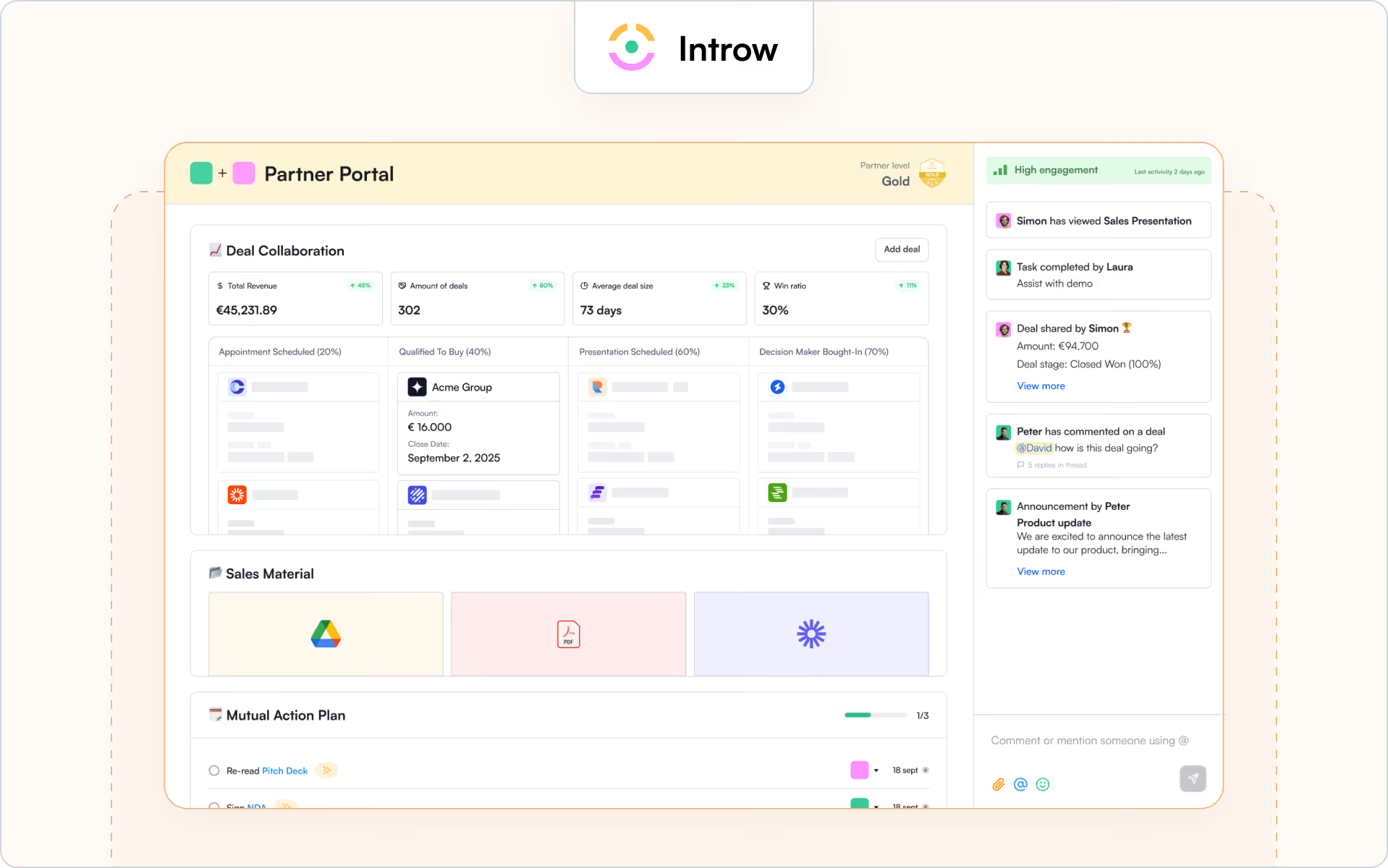
Introw is one of the few PRMs that was built with CRM integration in mind.
It connects seamlessly to Salesforce and HubSpot and allows SaaS companies to collaborate off-portal. Just as important, the platform is no-code, so integrations and other features can be set up in minutes.
In addition, Introw helps simplify partner onboarding and deal flows, automates engagement tracking for hundreds of partners at once, and powers co-selling - all directly inside your CRM.
Key Features:
- CRM-first, so all data stays inside your CRM
- Real-time deal registration, forecasting, and MAPs
- Slack and email sync for timely notifications and reminders
- Modular workflows for referral, co-sell, and reseller partners
- No-code setup, so anyone can customize their PRM software
Request a demo to see if Introw is right for your SaaS brand!
2. PartnerStack — Best PRM for Growing Affiliate Sales

PartnerStack connects users to affiliates, resellers, and referral partners through a user-friendly interface. This simplifies the management process and leads to more sales.
The tool also includes advanced features and automation capabilities that can be used to improve marketing efforts and better recruit new partners.
Unfortunately, PartnerStack has limited CRM visibility, which creates friction for users.
Key Features:
- Recruit new partners
- Train partners effectively
- Track every partner sourced lead
- Issue partner commissions automatically
3. Partnero — Best for Influencer-Focused Growth Strategies

Partnero was specifically designed to help companies create affiliate and referral programs.
It enables users to track links and coupon codes, offer goal-based rewards, and use sophisticated commission structures. It also integrates seamlessly with popular tools.
It should be noted, however, Partnero was not designed for co-sell SaaS motions. If that's an important aspect of your company's sales approach, consider a different Kiflo alternative.
Key Features:
- Create affiliate, loyalty, and email newsletter referral programs
- Offer a variety of dynamic rewards and keep partners engaged
- Track partner performance and make data-driven decisions
- Integrate with popular tools like PayPal and WooCommerce
4. Channelscaler — Best for Large Enterprises

Channelscaler is the combination of two leading PRM tools: Allbound and Channel Mechanics. Together, the two tools create a capable solution for large companies.
Use Channelscaler to create partner portals, host content libraries, train new partners, offer a variety of incentives, close and track sales, integrate with other apps, and more.
As you can see, Channelscaler has a lot to offer, but you'll pay to use it. The platform is more expensive than other solutions. Sadly, you'll also have to deal with a rigid user experience.
Key Features:
- Build and manage a content library
- Develop learning tracks and certifications
- Manage market development funds (MDF)
- Easily distribute leads and register new deals
- Access detailed channel insights and reports
5. Tolt — Best for New Affiliate Programs
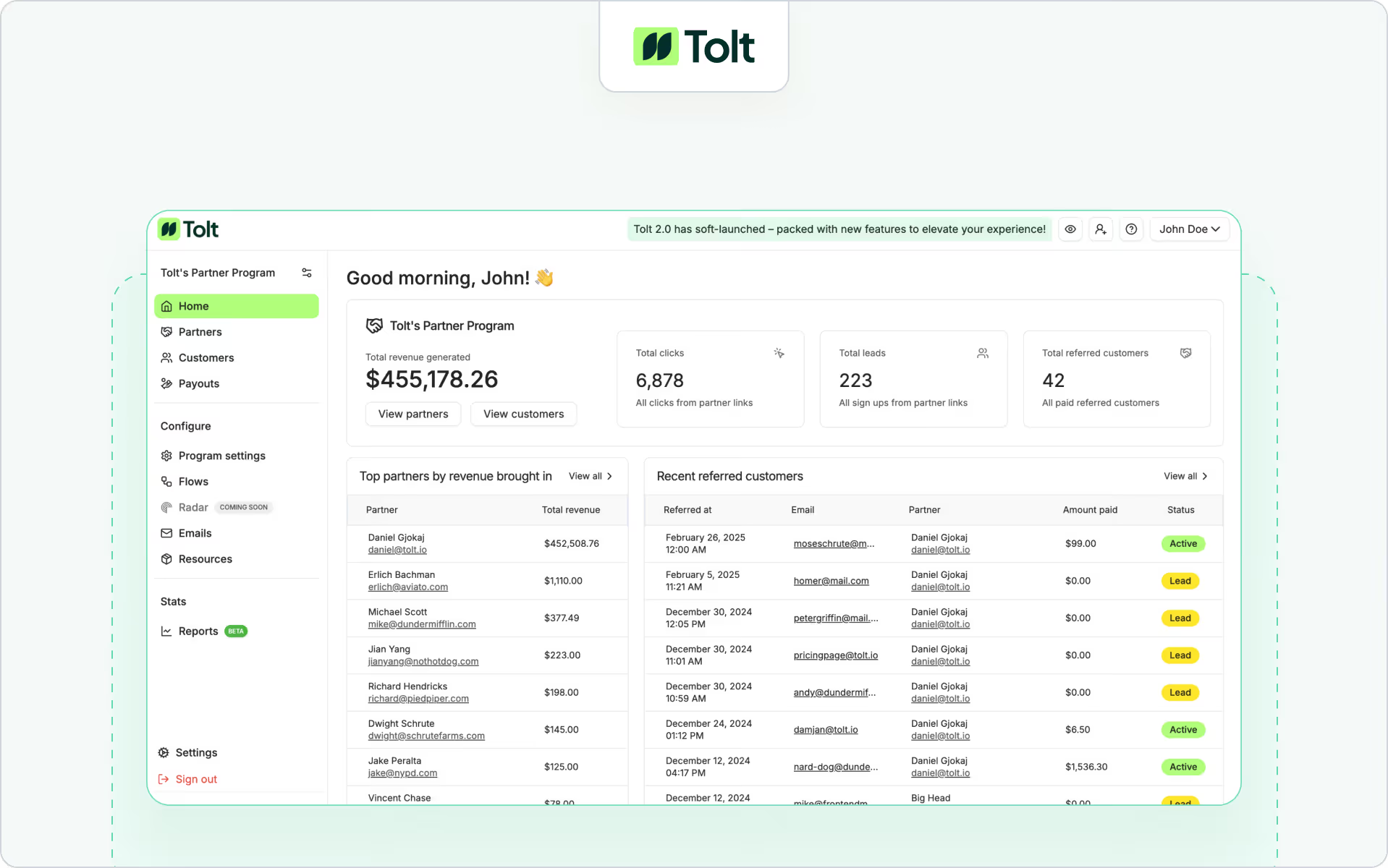
Tolt is all about affiliate marketing for SaaS companies.
After registration, customers can use Tolt to create branded portals for their affiliates, analyze important metrics related to their affiliate programs, and streamline affiliate payments.
While Tolt is a strong option for new affiliate programs, it lacks advanced PRM features. For example, Tolt doesn't offer deal registration tools. Its forecasting features are also weak.
Key Features:
- Easy setup
- Quick affiliate onboarding
- Intuitive interface and reporting tools
- Integrations with multiple payment apps
6. Impartner — Best for Global Organizations
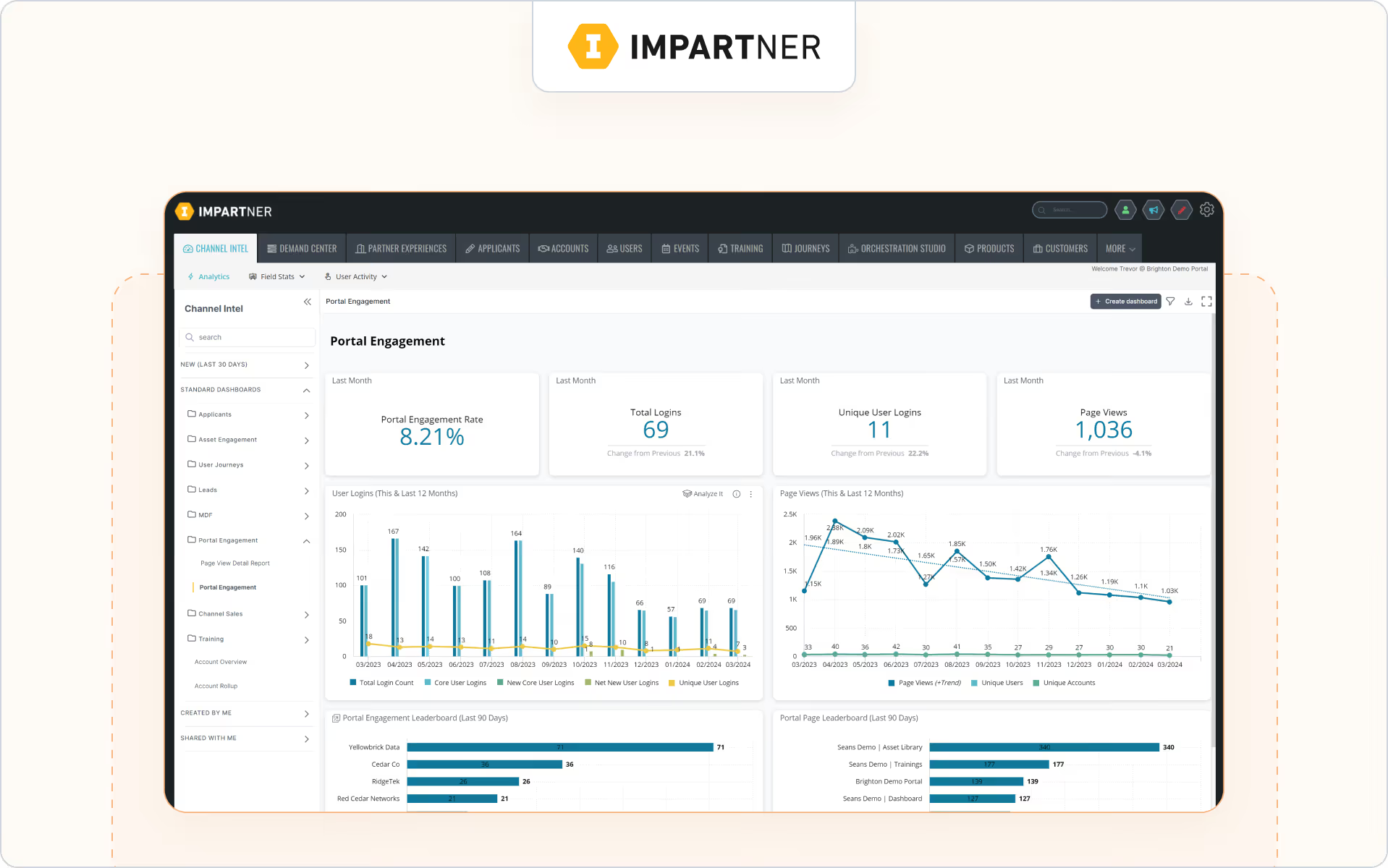
Impartner is an extremely robust platform for global enterprises.
Does that sound like your company? Then you'll likely enjoy Impartner's many features, from personalized partner onboarding to advanced performance tracking and incentive management.
Just know that these features are often difficult to implement. If you're looking for an intuitive, user-friendly solution to manage your partner program, look elsewhere.
Key Features:
- Personalized partner onboarding
- Partner training and certification
- Advanced performance tracking
- Incentives and rewards management
- Integrations with other top tools
7. Impact.com — Best for Influencer-Focused Growth Strategies
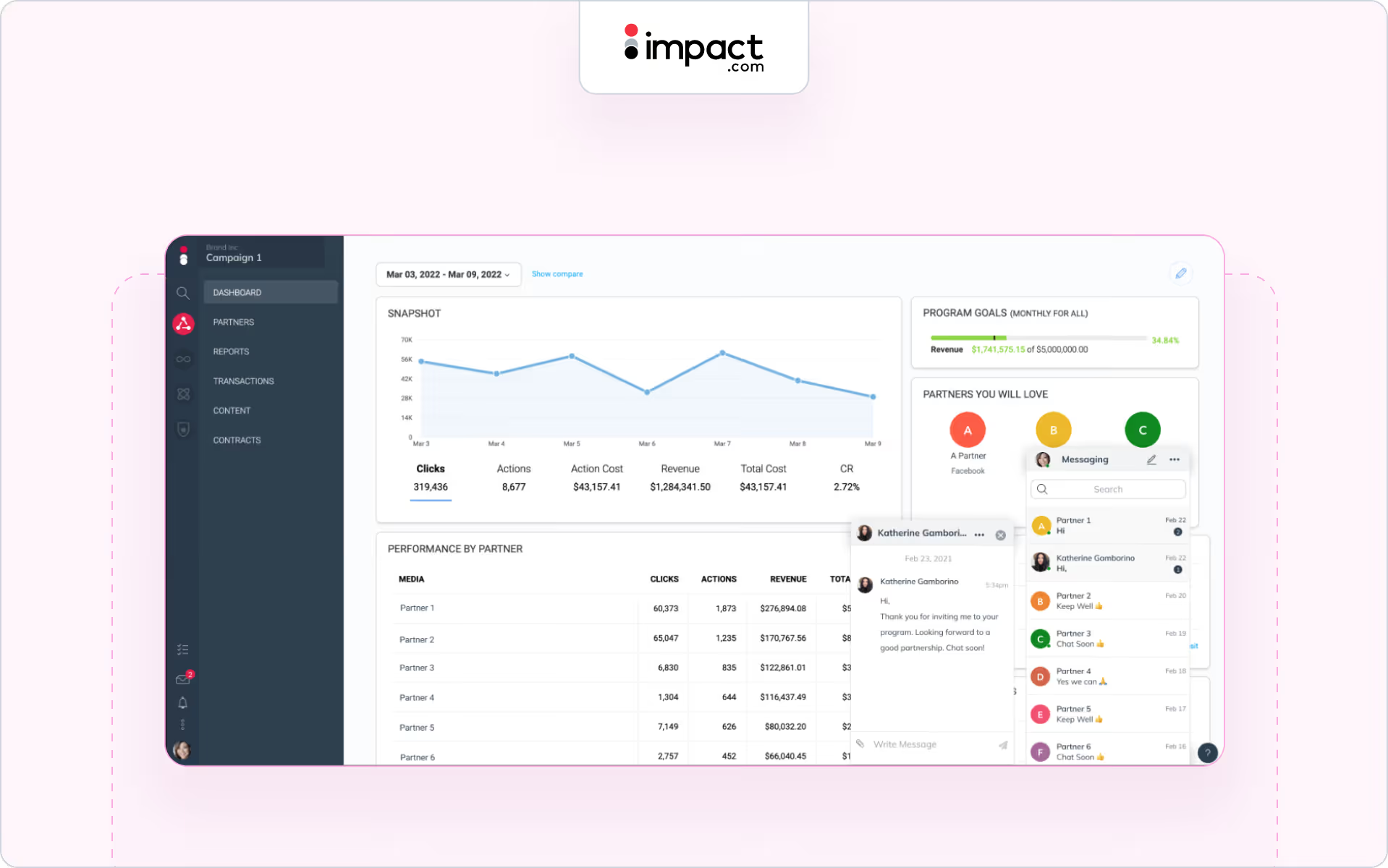
Impact.com was made to accelerate growth via affiliates, social media influencers, media publishers, and pretty much every other partner type. (Though, it really shines with influencers.)
Use the platform to recruit partners, encourage engagement, track performance, automate payouts, and optimize results. In other words, manage partnerships through the entire lifecycle.
Impact.com is a strong PRM software, but it wasn't built specifically for SaaS brands. Software companies that want to drive results via partnerships might want a more tailor-made tool.
Key Features:
- Discover and recruit potential partners
- Track partner engagement and performance
- Create contracts and pay partners automatically
- Optimize partner programs based on in-depth analytics
8. Rewardful — Best for Small, Bootstrapped Teams

Rewardful offers "All-in-One Affiliate Management Software for SaaS".
Once users are set up with the platform, they can build custom affiliate portals, set different commission structures for different partners, track and settle payments, and more.
While not as fully featured as other PRMs, Rewardful is easy to use and affordable, which makes it a solid option for small, bootstrapped teams in the SaaS space.
Key Features:
- Build a user-friendly portal for affiliates
- Track performance via links or coupon codes
- Set up mass affiliate payouts through PayPal or Wise
- Build no-code integrations with Stripe, Paddle, and more
9. Partnerize — Best for Enterprise Direct to Consumer Sales

Finally, Partnerize connects brands with retailers, influencers, affiliate marketers, and more. The goal? To build complete partner programs that increase sales and drive revenue.
Partnerize gives users the ability to find potential partners, collaborate with them on sales, track their performance with real-time analytics, and send commission payments at scale.
Partnerize can be used by any SaaS company with the means to pay for it. But it's best suited to large organizations that focus on ecommerce and/or direct to consumer sales strategies.
Key Features:
- Tap into Partnerize's database of 1M+ potential partners
- Analyze metrics to see which partner strategies work best
- Build custom commission structures based on desired outcomes
- Issue prompt payments to partners in their preferred currencies
- Integrate with top commerce, content, and influencer solutions
How to Choose the Right Kiflo Alternative
We know what you're thinking, "All of the PRMs above sound great! How do I choose the best Kiflo alternative for my company?" We're glad you asked. Here are three suggestions:
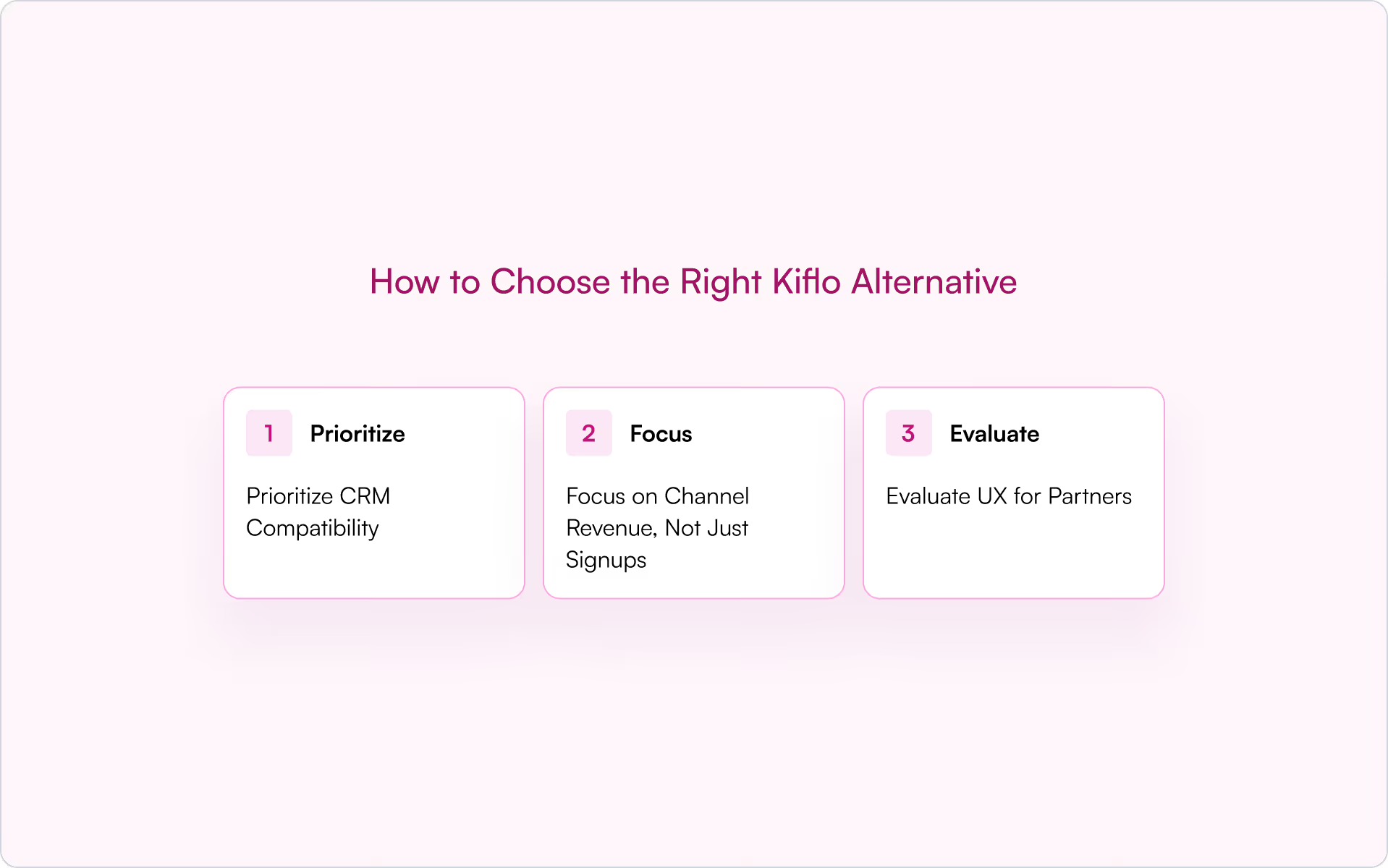
Prioritize CRM Compatibility
A PRM will not replace your CRM. The tools should work together to boost revenue for your company. Look for Kiflo alternatives that prioritize CRM compatibility and connect to the CRM you already use. This will help you avoid information silos and make more sales.
Focus on Channel Revenue, Not Just Signups
Partner signups are great - but only if they produce revenue. Choose a Kiflo alternative that will support your company's specific partner journey, from onboarding to closed deals. Doing so will help you create better partner experiences that lead to more sales, revenue, and success.
Evaluate UX for Partners
Speaking of partner experiences, the best Kiflo alternatives support off-portal collaboration, so partners can close deals without logging in to a PRM. They also offer real-time visibility, so partners always know how many sales they've made and how much money they'll earn within a given time period. These things may sound simple, but they keep partners engaged. And engaged partners drive more revenue. As such, they're essential to a strong partner program.
Introw: The Best Partner Relationship Management Tool for SaaS Companies in 2026
There are plenty of good PRMs on the market. But Introw leads the pack because it's CRM-native, built for RevOps alignment, and helps users to create better partner experiences.
Put simply, Introw integrates directly with powerful CRMs like HubSpot and Salesforce, which means partners can use CRM data to increase sales. Just as important, the sales partners make via Introw portals are automatically logged in your CRM - no more manual data entry!
Introw also allows users to work off-portal, supports asynchronous workflows via Slack and/or email, enables modular and scalable partner flows, and includes real-time forecasting.
Plus, Introw offers transparent pricing that almost every scaling SaaS company can afford. Request a demo of Introw today to see if it's right for your company's partnership program.
Best 17 Everflow Alternatives to Optimize Your Partner Program in 2026
Why Consider an Everflow Alternative in 2026?
When scaling a SaaS partner program, choosing the right technology stack is critical — but not all “partner platforms” are created equal. Everflow is a popular platform in the affiliate marketing world, built for B2C brands and digital commerce teams that want to manage high-volume, transactional affiliate or influencer relationships. But for SaaS companies running B2B partner programs — especially those focused on co-selling, enablement, and revenue collaboration — affiliate tools like Everflow simply aren’t designed for the job.
Everflow’s core strengths are affiliate link creation, payout automation, and large-scale tracking — ideal for e-commerce or consumer referral programs. If your goal is to manage influencer marketing, run pay-per-click campaigns, or turn your customer base into referral partners, Everflow is a solid choice.
However, Everflow is not built for B2B SaaS channel programs where:
- You need to train or enable partners with content and resources
- You want to co-sell and collaborate on pipeline, not just pay out commissions
- You work with resellers, referral partners, or managed service providers
- Your revenue team relies on real-time CRM data for forecasting and attribution
In short: Everflow is a strong B2C affiliate tool, but not a PRM (Partner Relationship Management) solution for SaaS. If you’re building a modern B2B partner ecosystem, you’ll want a CRM-native PRM platform that supports deep engagement, automation, and revenue alignment across your entire partner lifecycle.
What to Look for in an Everflow Alternative — If You’re Considering a True PRM
If you’re evaluating alternatives to Everflow because you want to do more than just affiliate payouts — like building lasting partner relationships, driving co-selling, or enabling resellers — you’re really in the market for a Partner Relationship Management (PRM) solution, not another affiliate tool.
Here’s what to prioritize if you’re ready for a real PRM:
- CRM-Native Workflows: Seamless integration with Salesforce or HubSpot to keep partner data and deals in your single source of truth
- Automation: Onboarding, deal registration, communications, and reporting handled automatically — not through manual tracking
- Off-Portal Engagement: Communicate and collaborate with partners via Slack, email, or other tools they already use (no portal logins required)
- Real-Time Analytics: Pipeline, attribution, and forecasting updated live inside your CRM
- Scalability: Manage anywhere from 10 to 300+ partners, each with customized journeys and permissions
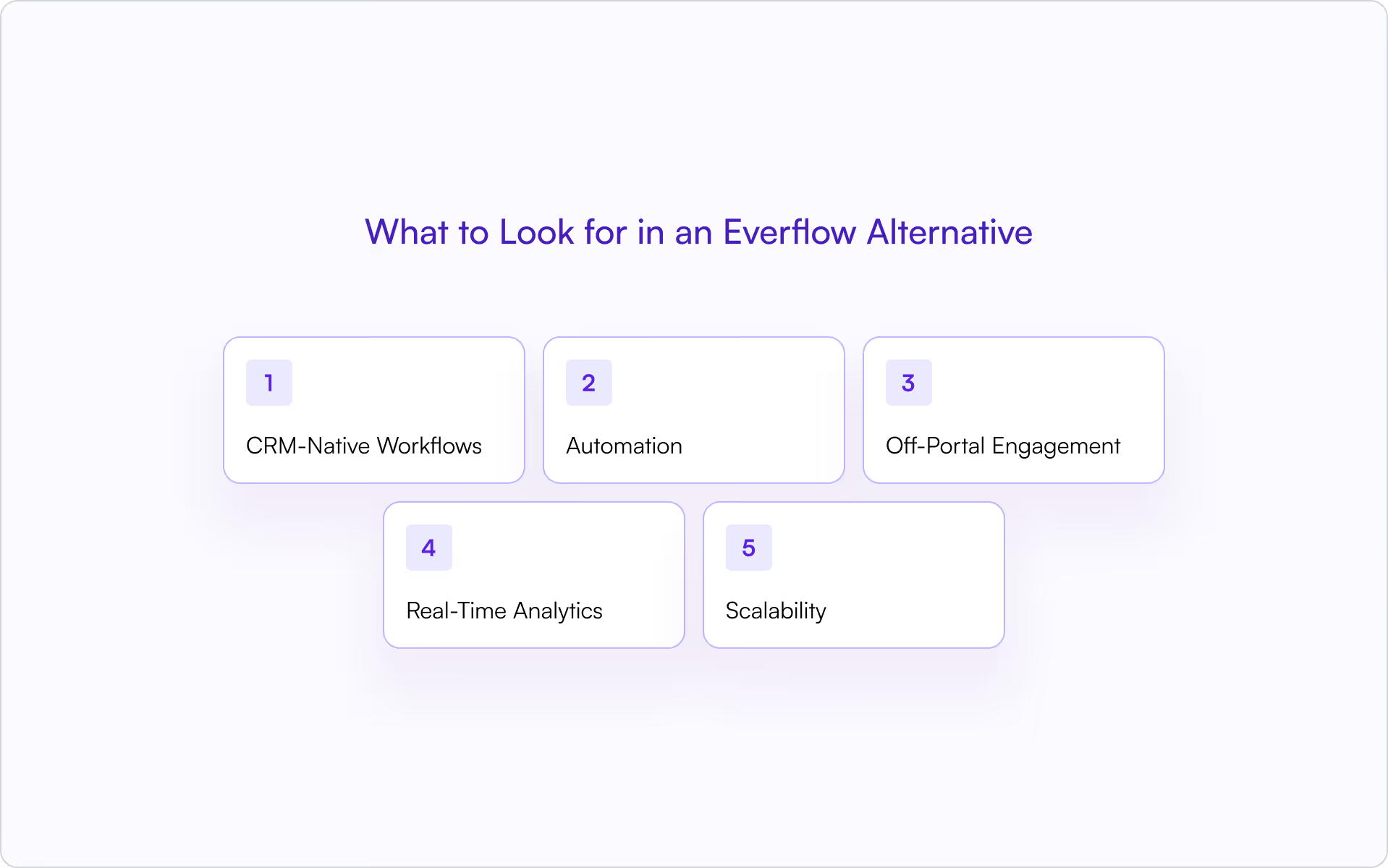
The bottom line: If you’re running a B2B SaaS partner program and want more than basic affiliate marketing, focus on platforms designed for lasting, revenue-driven relationships — not just transactional tracking.
17 Best Everflow Alternatives for SaaS & B2B Partner Programs (2026)
There are plenty of great Everflow alternatives out there in 2026.
Here are our 17 top picks of the best Everflow alternatives, alongside their stand-out use cases and pros and cons.
1. Introw
A modern, CRM-first PRM platform that integrates deeply with Salesforce and HubSpot. Introw empowers businesses to launch branded partner portals in minutes — no coding needed.
Other highlights include:
- Off-portal comms
- Deep engagement tracking
- Automated deal registrations and partner updates, with no login required
- Customizable by partner type or tier
It also automates deal and lead registration, commissions, and real-time partner engagement via email or Slack; all synced seamlessly with CRM data.
Best for: SaaS teams needing CRM-first partner automation
Why switch? Introw empowers SaaS teams to go beyond affiliate marketing and run true co-selling and revenue-generating programs.
Request an Introw demo here today.
2. PartnerStack

PartnerStack is a full-stack PRM and partner ecosystem platform for B2B SaaS companies.
It's an effective platform for rapid partner scaling but less so when it comes to deep channel sales.
Key features include:
- Scalable portal
- Easy payouts
- Partner marketplace
Best for: SaaS looking to blend affiliate, referral, and reseller
Pros and cons: While PartnerStack offers a solid onboarding facility, its CRM integration is limited.
3. Kiflo
Kiflo is a PRM platform designed to streamline the entire partner lifecycle for SMBs.
It offers simple and affordable partner management but is not designed for highly complex workflows.
Highlights include:
- Clean UI
- Lead and deal registration
- Partner onboarding templates
Best for: SMBs or new SaaS partner programs
Pros and cons: Good for co-marketing, but lighter on integrations and automation
4. Channelscaler

Channelscaler is a unified PRM and channel program automation platform born from the merger of Allbound and Channel Mechanics.
The platform is portal-based with some CRM integration via API.
Key features include:
- Deal registration
- Co-selling
- Enablement/content
- QBR tools
Best for: Enablement-heavy SaaS partner orgs
Pros and cons: Channelscaler is an excellent option for enablement but can be overkill for small teams
5. Impact.com
Impact.com is an all‑in‑one partnership management platform that empowers brands to manage diverse partner types — affiliates, influencers, creators, and referral advocates — within a unified interface.
It automates the full partner lifecycle, from recruitment and contracting to tracking, payouts, and performance optimization.
However, it's worth noting that Impact.com offers fewer B2B and channel features than many other platforms, and its CRM integration is limited, too.
Top features include:
- Marketplace
- Deep affiliate tracking
- Payout automation
Best for: Affiliate-first organizations, influencer, and content partnerships
Pros and cons: Impact.com is best suited for scaling digital commerce and affiliate programs rather than SaaS channel co-selling.
6. Impartner
Impartner is a leading partner ecosystem platform that offers end-to-end PRM and Through-Channel Marketing Automation (TCMA).
It simplifies the partner lifecycle — from recruiting and onboarding to training, marketing, deal registration, and performance analytics.
Highlights include:
- Full-featured PRM (including deal reg, MDF, onboarding, and analytics)
- Advanced role permissions
- Strong reporting
Best for: Enterprises, global channel programs
Pros and cons: A great option for large organizations with IT resources, but it has a slower setup than similar tools
7. Tune

TUNE (formerly HasOffers) is a flexible SaaS platform designed for brands, agencies, and networks, offering a comprehensive solution for partner marketing.
It's important to bear in mind that this is a digital-first platform and is not ideal for SaaS channel sales.
Key features include:
- Flexible tracking
- API
- Good mobile support
Best for: Affiliate/performance marketing (mobile, app, gaming)
Pros and cons: TUNE offers API integration, fraud prevention, and real-time reporting but lacks partner co-selling and CRM integration.
8. Partnerize

Partnerize is an AI-powered partnership automation platform that helps enterprises manage, optimize, and vault affiliate, influencer, and referral programs end‑to‑end.
The platform's highlights include:
- Affiliate, influencer, B2B, and channel all in one platform
- AI-powered optimization
- Flexible reporting
Best for: Large brands managing mixed partner ecosystems
Pros and cons: Partnerize works best for companies with big budgets and delivers big reach — but it's not tailored for SaaS workflows.
9. Zift Solutions

Zift Solutions — a unified PRM and through-channel marketing automation platform for indirect selling — promises to optimize campaigns and deliver happier partners.
It excels in channel marketing and automation for large teams.
Platform highlights include:
- MDF
- Campaign management
- Strong integrations
Best for: Channel marketing automation at enterprise scale
Pros and cons: Zift Solutions offers robust reporting but can be complex
10. Crossbeam
Crossbeam is an ecosystem‑led growth platform that securely connects partner CRMs and data sources to identify account overlaps, surface warm leads, and enable co‑selling.
This platform is designed to help sales teams uncover partnership opportunities and drive ecosystem‑based revenue — and should be used to supplement your CRM and/or PRM.
Crossbeam's key features are:
- Account mapping
- Partner overlap
- Joint pipeline tracking
Best for: SaaS with ecosystem and co-selling focus
Pros and Cons: Crossbeam is not a full PRM, but it's super useful for ecosystem data
11. Channeltivity
Channeltivity is a cloud-based PRM and channel management software designed to help companies build, scale, and optimize their indirect sales programs.
It works well for classic channel teams rather than affiliate-heavy programs.
Key features include:
- Deal reg
- MDF
- Reporting
- Customizable portal
Best for: Mid-market B2B SaaS
Pros and cons: Quick to deploy and has HubSpot/Salesforce connectors but is not ideal for affiliate-heavy programs
12. Magentrix
Magentrix is a robust PRM and partner portal platform.
This software helps organizations streamline partner onboarding, deal registration, pipeline tracking, incentives, and training via a built-in learning management system.
Its LMS makes it an excellent fit for SaaS teams with heavy partner enablement or content needs.
Key features:
- PRM
- Community features
- Strong Salesforce integration
- Resource library
- Support tools
Best for: Teams needing robust partner portal customization
Pros and cons: Magentrix is highly flexible and scalable, but it does come with a learning curve, and its high level of customization means implementation can be slow.
13. Affise

Promising to help companies master performance marketing and mobile attribution, cloud‑based Affise simplifies partnerships — affiliate, influencer, app, and referral marketing.
This is a handy tool for teams that are digital-first, mobile-first, or work in e-commerce.
Highlights include:
- Flexible tracking
- Payout automation
- Supports mobile attribution data
Best for: Performance marketing and affiliate networks
Pros and cons: Affise is helpful in the B2C space, but it's not built explicitly for co-sell or B2B SaaS channels.
14. Salesforce PRM

Salesforce PRM is an extension of the Salesforce Sales Cloud that empowers companies to manage channel sales with their partners.
As you'd imagine, it's fully integrated with Salesforce CRM, enabling organizations to grow indirect sales and collaborate efficiently with their partner ecosystem.
Salesforce PRM is a top choice for teams with SFDC admins or those who need single-source-of-truth
Key features include:
- Native integration
- Customizable objects
- Customizable workflows
Best for: Organizations already on Salesforce
Pros and cons: Salesforce PRM offers built-in reporting but has limited out-of-the-box PRM features
15. Elioplus
Elioplus is a B2B platform for software and cloud vendors that simplifies channel growth by combining partner recruitment with PRM features.
It's best used for building partner networks rather than scaling complex programs.
Highlights include:
- Marketplace
- Partner discovery
- Some PRM features
Best for: SaaS/IT vendors looking for partner recruitment
Pros and cons: The software's emphasis on partner recruitment is valuable for those building their partner program, but Elioplus is limited when it comes to automation and deep integrations.
16. Post Affiliate Pro
Need a software that will help you launch, track, and manage affiliate programs at scale?
Take a look at Post Affiliate Pro, which is designed for affiliate programs.
If you're looking for channel sales support, however, this may not be the software for you.
Key features of Post Affiliate Pro include:
- Multi-currency
- Campaign management
- Automated commission payments
Best for: Affiliate marketing and pay-per-performance schemes
Pros and cons: While useful for affiliate programs, it's not focused on B2B or SaaS channels.
17. WorkSpan
WorkSpan is a SaaS-based ecosystem business‑management platform that unifies co‑selling, co‑marketing, co‑investing, and co‑innovating across partner networks.
Features include:
- Joint pipeline tracking
- Workflow automation
- Real-time referral sharing
- Salesforce integration
- Comprehensive data visibility
Best for: Co-selling, alliance, and ecosystem management
Pros and cons: This software is a good fit for businesses with complex ecosystems but not classic affiliate programs.
Why SaaS Teams Upgrade to Introw
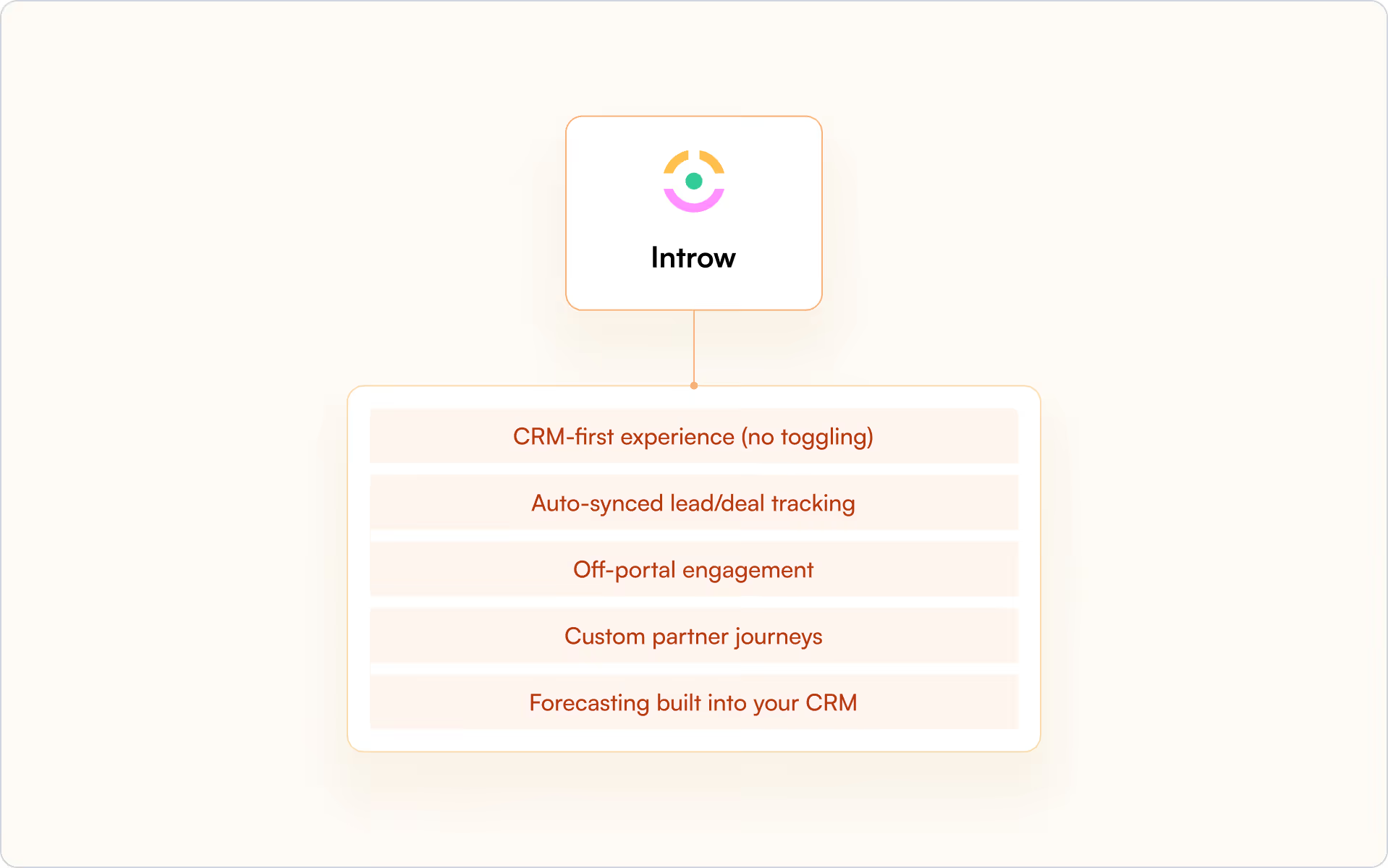
Modern SaaS teams need tools that match the speed and complexity of today's partner ecosystems while also simplifying collaboration and streamlining user journeys.
Here's why leading SaaS teams are making the switch to Introw.
CRM-native workflows
Introw works directly within your existing CRM, so your team gets to keep using familiar tools without any disruption, and you get to retain your single source of truth.
👉 Find out more about Introw's HubSpot and Salesforce integrations.
Off-portal engagement
Forget forcing partners to log into separate portals — this is a fast track to disengagement.
Introw enables seamless communication and collaboration outside of portals (such as email and Slack), reducing friction and keeping partners engaged where they already work.
Instant analytics
Action real-time insights with analytics that update instantly.
Track partner performance, spot trends early, and make data-driven decisions without waiting for reports.
No more missed updates or chasing partners
Stay effortlessly connected with automated alerts and notifications.
Role-based dashboards for managers, RevOps, and CROs
Everyone on your team gets personalized dashboards tailored to their needs.
This means managers, RevOps, and CROs can easily access the data that matters most to them, empowering them to make faster and smarter decisions.
Introw has been proven to scale SaaS partner revenue — request a demo here today.
Conclusion
Today's partner programs demand more than just tracking — they require deep CRM integration, automation to reduce manual work, and meaningful engagement that create results.
It's fair to say that traditional tools and disconnected portals simply can't keep up with the speed and complexity of modern SaaS ecosystems.
What are the next steps for organizations building and running modern partner programs?
- Evaluate the leading partner management solutions
- Schedule a live demo with your team
- Choose a platform that can future-proof your channel strategy as you grow
After all, the right tool can make all the difference in unlocking partner-led revenue.
12 Strategies for Building Effective Partner Ecosystem in 2026
In 2026, traditional, linear partner programs simply aren’t cutting it.
Instead, SaaS teams need to build modern, collaborative partner ecosystems with multi-directional partnerships.
From co-creation and shared growth opportunities to innovations and integrations, successful partner ecosystems have the potential to become a significant revenue stream for any SaaS brand.
Read on for our 12 impactful strategies for building an effective partner ecosystem fit for 2026.
What is a Partner Ecosystem? (2026 Definition + Key Terms)
A partner ecosystem is an interconnected network of companies that collaborate to deliver better value to customers.
So what’s the biggest difference between more traditional, linear programs like channel programs and alliances, and modern partner ecosystems?
Channel programs work inside a structured, transactional framework.
Within a channel program, partners (such as reseller partners, VARs, and distributors) sell or resell your product, incentivised by discounts and margins.
An alliance, on the other hand, refers to a strategic partnership between two or more companies (often at enterprise-level) to jointly pursue opportunities.
This could mean co-developing solutions or launching into new verticals together.
So, what is a partner ecosystem?
Broader and more modern, ecosystems are collaborative and, vitally, multi-directional, putting a sharp focus on co-creation, integrations, and shared growth opportunities.
These ecosystems encompass channels, alliances, integrations, resellers, service partners, technology vendors, consultants, and influencers, with collaborations occurring across multiple partner types.
So, what is an ecosystem partner?
An ecosystem partner is defined as any external company that actively contributes to your ecosystem.
Their role goes far beyond transactions; for instance, they might contribute by integrating, co-marketing, implementing, or influencing customers, as well as selling.
They provide added value to both your SaaS business and your customers through their expertise, services, or integrations, helping to expand your solution’s reach.
These modern partner ecosystems typically outperform traditional SaaS partner programs because they’re designed for flexibility, collaboration, and delivering value to customers, rather than just transactional sales.
The Business Case: Benefits of a Partner Ecosystem
Why should you build a partner ecosystem?
Here are four of the biggest benefits of taking this approach.
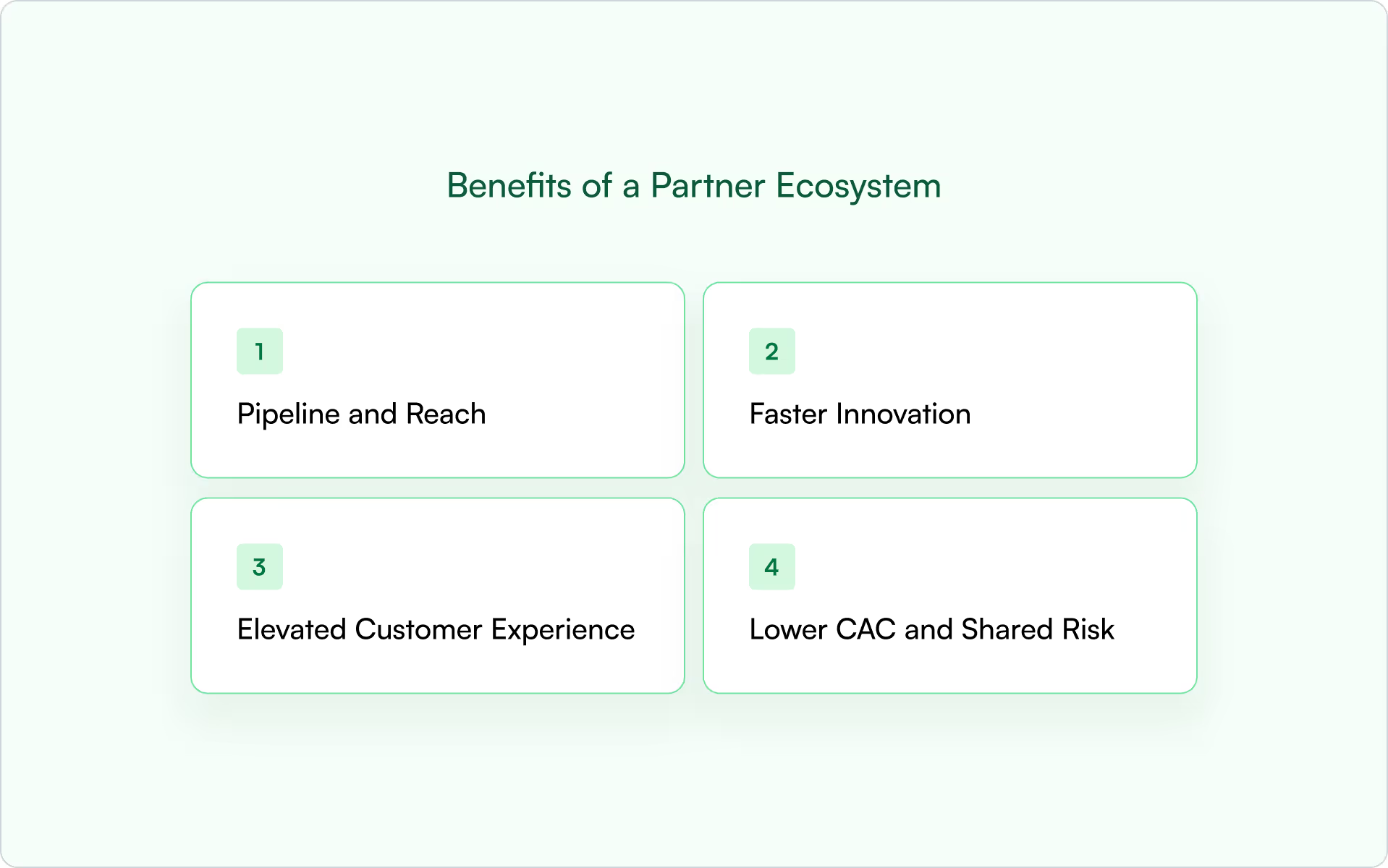
- Pipeline and Reach
A robust partner ecosystem significantly enhances the number of trusted voices and channels that bring your solution to market.
This helps to expand your brand’s reach and keep your pipeline looking very healthy.
Indeed, getting this right should lead to more deal sources, shorter sales cycles, and improved pipeline diversity.
Meanwhile, partners help you to launch in new geographical markets faster and specialise in more verticals.
- Faster Innovation
Your partner ecosystem will also open up more avenues for co-creation, experimentation, and feedback than more traditional programs.
It empowers you to tap into external creativity, quickly enter new verticals, experiment at scale, launch plug-and-play solutions, and develop faster feedback loops —all of which increase the speed at which innovation occurs.
And faster innovation keeps you at the forefront of the market, which is crucial in a fast-moving industry like SaaS.
- Elevated Customer Experience
Building a partner ecosystem enhances the customer experience by granting customers access to more value, choice, and support than the SaaS company could deliver alone.
Furthermore, by their very nature, ecosystems deliver integrated offerings, allowing you to provide a seamless workflow rather than a fragmented stack.
This significantly reduces friction throughout the customer experience.
- Lower CAC and Shared Risk
When you’re supported by a robust partner ecosystem, your customer acquisition cost (CAC) should drop significantly.
With a wide variety of partners generating warm leads from their own customer bases, you reduce the amount your business needs to spend on tactics like cold outreach and ads.
Furthermore, co-marketing means you share costs with your partners, while customers are more likely to buy when a trusted partner recommends your SaaS, shortening sales cycles.
Of course, you’re also spreading out the financial and operational risks by operating from within an ecosystem, from go-to-market investments to innovation risks.
Types of Partners in a Modern Ecosystem
In channel partner mapping, partners are typically classified primarily by their role in reselling or distributing your SaaS product, but in a modern ecosystem, we take a network-based view of all partner types that contribute to customer success and growth.
So let’s take a closer look at the types of partners that make up a modern ecosystem.
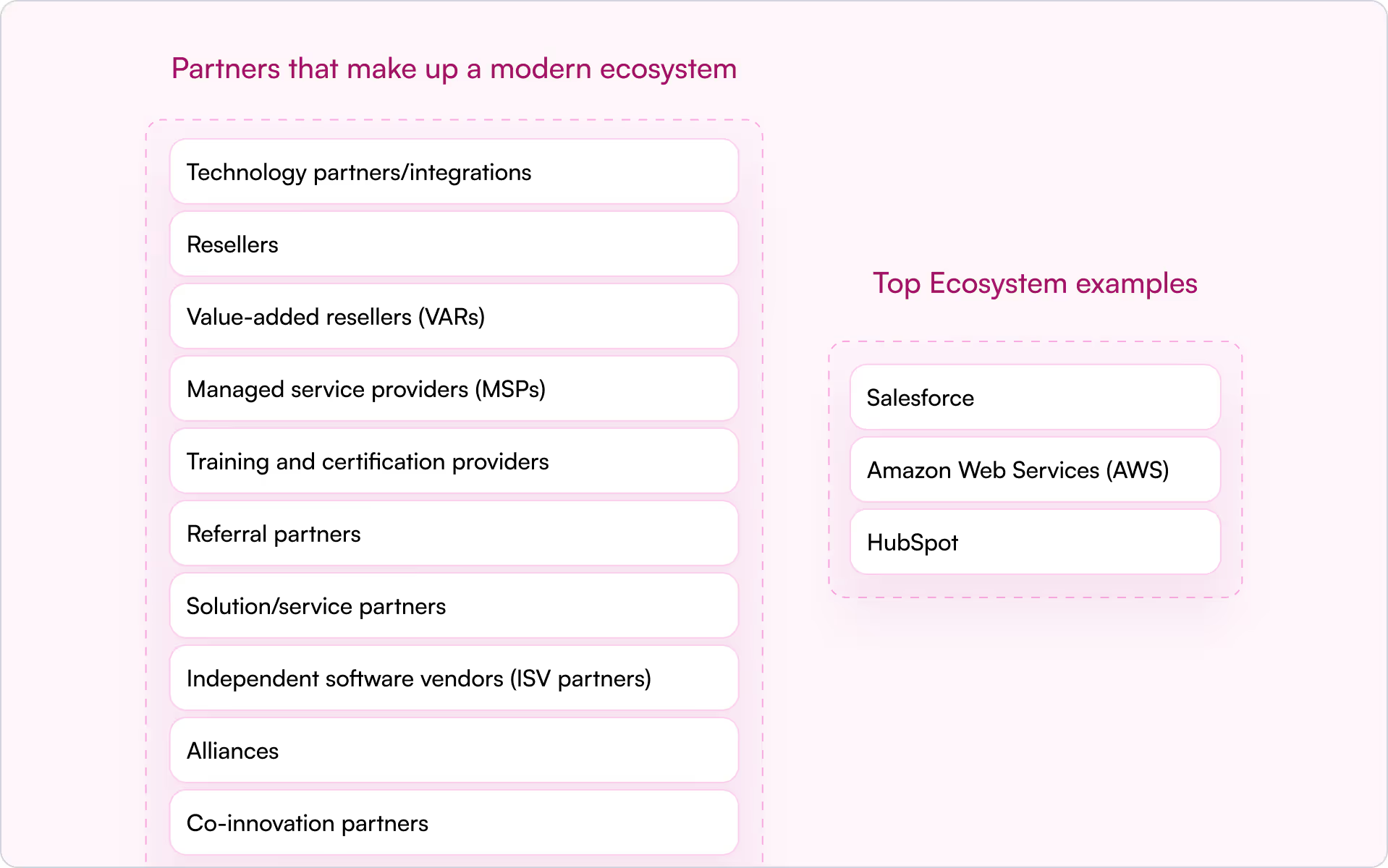
- Technology partners/integrations connect your SaaS to complementary platforms and tools, creating seamless workflows that make your product more valuable and harder to replace.
- Resellers purchase your SaaS at a discount and then sell it to end customers.
- Value-added resellers (VARs) bundle your SaaS solution with services, customization, or other complementary products, tailoring the solution to meet specific customer needs.
- Managed service providers (MSPs) deliver your SaaS as part of a managed service package. For example, they might take over IT, security, or operations for customers who prefer outsourced solutions.
- Training and certification providers offer guidance to help business leaders and employees build skills and knowledge around your product.
- Referral partners introduce you to potential customers, helping you generate warm leads rather than selling directly.
- Solution/service partners are consulting firms or service providers that implement, customize, or optimize your SaaS, ensuring customers see value faster and more effectively.
- Independent software vendors (ISV partners) build complementary apps or features to extend your SaaS.
- Alliances comprise two or more companies in a strategic partnership aimed at expanding their market opportunities.
- Co-innovation partners actively collaborate with you to create new solutions, products, or features.
Top Ecosystem examples
- Salesforce built the AppExchange marketplace, where ISVs and partners create apps that integrate directly with Salesforce.
- Amazon Web Services (AWS) has cultivated a partner network that supports tens of thousands of consulting and tech partners who help customers adopt AWS at scale. Meanwhile, AWS Marketplace enables SaaS vendors to sell cloud-native solutions directly to enterprises.
- HubSpot is known for its partner ecosystem of agencies, consultants, and ISVs. Agencies provide inbound marketing support powered by HubSpot, while the HubSpot App Marketplace hosts integrations with hundreds of SaaS tools.
12 Strategies for Building an Effective Partner Ecosystem in 2026
Is it time to build your partner ecosystem and take your SaaS brand to the next level?
Read on for our 12 essential B2B partner ecosystem strategies for 2026.
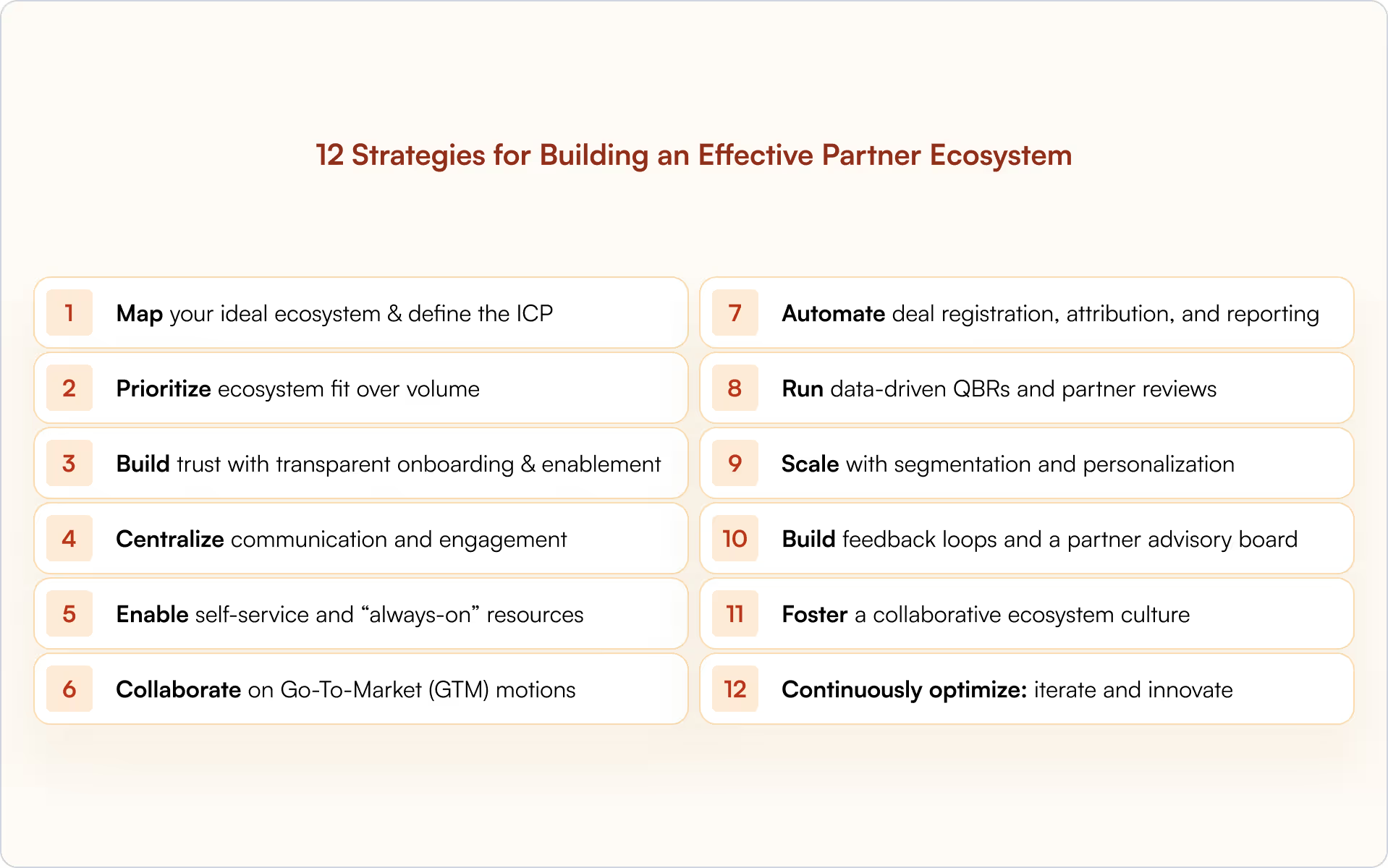
1. Map Your Ideal Ecosystem & Define the ICP
Start with a partner ecosystem mapping exercise – you’ll thank yourself down the line.
This mapping exercise should help you to:
- Clarify partner roles
- Prioritize investment
- Reduce duplication and gaps
- Visualize how partners interact to deliver end-to-end customer solutions
- Allocate resources efficiently
- Strategically scale partner engagement
Start by identifying high-value partner types, industries, and geographies.
Then visualize interconnections, so you understand how partners complement each other and deliver end-to-end customer solutions.
For optimal results, you should also dedicate time to developing your ideal customer profile (ICP).
Analyze your top-performing accounts to identify common traits, pinpoint their pain points and needs, segment the list by relevant criteria such as location or tech stack, and determine the decision-making roles within those businesses.
It’s vital to use data to define and refine your partner ecosystem ICP, for example, prioritising partners based on their impact on pipeline, adoption, and customer success.
2. Prioritize Ecosystem Fit Over Volume
While it can be tempting to take on every potential partner that comes your way, resist signing every logo and prioritize quality over quantity.
Remember: you need to be strategic about this.
Your business doesn’t necessarily need hundreds of partners to grow – in some cases, five or six well-chosen partners can be more effective.
So, how do you know which partners to sign and which to avoid?
First, create clear partner profiles. This provides clarity on roles, enables targeted enablement, reduces friction between partners, and simplifies onboarding and management of new partners.
And vitally, it also gives you a sense of whether and where each potential partner would fit within your ecosystem.
You should also investigate the potential value exchange of a partnership to see if it’s worth bringing a company on board.
Look at what the potential partner would contribute (for example, their reach, expertise, or technology), and what they gain in return (such as revenue growth, leads, product advantages, or market credibility).
3. Build Trust with Transparent Onboarding & Enablement
Don’t underestimate the importance of a robust onboarding and enablement program when it comes to laying the foundations for ecosystem success.
Our ten essential strategies for partner onboarding and enablement are as follows:
- Start pre-onboarding prep before the contract
- Segment and personalize the onboarding experience
- Automate welcome and kickoff communications
- Deliver role-based enablement and certification
- Make deal registration fast and frictionless
- Provide ‘always-on’ resource access
- Assign dedicated onboarding support
- Run automated progress and activation tracking
- Schedule early wins and QBRs
- Gather feedback and continuously optimize
Partner ecosystem platform Introw includes a multitude of features that make building an effective onboarding and enablement program much easier, including:
✅ CRM integration
✅ Automated onboarding
✅ Partner enablement flows
✅ Real-time tracking
✅ Self-serve resources
4. Centralize Communication and Engagement
When you’re managing multiple partners, it’s crucial to prioritize communication and engagement.
Failure to master both of these disciplines can see your partnership program flounder and falter, and your business miss out on opportunity after opportunity.
When it comes to communication and engagement, it’s vital to meet partners where they’re working.
And this means launching and maintaining several communication channels. For example, you might establish three main channels: email, Slack, and your partner portal.
Save time and improve consistency by using your PRM to set up automated communication flows, including welcome messages, milestone reminders, and enablement updates.
Also, remember to track engagement levels and adjust your strategy as needed.
5. Enable Self-Service and “Always-On” Resources
Reduce friction within the partnership experience by enabling self-service and ‘always-on’ resources.
Using on-demand knowledge bases, self-service portals, and/or enablement content hubs empowers partners to engage with you at their leisure.
In 2026, it’s vital to track your partners’ content usage to improve the ecosystem consistently.
Introw, for example, provides analytics for every engagement metric – track asset views and downloads to find out which documents, resources, and deals your partners are engaging with, and how frequently they’re doing so.
Then, analyze this data to optimize your partner portal and resources effectively.
6. Collaborate on Go-to-Market (GTM) Motions
Collaborating on go-to-market motions is often one of the biggest payoffs of a strong partner ecosystem.
Whether you’re launching joint campaigns, co-producing events, co-selling, or creating bundled offerings, there are plenty of attractive benefits to taking this approach.
It allows you to expand market reach with a lower CAC cost, strengthens your customer value proposition, and can lead to a shorter sales cycle due to an increased trust factor.
Furthermore, GTM motions should also lead to better operational efficiency and shared insights.
To achieve this, be sure to share your pipelines, leads, and success metrics when collaborating on such initiatives.
7. Automate Deal Registration, Attribution, and Reporting
Automating deal registration, attribution, and reporting is one of the most impactful actions you can take when constructing your ecosystem.
Here’s why.
It eliminates channel conflict by ensuring partners don’t compete with each other (or with your sales team) for the same opportunities, and it provides accurate attribution, which means rewards are fairly distributed.
From your perspective, the real-time visibility and forecasting that automatic registration enables doesn’t hurt either!
And, as with most administrative tasks, automating deal registration, attribution, and reporting will save time for all parties involved, with no manual entry required.
You should also look for a partner relationship management tool that automatically syncs this data to Salesforce, HubSpot, or your preferred CRM.
Introw delivers CRM-native deal registration with a no-code form builder, which means that forms can be embedded in partner portals or external pages via URL, with no portal login required.
Each form submission is then automatically mapped back to your CRM and synced with Salesforce or HubSpot in real time.
Attribution is also automated, with partner revenue attribution tagging synced to your CRM, as well as automated deal notifications.
When it comes to reporting, lean on Introw’s real-time dashboards, which deliver up-to-the-minute revenue insights and partner engagement analytics.
Crucially, in a partner ecosystem, Introw also offers role-based visibility, allowing each stakeholder to access only the relevant dashboards.
8. Run Data-Driven QBRs and Partner Reviews
When it comes to maintaining and reinforcing the strength of your partner ecosystem, data-driven QBRs are non-negotiable.
It’s absolutely crucial to use engagement and revenue data to inform these sessions, rather than relying solely on anecdotes.
Not only does this enable you to align on what’s working (and what’s not), but partners want to see reliable, data-based results – in 2026, no one wants to be working off ‘gut feel’.
You must also conduct regular partner reviews to identify your top performers, as well as those who are at risk.
This way, you can fairly reward top performers and hold those who are not pulling their weight accountable.
It’s also beneficial when considering who to include or partner with on future initiatives within the ecosystem.
9. Scale with Segmentation and Personalization
Most partner ecosystems comprise a diverse range of businesses, which means you need to segment and personalize your approach to engage with them effectively.
There are many different ways to approach segmentation.
Depending on your circumstances and your goals, you might want to segment partners by:
- Partner tier
- Region
- Solution
- Engagement level
- Partner type
- Performance
- Vertical
You can then automate personalized communications and incentives by segment, which enables you to scale your ecosystem much faster than you would have been able to in the past.
10. Build Feedback Loops and a Partner Advisory Board
Feedback loops can be the difference between helming a thriving partner ecosystem and complete disengagement.
Remember – your partners are on the frontline, hearing customers’ questions, objections, and feedback.
By establishing a structured feedback loop, you ensure that these insights flow back into product, marketing, and sales enablement, where they can actually make a difference.
Furthermore, feedback loops tied to metrics such as deal registration rates and co-sell win rates reveal what is working and what isn’t.
Meanwhile, establishing a partner advisory board gives strategic partners a seat at the table in shaping your ecosystem, making them co-owners of the initiative and ensuring they feel valued and heard.
The most effective feedback technique for you will depend on the makeup of your business and ecosystem, but it could include regular partner surveys, joint roadmaps, and open office hours.
11. Foster a Collaborative Ecosystem Culture
In more traditional schemes, partners have often been siloed.
But in 2026, we know that fostering a truly collaborative ecosystem culture brings significant benefits to all parties involved.
These benefits include faster business growth, lower CAC, expanded market reach, stronger partner relationships, improved customer experience, more innovation, and an overall strategic advantage.
Cultivate this vibe by enabling partner-to-partner introductions and sharing forums.
You can also highlight joint wins with case studies and public acknowledgement across the ecosystem’s communication channels.
12. Continuously Optimize: Iterate and Innovate
From A/B testing campaigns to regular reviews of partner data, you must continuously optimize your partner ecosystem for best results.
Tracking vital metrics empowers you to sunset low-performing partners before they become a drain on your ecosystem, and invest in ‘next gen’ ecosystem plays.
Of course, you want to make tracking ecosystem metrics and analysing data as easy and effective as possible – and that’s where Introw comes in.
This sophisticated PRM incorporates real-time, user-friendly partner performance dashboards, while centralized visibility makes it super easy to get a snapshot of what’s going on at any moment.
Furthermore, its workflow automation capabilities include engagement-based alerts and automated deal updates, ensuring you’re always in the loop.
Challenges of Managing a Modern Partner Ecosystem (and How to Overcome Them)
With a broad range of partners and rapidly evolving technology, managing a partner ecosystem comes with its own set of challenges.
Here are the pitfalls to be aware of:
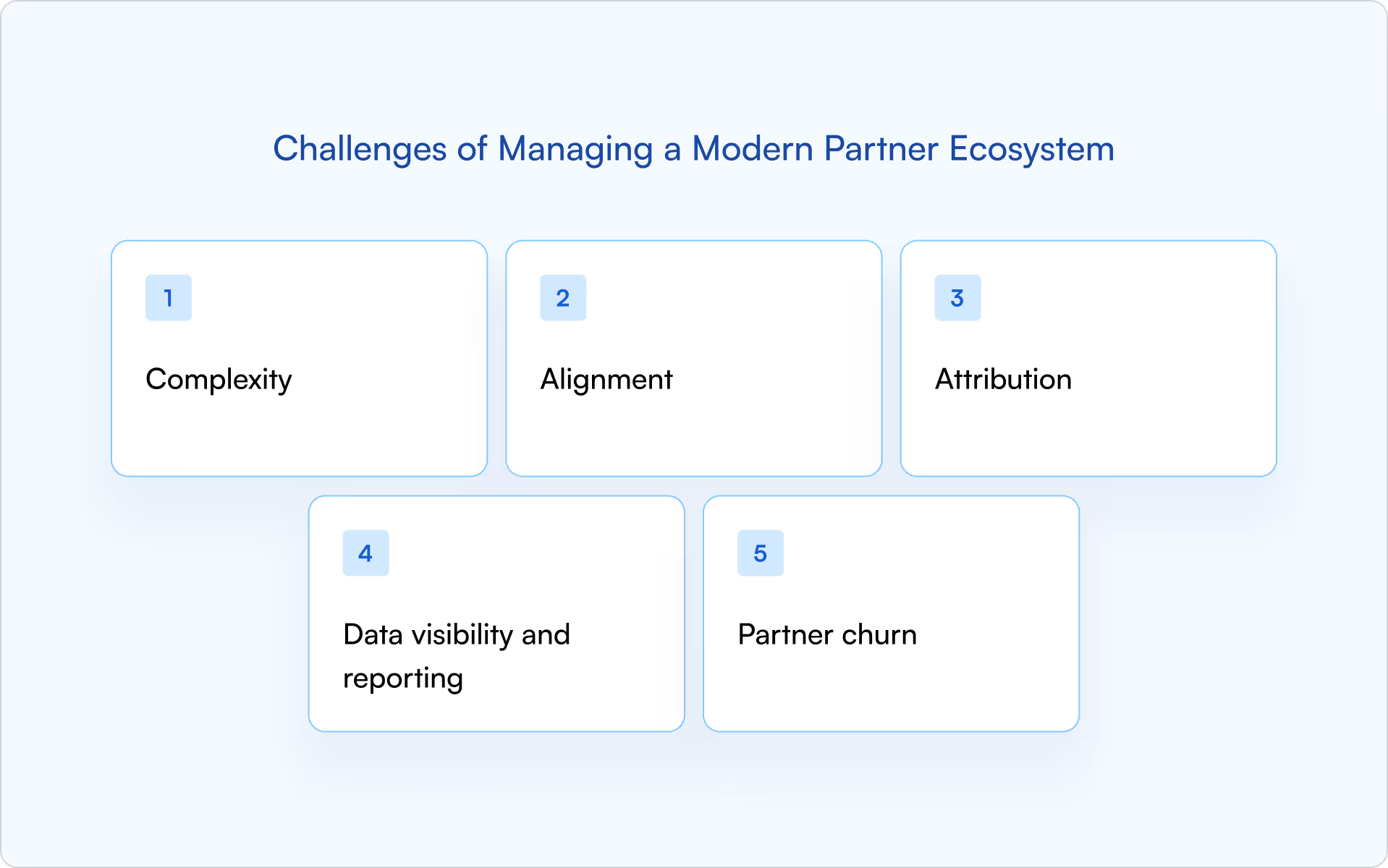
- Complexity: Staying on top of multiple motions, partner types, and geographies can be tricky, as each requires unique enablement, workflows, and tracking that quickly overwhelm manual processes.
- Alignment: Keeping all your partners aligned behind shared goals is difficult when everyone has different priorities and circumstances.
- Attribution: Accurately connecting activity to revenue can be super complex (especially without the right tech). This can make it hard to prove impact, reward partners fairly, or justify ecosystem investments.
- Data visibility and reporting: Without centralized, real-time insights, leadership and partner managers lack the visibility needed for a thriving ecosystem.
- Partner churn: If partners feel under-supported, misaligned, or unrecognized for their contributions (due to the above challenges), they will most likely disengage from your program and shift their focus to competing ecosystems.
The key to overcoming these challenges lies in your tech stack.
Indeed, investing in the right CRM-native platform and the right automation tools can prove something of a silver bullet for partner ecosystem challenges.
Look for software that:
✅ Streamlines complexity with standardized workflows
✅ Keeps goals aligned through transparent incentives
✅ Automates attribution for fair credit
✅ Delivers real-time analytics directly into your CRM
✅ Creates a smooth partner experience that reduces churn
The Role of Technology: Partner Ecosystem Management Platforms & Tools
So, when it comes to securing the optimal tech for your partner ecosystem, what exactly should you be looking for in a PRM?
There are three core must-haves:
- CRM integration
- Off-portal communications
- Real-time analytics
But if you want to build a partner ecosystem that will become a significant revenue stream for your SaaS business, you’re going to want more than a traditional partner relationship management system can offer.
Instead, look for a comprehensive partner ecosystem management platform like Introw.
Building on the core must-haves outlined above, Introw is:
✅ CRM-first: Introw is natively integrated with Salesforce and HubSpot, so deal registration, attribution, and reporting all flow directly into your CRM.
✅ Scalable: Templates, auto-segmentation, and workflow automation make it easy to manage hundreds or thousands of partners without manual tasks piling up.
✅ No-login-required: Partners can register deals, access assets, and receive updates via forms, email, or Slack without needing to log into a separate portal.
✅ Built for SaaS ICP: Introw is tailored for the SaaS industry, which means it delivers handy features for modern SaaS go-to-market strategies, such as account mapping, revenue attribution, and co-sell workflows.
The Future of Partner Ecosystems: Trends to Watch in 2026
SaaS is an incredibly fast-paced industry, so when building your partner ecosystem, it always pays to have one eye on the future.
Here are four rising ecosystem trends to watch out for in 2026 and beyond:
- AI-Powered Partner Matching, Automation & Analytics
AI will increasingly be used to help identify the right partner opportunities, optimize workflows, and surface insights.
- Embedded Integrations & API-First Ecosystems
Seamless technical integrations between partner products will become the norm.
This means that, before long, customers will expect access to end-to-end solutions without friction.
It should also drive up adoption stickiness.
- Verticalization & Specialization Of Partner Networks
We can also expect partners to increasingly focus on specific industries or niches.
From the perspective of SaaS companies, this should enable the development and delivery of more tailored solutions, thereby achieving stronger alignment with customer needs.
- The Rise Of ‘Ecosystem-As-A-Service’ Platforms
Platforms that provide turnkey partner management, automation, and enablement tools will become increasingly popular as ecosystems mature into a significant revenue stream.
These platforms will vastly simplify ecosystem operations, allowing SaaS companies to build, scale, and optimize their networks faster.
Why Introw Is The Future Of SaaS Partner Ecosystem Management
Ready to take your partner program to the next level with world-class ecosystem management?
Here’s how Introw – an advanced partner ecosystem management tool tailored for SaaS – can help.
✅ Unified partner management, engagement, and reporting in your CRM: All partner data, deal activity, and engagement metrics live within your CRM, giving teams a single source of truth and eliminating silos.
✅ Automation at every step: From onboarding and engagement to deal registrations and QBRs, routine tasks are streamlined and triggered automatically. This frees up teams to focus on high-value activities while keeping partners engaged and productive.
✅ Off-portal experience = frictionless for partners: Partners can register deals, access assets, and receive updates without logging into a separate portal.
✅ Role-based dashboards: Each revenue leader accesses their own dashboard, which displays the data most relevant to them.
Take the first step towards a thriving partner ecosystem today – request an Introw demo here.
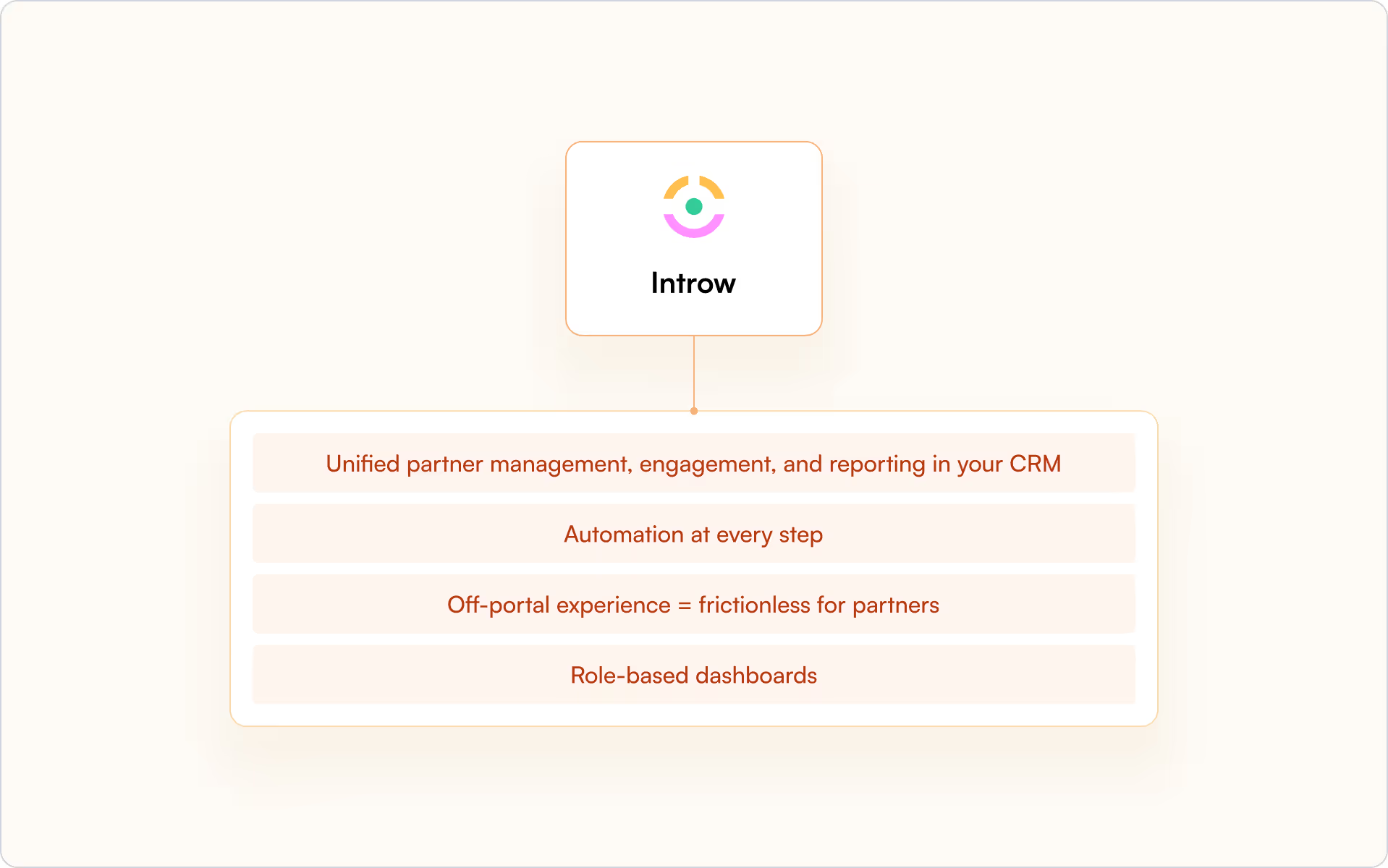
Conclusion
Old-fashioned, siloed partner programs won’t do much for your business in 2026, but a strategic partner ecosystem could establish your brand as a major industry player.
Remember – to win with a partner ecosystem in 2026, you need to put a laser-sharp focus on automation, measurement, and collaboration.
➡️ Audit your ecosystem strategy, adopt CRM-native tools, and start scaling with Introw